Interview
How Alissa Is Building newl, an AI That Lets You Simulate Different Versions of Your Life
with Alissa Voutova, Founder of newl
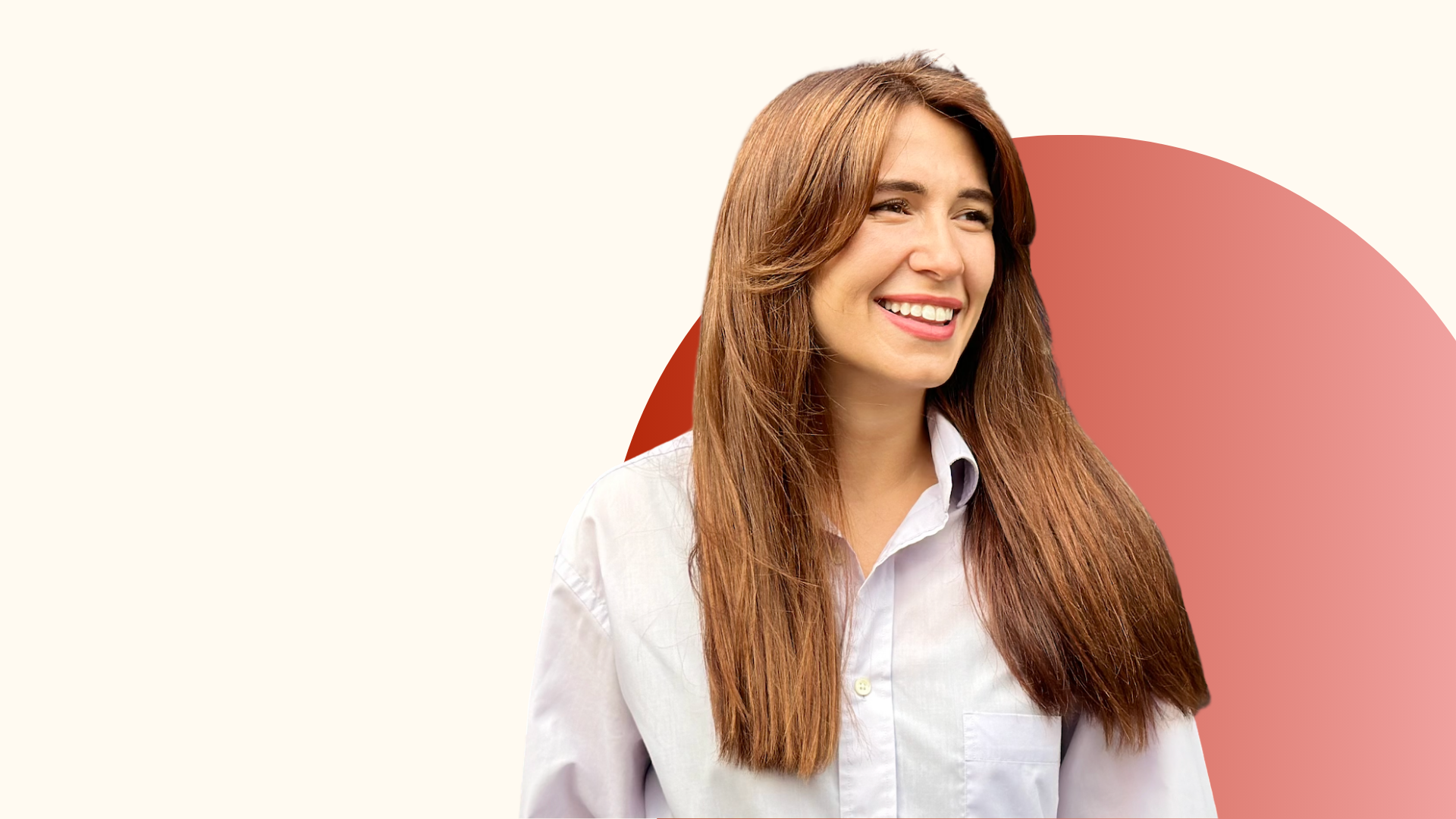
Meet Alissa
Alissa Voutova is the founder of newl, a pre-seed AI startup that lets you simulate different versions of your future to help you make better decisions about your life. She spent nearly a decade as a planning and strategy lead at media agencies, working across accounts including LEGO, Heineken, Kellogg's, and Salesforce, before quitting to move to Bangkok and building newl out of a problem she encountered along the way. She's 35, calls London home base, and has spent the past year nomadic across Bangkok, San Francisco, Sofia, Paris and Tel Aviv.
In this interview, she talks about why the highest stakes decisions in life are made with the flimsiest tools, how Cursor and Claude Code made building possible for a non-technical founder, what a year of radical freedom and no salary has actually felt like, and why she believes the financial and time cost of taking a risk has never been lower.
The Interview
What is newl, and where did the idea come from?
Newl is an AI that lets you simulate different versions of the future to help you make big decisions. We sit at the intersection of AI, decision intelligence tech, and simulation. The idea started to form when I decided to quit my job and move to Bangkok. I realised the tools we currently have for making big life decisions, like career changes, relocations, starting over, are really poor. It seemed crazy to me that we put in so much rigour and data-driven decision-making into a brand plan for a client, yet nothing like that existed for life planning. The highest stakes decisions are made with the flimsiest tools! I want people to be able to make those decisions with the same rigour we'd give a corporate budget, using the most powerful technology we've ever had access to, in service of actually living a life that's aligned with what they want.
You spent nearly a decade making million-pound media decisions for LEGO, Heineken and Salesforce. How does that feed into building newl?
My job was to help clients work out how to spend multimillion-pound media budgets by building out different scenarios and pulling in data to see which would get the best return. That's basically the same skill newl is built on, just pointed at someone's life instead of a client's budget: take a big decision, model out the different paths, work out which one actually gets you where you want to go. I was also responsible for the softer side of it, how these brands showed up in the world, which audiences to target with what messages and across which media, using strategic insight to build real brand love. That mix, being rigorous with data but also genuinely creative, is exactly what you need as a non-technical founder building in AI. And underneath it all, I was always obsessed with how and why people make decisions, which is the thing I eventually built a company around.
You told friends and family about your move to Bangkok and kept hearing "I wish I could do that." What did that tell you?
I especially remember telling a few of my friends and family about my move and them saying "I wish I could do that" and that really stuck with me. It got me thinking about what keeps people from taking risks and what's stopping us from living our most fulfilled lives. That question is basically what became newl. We're pre-revenue and pre-launch, but the pilot itself has already given us a real signal: we ran pre- and post-session surveys with our first 15 participants to test whether the methodology itself worked, not just whether people were interested. They reported a 60% increase in decision clarity, and every single one of them took real-world action within days of their session. People still email me now, sometimes months later, to say the session changed something concrete, they moved countries, applied for a completely different kind of role, or just started thinking about their future differently. That's the proof point I actually care about: not that people liked it, but that it moved something in their actual lives.
As a non-technical founder building an AI platform, how did you actually get it built?
I'd actually been here before, in a smaller way. With my first business, a drinks brand, I assumed I needed someone else to create the recipes for me, until a friend asked why I didn't just try it myself. I did, and it was only later that I brought people in to help refine them, once I already understood the process inside out. So when it came to newl, my biggest doubt was that I didn't have the right skillset to create a tech platform. But before I wrote a line of code, I ran the whole thing manually myself, which meant I knew exactly what quality bar I needed and every step that had to be built, rather than handing over a vague idea to someone else. When I got stuck on the technical architecture, I brought on two engineers short-term to get the build to the standard it needed, but I stayed closely involved and in the detail the whole way through. Outside of that, Cursor and Claude Code have been a gamechanger for a non-traditional coder like myself. Especially the latest models are so capable and can help you spin up prototypes quickly. Claude is also my thinking partner on a daily basis. I use OpenClaw for news and research debriefs, Claude Design for quick decks I use as talking points, NotebookLM to prepare for important calls, and Gemini for deep research, especially academic literature reviews.
You've been nomadic for a year, living between Bangkok, San Francisco, Sofia, Paris, Tel Aviv. What does that actually look like day to day?
For me, time wealth is the most important thing in my life right now and that's been the biggest shift. Being in control of how and where I spend it has been a game changer. I'm someone who gets really depressed by routine and a 9-5, so whilst I enjoyed many elements of my corporate career, I always felt like the container of that life didn't quite fit me. I don't have a salary anymore, which is scary, and my life is much simpler day to day, but it suits me so much better than I ever expected. I've stayed with friends, family, even taken dog-sitting gigs to cut costs. It's tiring, but I'm lucky to have people scattered around the world who make it possible. It can also feel isolating without the network and structure of a corporate career, and the path forward isn't always clear. But I've become comfortable with uncertainty, building that resilience is half the fun for me now.
What has been the hardest part of the mental shift from expert to beginner?
Building self-belief whilst doing something new vs the comfort I had of being an expert in my field in my corporate career. Especially as women, we tend to underplay our right to be in certain rooms and speak up if we don't feel like we know our stuff perfectly. I'm still learning how to deal with this but I'm on a constant journey of upskilling in the areas I'm building in, which helps my confidence. The truth is, you probably have a whole load of knowledge and experience that's valuable that you're not giving yourself enough credit for. You just have to point it in this new direction you're building in.
What is the biggest mistake you see founders make in the early stage?
The biggest mistake I see founders make is falling in love with their idea before they've done the homework that actually matters, talking to real people, doing proper market research, looking at competitors, getting feedback in the real world, and letting that shape the idea as fast as possible. Skip that, and you find out it's not viable only after you've already spent the time and money on it. I made my own version of this with my drinks brand, except my mistake was doing the wrong kind of homework. I went to webinars, read the theory, studied how other people had built their companies, and told myself that counted as research. It didn't, none of it involved actually testing the idea on real people. The homework that matters is the kind you can only get by going and doing it.
You said the safety net of traditional careers is disappearing. Do you think that changes the risk calculation for women thinking about making a leap?
Now more than ever, people should pursue their dreams because the safety net of traditional careers is disappearing as AI reorganises what work and productivity looks like. It's a bit of a trope now but it's also never been easier to start something and the AI tools available are making it cheaper than ever too. So both the financial and time cost of taking a risk is the lowest it's ever been. Which means the biggest barrier left isn't really the world, it's you. I wish I'd trusted myself earlier instead of listening to other people's ideas about what a successful life looks like. I let that guide my choices for far too long, and I see a lot of incredible people around me fall into the same trap, feeling deeply unfulfilled despite everything looking great on paper.
What is your actual advice for someone who wants to start but does not know where to begin?
A lot of people feel overwhelmed when starting because the task itself feels too big. So just break it up into the smallest actions possible and go from there. If you're unsure about what you want to do next, follow your gut and especially what gives you energy. Spend a week tracking everything you do and categorise it in how it affects you: does it drain your energy or does it light your fire. At the end of the week, you'll have a clear picture of what's worth pursuing. Then, talk to everyone about the problem you want to solve and become an expert on it. Prove it out manually before you build anything. Don't let your lack of knowledge or expertise stop you. Watch tutorials, experiment with tools, ask for favours, talk to people. And most of all, enjoy the journey, the start is the most exciting part.
JOIN AK ACADEMY
AK Academy brings together courses, workshops, interviews, and a community to help women build practical AI skills for real professional use.