Interview
The Trades Industry Had a Blind Spot for Women. Anna Built TaskHer to Fix It.
with Anna Moynihan, Co-Founder of TaskHer, London
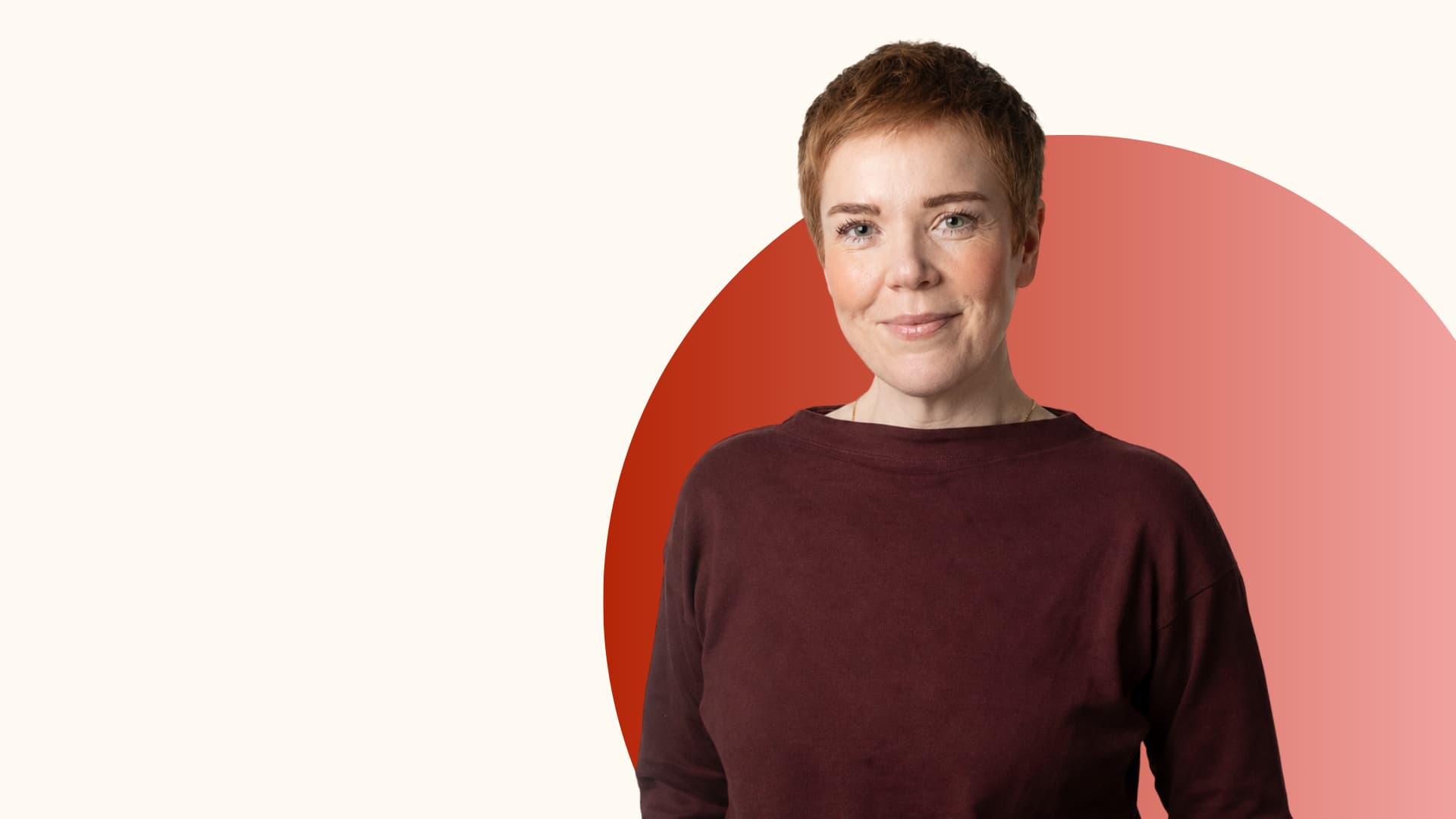
Meet Anna
Anna Moynihan is the co-founder of TaskHer, a funded marketplace that lets customers book verified, qualified tradeswomen online. She is based in South West London, and came to TaskHer through a career in TV production, mobile video, and events marketing, before a pandemic redundancy, a newborn, and a frustrating home renovation all landed at the same time. TaskHer launched in 2022 and has since raised pre-seed and seed funding, including from Bethnal Green Ventures.
In this interview, she talks about the moment a tradesperson talked past her to her husband and she realised no platform had ever shown her a tradeswoman as an option, how she tested the idea before building anything, how AI powers both the product and her own marketing workflow, and why the startup rollercoaster is completely accurate and completely addictive.
The Interview
What is TaskHer, and what gap does it fill?
TaskHer is a marketplace that enables customers to book verified, qualified tradeswomen online. The trades industry is one of the most gender-imbalanced sectors in the UK. It has been slow to modernise, built on word-of-mouth networks and working practices that have barely changed in decades, and it has done very little to attract, retain, or even acknowledge women.
The platforms designed to connect tradespeople with customers have largely just replicated that same outdated model rather than challenging it. TaskHer challenges it. We launched in 2022 and have since raised pre-seed and seed funding. You can find us at taskher.co.uk and on Instagram at @task.her.
What was the moment you realised this gap existed?
We were having work done on our home and I found the whole process frustrating. We were new to the area, so I was trawling directory sites, chasing quotes, and navigating clunky interfaces. When someone finally showed up, they turned and talked to my husband, despite the fact that I had handled every bit of the communication. It made me wonder whether I would have a different experience with a woman. And then it hit me: I had not even considered that hiring a woman was an option.
Looking back, that was probably a mix of unconscious bias and the fact that none of the platforms I was using showed images of women, suggested women, or used anything other than tradesman and handyman as default language. The more we looked into it, the bigger the picture became. This was not just a personal frustration. It was a systemic gap with serious consequences for women on both sides of the transaction.
A pandemic redundancy, a newborn, and a startup idea. How did that actually come together?
I was on maternity leave when Covid hit and effectively wiped out the events industry overnight. I had been Head of Marketing at one of the UK's largest events agencies, working across Chanel, Innocent Drinks, Wimbledon, and the O2. Most of the company was made redundant, and suddenly we had a lot of time on our hands. I had the idea for TaskHer towards the end of 2020. I want to be clear about the privilege in that situation: savings in the bank, a roof over our heads, maternity pay still coming in, and a baby who was sleeping well.
That runway made the risk possible. I also figured there was nothing to lose. I had always worked for someone else, with it drilled into me that sensible meant a stable job and predictable pay. A global pandemic, maternity leave, and redundancy all landing at once taught me that is largely nonsense. There is no real safety net when it comes to job security. So why not take a risk on something purposeful when you are actually in a position to do it.
You had your first booking the day the website went live. How did that happen?
The day-one booking did not come from nowhere. We had done a lot of groundwork. Right from the start we wanted to test whether TaskHer was something other people actually wanted. We did one-on-one calls within our social circle and beyond to gather honest feedback. We ran fake door ads on Instagram and Facebook, tracked sign-ups, and built an email list in the process. We put content across social media to build momentum before there was anything to actually sell.
The comments on our posts told us people wanted this well before we had launched anything. As a B2C business, social was our route into people's homes, and the signal came back fast. By the time the website went live, there was already an audience waiting. Getting that first booking was so exciting and so nerve-wracking at the same time. The business baby was out there for everyone to see.
How does AI run inside TaskHer, and how do you use it in your own work?
The platform runs on AI in a significant way. We built a prompt that generates instant quotes from natural language input, so instead of filling out a form you just type the problem as you would describe it to someone: my bathroom tap is dripping, and get a quote back immediately. That is the product side. On the marketing side I use Claude Cowork for SEO. It generates organic content based on the keywords we are targeting and lands it directly on our website, ready for me to review, add images to, and publish.
For a startup with a lean team and a limited budget, that has been a genuine game changer. The kind of output that would previously have required an agency or a dedicated hire, done in a fraction of the time. I also use AI for meeting notes, automatically pushing them to Slack and Notion so the whole team has a clear record and actions are captured without anyone having to do it manually. Our weekly team meetings generate an automated to-do list without any extra admin.
What does the WhatsApp community mean to TaskHer, and why did it work when other platforms did not?
Our WhatsApp community is honestly one of the most important parts of the business. We have built a UK-wide community of tradeswomen through it, and it serves as both the supply pipeline for our marketplace and a genuine space for connection and support. We tried building community on other platforms first and it did not stick. Tradeswomen are on the road or in their vans. They are not logging into somewhere new. WhatsApp is already on their phone, and that turned out to make all the difference.
The insight sounds obvious in retrospect, but it took actually trying the wrong thing first to understand it.
What has been the hardest part of building this?
Trying not to let the business dictate your mood or your sense of self-worth. When things are going well it is easy, you feel good and you can focus. When things are tricky it becomes all-encompassing, and when there is nobody at home who is removed from it, there is nowhere to retreat to. You are both in the thick of it, all the time. It can get really heavy. There have been moments where we have looked at each other and genuinely wondered what on earth we are doing.
And then somehow you come out the other side, and almost immediately you forget how bad it felt. It is a bit like childbirth. The startup rollercoaster is not just a cute phrase. One week you are flying, the next you have hit the floor, and then somehow a day later you are back up again. It is exhausting. It is also completely addictive, which is probably the most inconvenient part.
What mistakes did you make early on?
My main one was thinking things had to be perfect before I could put them out into the world. I really struggled putting our MVP live when it was not the exact polished final version I had envisioned. Nobody cares as much about your company as you do. You need to put things out there to get feedback, make improvements, and build something people want. That lesson took longer than it should have to land. The imposter syndrome was real coming out of a stretch of maternity leave preceded by a job where I had not been properly challenged for a few years.
I was stepping into an industry I had no obvious credentials for, and the fear of someone calling the business baby ugly was genuine.
What would you say to a woman who has an idea but is hesitating?
If you can give yourself a window where the bills are covered and you have enough of a buffer to give it a real shot, do it. Because there is no certainty in working for someone else either. It feels safer, but that is not the same thing as being safer. If you have an idea you believe in and a reason behind it that genuinely motivates you, that is enough to start. You can figure out the rest as you go. Speak to as many people as you can in the space you are looking at.
People love talking about themselves and are surprisingly generous with their time. Those conversations will teach you more than almost anything else, and they will tell you faster than anything else whether the idea has legs.
JOIN AK ACADEMY
AK Academy brings together courses, workshops, interviews, and a community to help women build practical AI skills for real professional use.