Interview
How Cláudia Used Maternity Leave to Come Back a Better Marketer with AI
with Cláudia Capelo, Head of Product Marketing at CMC Markets, Sydney
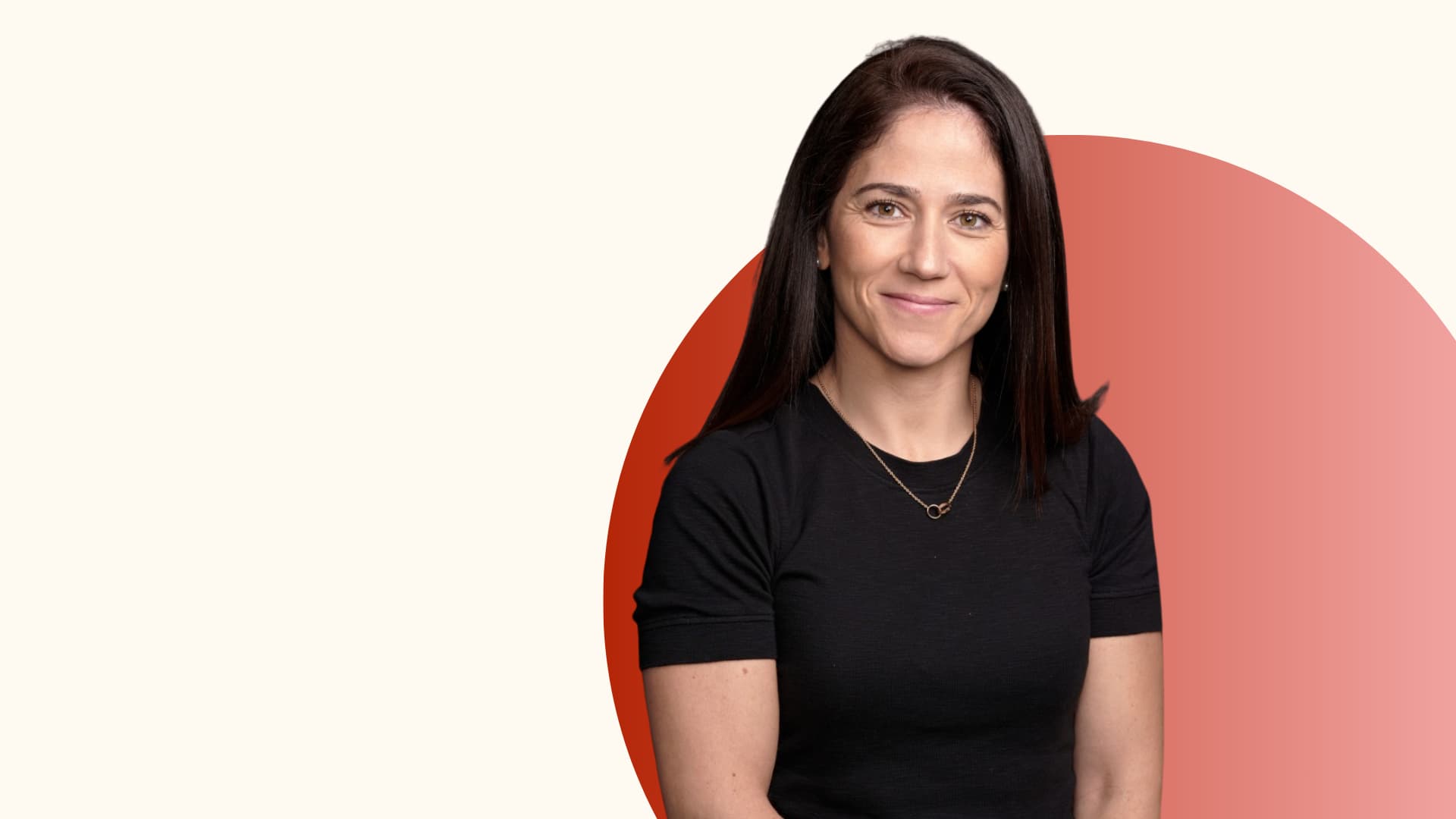
Meet Cláudia
Cláudia Capelo is Head of Product Marketing at CMC Markets, an online trading and investment platform operating across Australia and New Zealand, where she leads product positioning, go-to-market strategy, and growth. Originally from Portugal and now based in Sydney, she also mentors early-stage founders at Startmate advising on positioning and the marketing foundations that get startups to their first customers. She is most active on LinkedIn, where she shares thoughts on product marketing, GTM strategy, and AI in marketing workflows.
In this interview, she talks about how maternity leave became the most useful professional development she never planned, why experienced professionals have a hidden advantage when it comes to AI, and the fractional consulting opportunity she sees opening up right now for women with senior expertise.
The Interview
You went through several cycles of trying AI and stepping back before it clicked. What finally changed?
I started using AI seriously about two years ago, but it was not a smooth, linear journey. I tried things, felt overwhelmed, stepped back, and tried again. Like a lot of people, I knew the tools existed but struggled to find the version of it that actually clicked for how I work. The real turning point was my maternity leave. I remember sitting with a very specific fear: I am going to be away for several months, and the world is going to move without me. That fear turned out to be the best motivation I have ever had.
Maternity leave became the professional development I never planned. I used that time to go deep, and I came back more capable than when I left.
No structured course, no programme. How did you actually learn?
During maternity leave I started doing something really simple: following people on LinkedIn who were sharing how they actually used AI in their work, and saving the prompts they posted. That was it. With AI moving so fast, by the time a course is built, half of it is already outdated. What worked was staying close to people who were one step ahead and then trying things myself. I broke things, got bad outputs, tried again with better context. Gradually I started understanding what the tools were good for in my specific work: positioning research, competitive analysis, GTM strategy, synthesising customer insights.
I started with ChatGPT like most people but moved to Claude fairly quickly. For the kind of strategic work I do, positioning documents, GTM narratives, synthesising competitor intelligence, the quality of thinking is different, and that matters when the output is going into an executive presentation.
What was the hardest part of the learning process?
The noise. The sheer volume of information, opinions, tools, and hot takes is overwhelming, and it creates a constant pull to chase whatever is new. A new model drops, everyone says it is the best thing ever, and you feel like you are already behind if you have not tried it. The discipline I had to build was the opposite of that: find a source of information I trusted, commit to one tool at a time, and actually get good at it before moving on. FOMO is probably the biggest obstacle for most people learning AI right now.
The answer is not to consume more. It is to go deeper on less.
You never left your role. How did learning and doing the job at the same time actually work?
I used my maternity leave to learn and came back to CMC Markets with a much clearer perspective on how AI could help me and my team elevate the work we deliver every day. From that point I was using it inside my job every day, so the learning and the application happened at the same time. I think that is actually the most underrated path for experienced professionals. You do not need to quit, pivot, or start something new. You bring AI into the work you are already doing, and you become significantly better at it: faster, sharper, more impactful. For me the goal was never to become an AI expert.
It was to become a better marketer who uses AI well. Those are very different things.
What does your day actually look like with AI built into it?
My mornings usually start with Perplexity Finance, a quick sweep of what is happening in the markets before I get into anything else. From there I pick up whatever is live. I work a lot in GPT Projects, where I keep all the relevant context loaded: market intel, customer interviews, product details, so I can move fast without starting from scratch every time. When it is time to present the thinking, Gamma is where I go. It turns a strategic recommendation into something I can put in front of an executive without losing half a day to slides. At home it is a different toolkit.
I use Claude for deeper thinking, personal planning, longer-form writing, anything that needs more reasoning than a quick answer. Granola runs in the background of my meetings so I always walk out with a clean summary and a clear action list. And with two kids, even the family calendar is in AI hands now.
At minimum, it means we do not double-book birthday parties.
What do you enjoy most about working this way?
The speed of genuine progress. In marketing you often spend a long time building toward something: a campaign, a repositioning, a GTM strategy. AI has compressed the cycle, which means we see results from the strategic thinking faster. I also love that it rewards clarity of thought. If you know how to structure a problem, define an audience, articulate what you are trying to achieve, AI multiplies that. It has made me more rigorous, not less.
The people who get the most from these tools are the ones who already know how to think clearly about their work.
What is the biggest mistake you see people make when they start with AI?
Underinvesting in the input. Most people try AI, get a generic output, and assume the tool has limits, when the real issue is how they approached it. AI works best when you treat it like a capable thinking partner, not a search bar. The quality of what you get out is directly tied to the quality of context, structure, and intent you put in. I made the same mistake early on: I used to expect AI to read my mind and then be frustrated when it did not.
What I also underestimated was how much my existing experience made me a better AI user. Twelve years of strategic marketing thinking, knowing how to diagnose a problem, structure a narrative, and spot what is missing, made everything I produced with AI better. Experience is an advantage here, not a barrier.
What do you wish you had known earlier?
That the goal is not to master AI in the abstract. It is to master AI for your specific work. I wasted some early time exploring tools and use cases that had nothing to do with what I actually needed. The moment I focused on: what are the three things I do every week that take the most time, and how do I use AI for those specifically, everything accelerated. The discipline of staying specific, rather than broad and curious about everything, is what made the difference.
You mentor founders at Startmate. What opportunity do you see for women in AI consulting and fractional roles right now?
Fractional and consulting roles are a real opportunity right now. Thousands of founders and small businesses need senior-level strategic input: marketing, positioning, operations, growth, but cannot afford a full-time hire. If, as an expert, you can use AI to produce that quality of work efficiently, you can serve multiple clients part-time and build meaningful income without being tied to a single employer. This is something I see clearly from the mentoring work I do with early-stage founders at Startmate.
The gap between what founders need and what they can afford is real. AI closes that gap for the person providing the service.
What would you say to a woman who thinks AI is too technical for her?
I have a Finance degree and spent twelve years in marketing strategy, product marketing, and lifecycle growth. No coding, no engineering, no data science background. I use AI every single day to do work that used to take twice as long. The technical barrier that women imagine is not where the difficulty actually lives. The real skill is learning to articulate what you need clearly, give useful context, and build the habit of reaching for the tool. If you can write a brief, if you can explain a problem to a colleague, you can use AI.
Start before you feel ready, and start with the work you are already doing. You do not need a new career to benefit from AI. You need to pick one thing you do regularly, commit to doing it with AI for the next month, and pay attention to what changes. The learning is in the doing.
JOIN AK ACADEMY
AK Academy brings together courses, workshops, interviews, and a community to help women build practical AI skills for real professional use.