Interview
How Claudine Uses Improv, Comedy and AI to Make Senior Leaders Impossible to Ignore
with Claudine Ullman, Chief Comedic Officer, HahaLabs & The Human Advantage, London
Meet Claudine
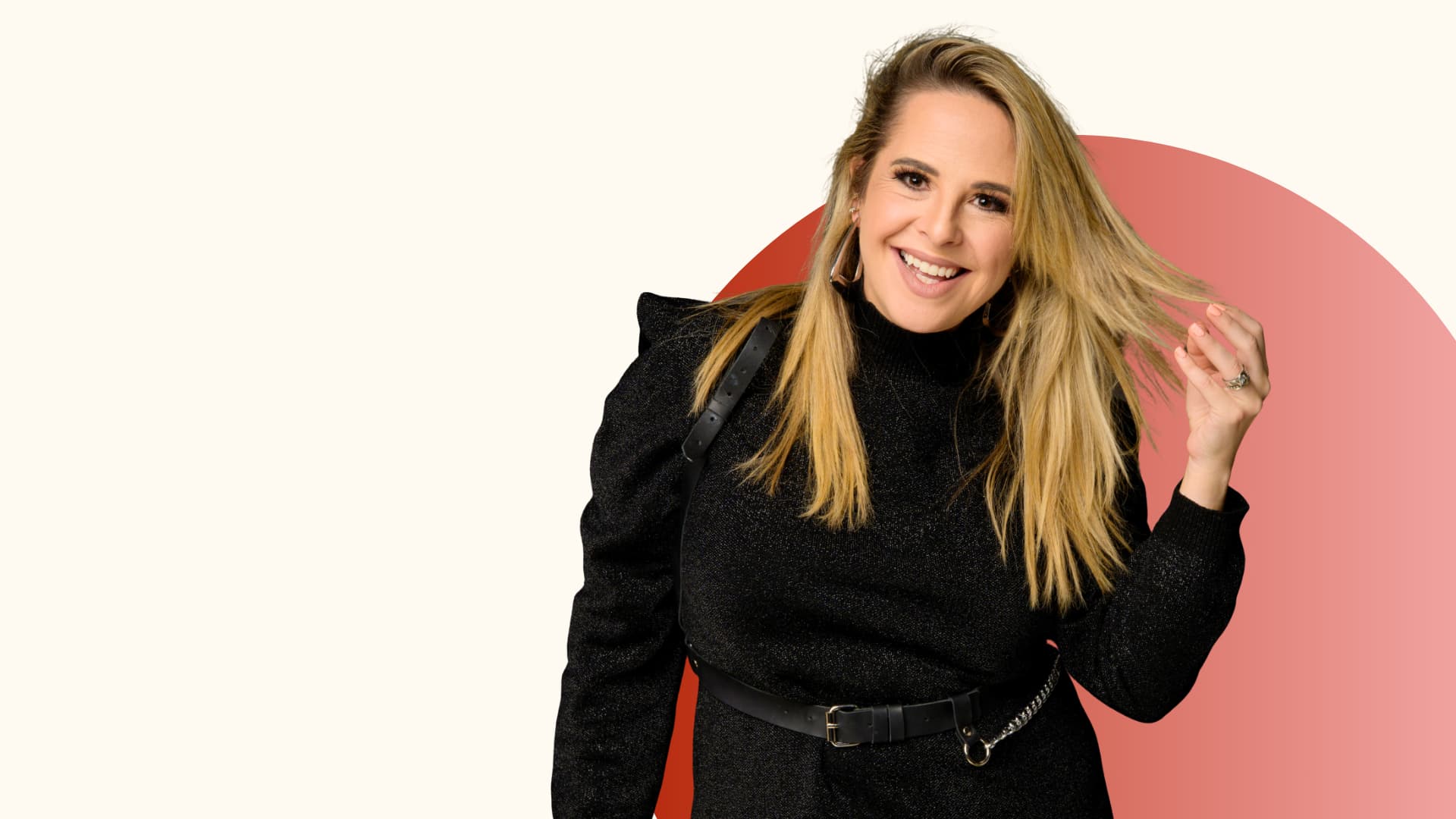
Claudine Ullman is the Chief Comedic Officer and founder of HahaLabs and The Human Advantage, a leadership consultancy that uses applied comedy, improvisation, and storytelling to help executives become impossible to ignore. Her clients include Unilever, Ogilvy, EY, Mercedes Benz, Accenture, and Publicis Groupe. She is 39, a Joburg girl based in London, and splits her time between the UK and South Africa. She trained as an actress and improviser at Wits University, was once told by a top acting agent that she was too large for the industry, survived being hijacked at gunpoint in 2021, and entered Mrs South Africa to confront the years of body dysmorphia that rejection had caused.
She runs HahaLabs as a solo founder, using a handful of custom AI assistants to help with research, strategy, proposal writing and business development. Rather than replacing human connection, she uses AI to create more space for it. In this interview, she shares how a rejection that nearly broke her became the foundation for her business, why improv training turned out to be the perfect preparation for working with AI, how she is intentionally rebuilding her business in the UK, and why she believes the real competitive advantage isn't artificial intelligence at all. It's our humanity.
The Interview
You are the Chief Comedic Officer. What does that actually mean, and who do you work with?
Yes, the title is real. And yes, it appears on invoices that global CFOs have to sign. I run HAHA Labs and the parent brand, The Human Advantage. We are a leadership consultancy that uses applied comedy, improvisation, and storytelling to help executives drop their corporate armour, step into the spotlight, and become impossible to ignore. My clients include Unilever, Ogilvy, EY, Mercedes-Benz, Accenture, and Publicis Groupe. Here is the beautiful paradox of my business. I use AI to help people become more human. Everyone seems to be racing to automate relationships, automate creativity and automate communication. I'm interested in the opposite. I use AI to handle the research, the thinking partner conversations and the first drafts so I can spend more time doing the work only a human can do.
We don't teach people to be funny. We use comedy as a laboratory for self-discovery. Because when people stop performing who they think they should be, they become impossible to ignore.
You trained as an actress and were told you were “too large” for the industry. How did that moment shape everything that came after?
I studied Dramatic Arts at Wits University in Johannesburg and trained as an actress, improviser, and comedian. The plan was stage, screen, and waiting for my Oscar. But in 2008, I walked into a meeting with one of the top acting agents in South Africa. He didn't even look at my CV. He took one look at my body and said: "Claudine… you're too large to be in this industry." How many of you have ever been looked directly in the eye, yet felt completely unseen? Now, realistically, he could never have been my agent. We were completely incompatible. I'm Virgo, and he is a faeces. But that label, "too big," stuck with me. It became an internal hijacker, holding a part of my soul hostage for years. I hid myself, played small, and let that voice control me.
Then, in 2021, my life took a terrifying turn. I was hijacked at gunpoint in Johannesburg. It literally took two guns pointed at my head to make me realise that life is too short to go on playing small. I promised myself that a hijacker would never control my life again. In an attempt to finally confront my body dysmorphia and stop hiding, I decided to do the thing that terrified me most. I entered Mrs South Africa. And guess what? I did fail! I didn't win the main crown. On the night of the finals, I sat backstage with a glass of champagne in one hand, a burger in the other, and I literally thigh-clapped for the new Queen.
But in that moment of spectacular failure, I won. I finally understood that this was my journey: from clown to crown, from hijacked to healed, from self-loather to self-lover. I wasn't actually "too large" for the acting industry. I had always been too large. Too large for their small stages, their small boxes, and their small vision. One week before the finals, I got a tattoo. It says "Yes Queen" because I knew that crown or no crown, I was coming out of that competition a winner. This is the exact origin story that led me to create The Human Advantage and The Humour Advantage frameworks. I realised that the very thing we are hiding, the thing we are ashamed of, is actually the thing that makes us impossible to ignore.
How did you go from corporate entertainment performer to building a leadership consultancy?
I was getting booked to perform as a professional corporate stand-up comedian. I'd deliver a show, and then afterward, during the networking drinks, I would chat with the executives and directors about what their companies were actually going through. They'd tell me about their massive silos, their team trust issues, and how terrified their managers were of making mistakes. And a massive lightbulb went off in my brain: Oh wait. I have the exact solutions to their corporate cultural problems.
Those solutions were literally the hard-won lessons I'd spent fifteen years learning by standing on stage, failing spectacularly in front of live audiences, learning to trust my gut, and finding psychological safety in the fire of performance. What they actually needed was applied improv and comedy training.
So I started training. My very first corporate client was Ogilvy. But in the beginning, I'd still walk into these boardrooms and introduce myself as a "comedian who does corporate training." And that is when the bottleneck happened. The executives would immediately drop their professional guard, look at me and say: "Oh, you're a comedian? Tell us a joke!" I had to stop that in its tracks. I wasn't there to do stand-up. I was there to run strategic leadership transformation. So I came up with my title, Chief Comedic Officer. It established my authority instantly. The techniques I use are rooted in storytelling, performance, and serious play, but I am certainly not there to tell jokes anymore. I am there to transform leadership, teams, and culture.
What was the moment AI stopped being a toy and became a business partner?
When ChatGPT launched, like most creatives, I was highly sceptical. I thought it was just a fancy autocomplete that produced a boring, robotic copy. Then, I decided to test it on a live corporate pitch. I was trying to write a complex proposal for a massive financial services group. Normally, that would take me three days of researching annual reports and trying to sound like an MBA graduate. Instead of asking the AI a basic question, I treated it like an improv scene partner. I briefed it deeply on the client's sector, their cultural friction points, and my methodology. I said: Let's build a scene. What is their biggest headache, and how does my framework solve it? Within two hours, I had a strategic proposal that was sharper, tighter, and more creative than anything I'd ever written manually.
That was the moment I realised this wasn't just another productivity tool. It was a thinking partner. Almost like a co-founder who never got tired of brainstorming. When I moved to the UK, I wasn't trying to build a huge agency overnight. I was trying to build a smarter business. AI became the assistant I couldn't yet afford to hire. It helps me research companies, challenge my thinking, organise ideas, prepare proposals and sharpen my messaging. Every keynote, every workshop and every client relationship still comes from me. AI doesn't replace me. It gives me more time to be the most human version of myself.
You studied drama, not computer science. How did that turn out to be an advantage?
I quickly realised you don't need a computer science degree to master AI. In fact, my drama and improv training was the perfect preparation. AI operates on natural language. The better you communicate, the better it performs. In improv, you are taught to listen deeply and build on your partner's offer. Prompt engineering is exactly the same skill. Once I figured that out, I went from knowing nothing to learning how to prompt properly, structure variables, and build my own custom workflows. I treated prompt engineering as a communication art, not a technical science. It took about two months of daily, messy experimentation to feel confident. I remember thinking I'd completely cracked it, and then I sent an AI-written email that sounded like a corporate robot. It was awful! That was a huge learning moment. I realised AI doesn't replace your voice, it amplifies it. If you don't inject your own personality, humour, and context into the system, you get generic, robotic output. The magic only happens when you put yourself into the machine.
What does your AI-powered team actually look like, and how did you build it?
I think "AI agents" sounds far more glamorous than my reality. People imagine a room full of robots running my business while I'm drinking cocktails somewhere. I wish!
What I've actually built are a handful of custom AI assistants that know my business, understand my frameworks and have learnt how I think and write. One helps me research organisations before I pitch them. Another helps me organise my ideas into proposals. Another mirrors my tone of voice so I never start with a blank page.
They're not replacing my judgement. They're amplifying it.
I still do every keynote, every workshop, every client conversation and every strategic decision. They simply remove the admin and the overwhelm so I can spend my time where I create the most value.
I often describe them as colleagues or thinking partners. Sometimes it genuinely feels like having a co-founder sitting next to me asking better questions than I would have thought of on my own.
How did you land your first client using this new approach?
The honest answer is that it hasn't magically delivered clients, and I think that's an important distinction. AI isn't some magical ATM where you press a button and Fortune 500 companies appear.
What it has done is completely change how I build my business.
In South Africa, I was incredibly fortunate. My clients came almost entirely through referrals. I spent fifteen years working with organisations like Unilever, EY, Mercedes-Benz, Ogilvy and Publicis Groupe, but I never really had to learn how to build a business because the work kept coming organically.
Moving to London has been a completely different experience. I'm rebuilding my network from scratch, but this time I'm doing it intentionally.
AI helps me identify my ideal clients, research the organisations I want to work with, understand their challenges, personalise my outreach and refine my thinking before I ever send an email.
It hasn't replaced the human part of building relationships. If anything, it's made me double down on it. The technology gives me more time to have better conversations with real people.
What is the biggest mistake you see people make when they start using AI?
Treating it like a Google search or expecting it to do the thinking for them. That's never been the point. If you ask a generic question, you get a generic answer. AI is an extraordinary strategic partner, but only if you treat it like an intelligent colleague who needs a proper brief. I made the same mistake early on. I used to ask it to "write a sales email" with zero context, and then wonder why the result was so bland. Now, I spend ten minutes briefing the system before I let it write a single word. I wish I had known earlier that you can build an entire corporate memory inside the system: your backstory, your client history, your exact brand voice, and your target buyer personas. The more the system knows about you, the more it sounds like you.
What is your message to a woman who feels she is not technical enough to use AI?
I literally studied drama. I have absolutely no technical background. If I can learn to use AI to strengthen my business, anyone can. The barrier isn't technical. It's psychological. You do not need to understand how the machine works. You need to understand what you want to achieve, and learn to communicate it clearly. That is a communication skill.
And women are the ultimate communicators. Do not try to launch an "AI business." Look at what you are already brilliant at. Are you an organiser? Become an AI-powered executive assistant. Are you a writer? Become an AI-assisted copywriter. Use AI to make your existing human skills ten times more valuable and scalable. Stop waiting until you "understand" it. Start using it today for something real.
The real advantage isn't AI. It's you. AI can research faster, write faster and organise information faster, but it can never replace your personality, your warmth, your instincts or your lived experience. It can amplify your voice, but it can't create one. That's why I think we're asking the wrong question. Everyone is asking how to become more like AI, when we should be asking how to become more ourselves. Your personality is your competitive advantage. Your humour is your human advantage. Everyone is optimising for AI. I'm interested in optimising for humanity.
JOIN AK ACADEMY
AK Academy brings together courses, workshops, interviews, and a community to help women build practical AI skills for real professional use.