Interview
From Law Student to AI Content Creator: How Daria Built Income at Night
with Daria Muslimova, AI Content Creator
Meet Daria
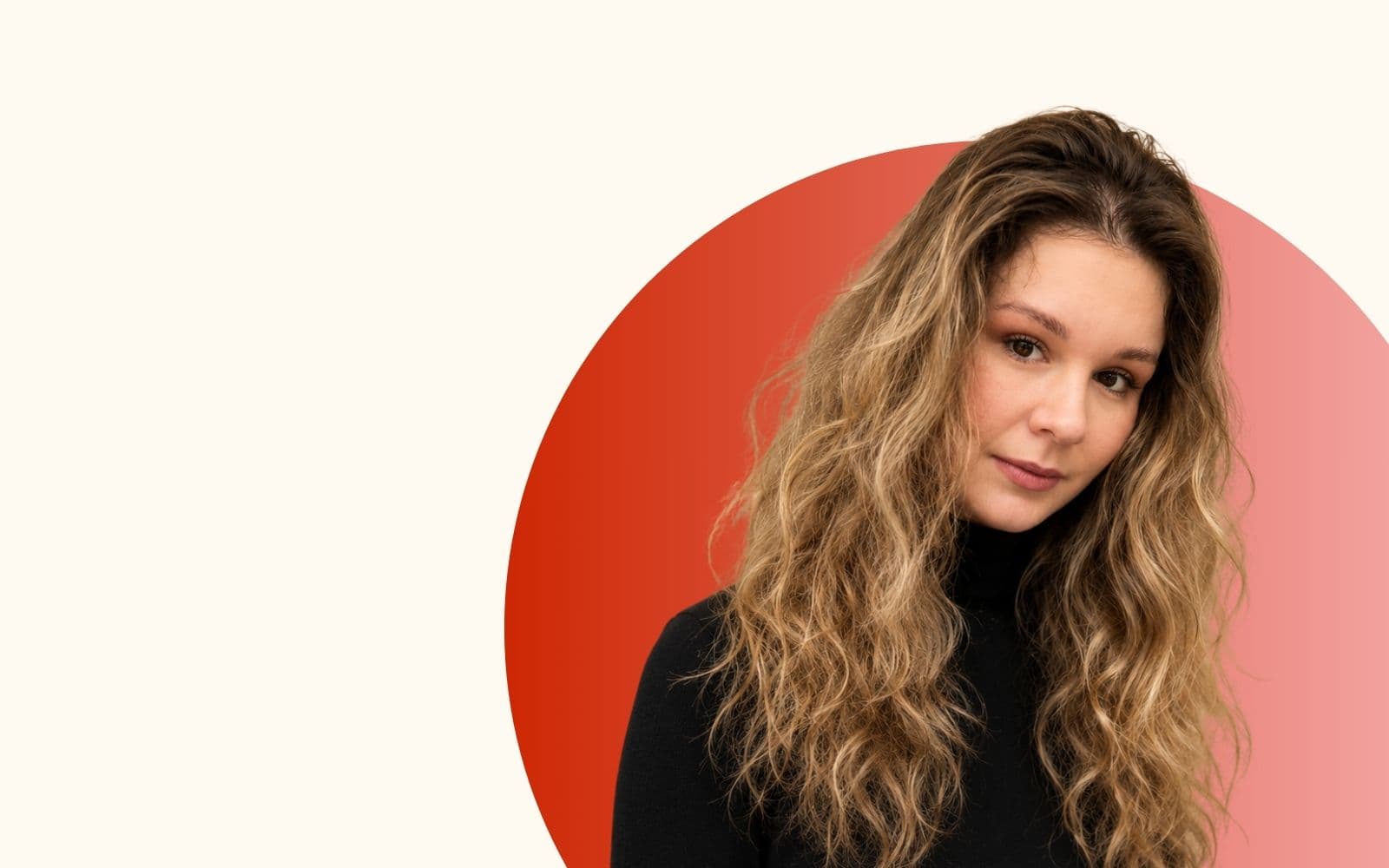
Daria Muslimova is a 28-year-old Ukrainian AI content creator, postgraduate law student, and mother of a young son. She discovered AI while on maternity leave, taught herself the tools in the hours her son gave her, and earned her first revenue within two months of completing her training. Today she creates AI-generated images and videos for businesses and brands across a range of niches, working freelance while finishing her dissertation.
In this interview, Daria talks about what it really takes to earn from AI content as a humanities person with zero technical background, why visual taste matters more than technical skill, how she found her first client through Threads, and why she believes the freedom this work offers is something her generation is only just starting to understand.
The Interview
Can you introduce yourself and tell us what you do?
My name is Daria Muslimova. I'm 28, Ukrainian, and currently a postgraduate law student finishing my dissertation while on maternity leave. I'm also an AI content creator working freelance, creating images and videos for businesses, experts, and events across completely different niches.
I always wanted to be a researcher and a teacher, and I still don't rule out combining that with what I do now and teaching others about AI one day. A year ago I fully immersed myself in this world, and now I simply can't imagine my life without it.
What was the moment that made you take AI seriously?
I got interested in ChatGPT as soon as it became available, but I told myself I wouldn't have enough energy, skills, or time to go deep into it. I was wrong. The real turning point was seeing high-quality AI-generated visuals for the first time. I was genuinely fascinated in a way that very few things have managed to fascinate me.
That was it. I came from a pure humanities background, law and research, no formulas, no code, nothing technical. And that is exactly why I want other women from similar backgrounds to know: if I could do it, the technical barrier is not what they think it is.
How did you actually find the time to learn AI while on maternity leave with a dissertation to finish?
I'm finishing a postgraduate program, and I'm a mom to a young son. So the honest answer is: whenever he allowed me time to study, that's when I studied. At night, just like I work now. I sleep about four hours. I don't regret it, because I'm genuinely passionate about AI content and I don't go to sleep until I've finished what I planned for that day.
I could only dedicate four to five hours at night to studying and working, which meant I couldn't do everything at once: build a portfolio, start on Upwork, run Instagram, and test tools simultaneously. My progress was slower than others. But by the second month after training, I had earned my first money with AI.
How long did it take to start earning, and how did you find your first client?
I don't have a story of easy overnight success, and I think that is actually more useful to share. Because I was working within a very limited window of time every night, I had to make choices about where to focus. I couldn't do everything at once.
By the second month after completing my training, I had earned my first $100, and my very first client came through Threads, which is not the platform most people would think to try. Right now most of my clients come from Ukraine, and I also work on Upwork when possible. I'm at the stage of building recognition and going deeper into digital marketing to grow further.
What does it actually take to earn money from AI content, and what do most people get wrong?
There is nothing particularly difficult about the technical side of AI content. You learn the logic, you figure out which tool works best for which task, and you practice. What is actually hard, and what separates people who build real income from those who don't, is visual taste and strong reference awareness.
Generating something that looks pretty is easy. Generating something that serves a brand, fits a brief, and meets a professional standard is a different skill entirely. People also underestimate how much AI can be trained and guided. Both image generators and text tools respond dramatically better when you give them clear rules, structured prompts, and proper context. The output can reach a level that even experienced photographers and videographers would respect.
What tools do you use every day and how do they fit together?
My core AI stack is Nano Banana Pro for generating images, and Kling 3 and Veo 3.1 for animation and video content (here is a reel example). Those three cover the creative production side of almost everything I make. Beyond AI tools I use CapCut and Canva for editing and finishing, and various apps for planning and finances.
Where does AI end and your own creative judgment begin in your work?
I create a lot with AI, but I never hand over the thinking. Strategy, goals, and content planning I always handle myself. When it comes to creative direction, that is entirely mine. AI executes. I direct. I sometimes work with a designer on Instagram post layouts, but the creative brief and the vision behind it always come from me. That distinction matters a lot, especially in client work, because the clients are not paying for AI output. They are paying for judgment, taste, and the ability to deliver something that actually works for their brand.
What kind of freedom has this work actually given you, even at this early stage?
I can't fully experience the freedom yet because I have a small child, and most of my work happens between midnight and four in the morning. But I can already see what it is building toward. Freelancing in AI content means working from anywhere in the world, choosing the projects you take on, and building something that belongs entirely to you.
I'm constantly in touch with professional editors, retouchers, and creators, and that community aspect is something I genuinely love. My mom could not have imagined this kind of work at my age. That perspective keeps me going on the nights when it is hard.
What mistakes did you make early on that someone starting now could avoid?
The classic story: too many things at once. When you're new, you build a plan in your head and try to grab everything simultaneously. I set myself a goal of two Instagram posts a day and almost burned out completely within the first few weeks. I also did not choose the right course at the start.
There are so many options available, with so much advertising behind them, that it is genuinely hard to navigate as a beginner. My advice: choose a course by an experienced individual creator rather than a school that teaches many things at a surface level. Depth matters more than breadth when you are starting out. And understanding which AI tool works best for which task, and where it is cost-effective to use each one, is knowledge worth prioritising early.
What is your message to women who are curious about AI but think it is too technical for them?
If we are talking about AI for content creation, I am a pure humanities person. There are no formulas, I promise. The barrier most women imagine is much smaller than the real one. The real challenge is not the tools. It is consistency, taste, and the willingness to keep going when the results are not yet where you want them to be.
My advice is simple: believe in yourself, show your work, and talk about yourself everywhere, even while you are still learning, and keep doing it consistently. The income, the clients, and the freedom follow the visibility. Start before you feel ready. You can find me and my work on Instagram, or reach me at dariamuslimova.ai@gmail.com.
JOIN AK ACADEMY
AK Academy brings together courses, workshops, interviews, and a community to help women build practical AI skills for real professional use.