Interview
How Denise Used AI to Merge Two Careers She Thought She Had to Choose Between
with Denise Millar, Founder of Sage Holistic & AI Atelier, Brighton
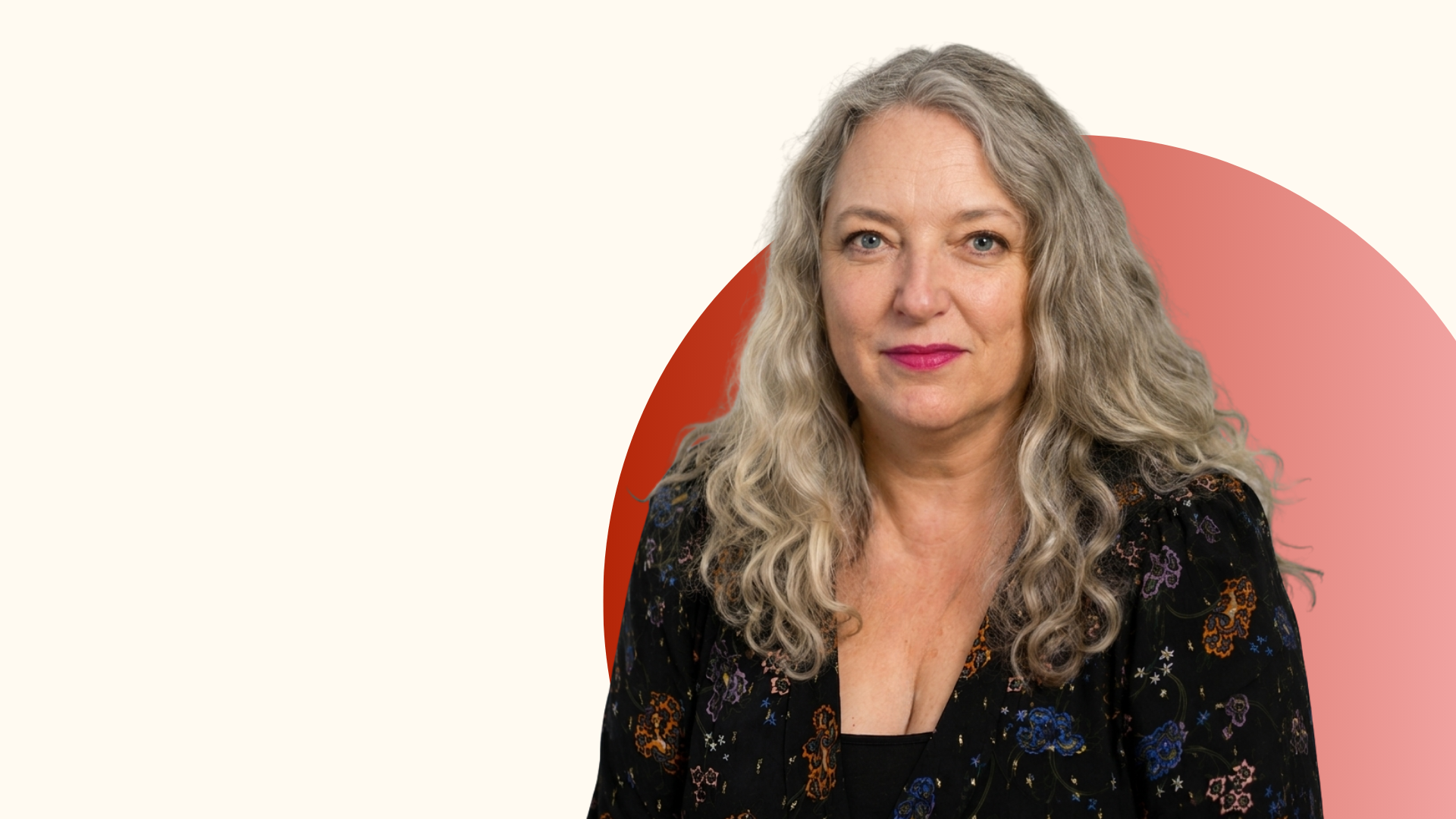
Meet Denise
Denise Millar is 58, based in Brighton, and has spent her career moving between two worlds she could never quite reconcile: fashion design and health. She studied printed textiles, ran multi-million pound accounts for major UK high street brands, built her own fabric print company that exhibited in Paris, lived in Bali for five years running a slow fashion label, then returned to the UK, trained as an acupuncturist, and built a wellbeing clinic before lockdown closed it. She discovered AI just over a year ago through a government-funded course, and it is the first thing that has genuinely allowed her to bring both sides of her career together. Today she runs Sage Holistic, her wellbeing product brand, and AI Atelier, her freelance AI creative practice for fashion and wellbeing clients. You can follow her work on LinkedIn, Instagram, and on her website.
In this interview, she talks about how two intensive courses transformed her skills, what the allergen compliance GPT she built taught her about practical AI, how community and creative partnerships replaced traditional job applications, and why she believes age is not the barrier most people assume it is.
The Interview
Can you introduce yourself and tell us what you do?
My name is Denise Millar, I am 58 and based in Brighton, UK. I run an ecommerce wellbeing brand called Sage Holistic, and I recently set up AI Atelier where I freelance creating AI images, content, and videos for fashion and wellbeing brands. For a long time I felt torn between two worlds: fashion design and health. AI is finally the thing that is allowing me to bring them together. You can find my work and connect with me through LinkedIn, Instagram, and my website, all linked above.
Your background is extraordinary. Can you walk us through the path that led you here?
I studied art and design, majoring in printed textiles for fashion and interiors, then completed a master's combining print with public art and fabric installations. I spent many years in the fashion industry in London running multi-million pound accounts designing and producing for major high street brands, and built my own fabric print company called Iona Print which exhibited in Paris twice a year. After some health issues I took a year off travelling, discovered different health modalities, and ended up studying for a three-year degree in Five Element Acupuncture while still working part time in fashion. Then I moved to Bali for almost five years where I designed my own ethical & slow fashion label called Beach to Boudoir, using my own print designs on hand screen and digital printed fabrics. Local artisans helped bring the garments to life, and leftover fabric scraps became Balinese dolls sold through a local charity that taught women sewing skills, literacy, and financial independence.
It was one of the most meaningful things I have been part of. My old range can still be seen on instagram
What were you doing just before you discovered AI?
After returning from Bali, I set up Sage Holistic, a low-cost clinic locally funded so that people with life-threatening illnesses and their families could access affordable treatments and learn about their bodies and health. Then lockdown happened, the funding disappeared, and practitioners moved on. Out of that difficult period came the wellbeing product range I still run today: massage oils and diffuser oils made with essential oils, kept deliberately affordable so people can access natural products that work even when illness is present. I was running that business but struggling with the social media side of it. That is what eventually led me to AI.
How did you first get into AI, and what made you go deeper?
About a year ago I signed up for a government-funded AI course run locally in Brighton by Creative Process. I was genuinely sceptical. I thought I had made a mistake, that everyone would know more than me, that I was too old.
The usual fears that come with trying something completely new. Two things on that course changed everything. The first was a custom GPT I built with my tutor's help to handle allergen compliance calculations for my product recipes, a task involving adding up numbers like 0.000052 that would have taken me months manually. The second was discovering GAMMA, which let me turn everything I had written into beautiful health blogs, workshop documents, and course handouts with professional layouts and images. Seeing that, something in me got genuinely excited for the future.
I could see how AI could free me from the mundane parts of running a business and give me back the creative work I love.
How did your learning go from that first course to where you are now?
After the first course I went straight into a second, far more intensive one: two full days a week online for twelve weeks, with homework, live client projects, and tight deadlines that mirrored real professional work. I was basically a hermit for those three months. We worked individually and in small teams with people from film, teaching, social media, and special effects backgrounds, which meant every project brought a completely different mix of skills into the room. Learning to work in a team again after years of working alone was its own education.
Some people were brilliant at editing, others at voice-overs, scripting, music, or prompting for specific camera angles and lighting. By the end I felt confident enough to start sharing my work publicly and putting myself forward for real opportunities.
Since then the learning has never stopped. I have taken courses, followed creators online, and experimented constantly. What I find interesting looking back is how much the tools themselves have changed.
The ones I trained on at the start had serious flaws: six fingers, plastic skin, faces that lost consistency mid-sequence. Those same tools are dramatically better now. Anyone starting today is beginning from a much easier position than we did, which I think is genuinely encouraging rather than frustrating.
What does your day-to-day work actually look like now?
My day is never the same twice. Early morning I catch up on LinkedIn posts and messages, saving anything interesting to watch later. Then I check orders for Sage Holistic, answer emails, and if it is quiet I get straight into my AI design work.
I usually have several projects on the go and go back to each with fresh eyes to decide what needs tweaking, deleting, or developing into video. As a creative partner with three AI platforms I also experiment with new tools they release and post honestly about what worked, what did not, and what could be improved. My top tools right now for fashion and lifestyle are Caimera for garment sketches, ghost images, editorials, and short form video; Lumoo for fashion editorials with node-based workflows and Seedance video integration; and Weavy for custom models, product shots, and building professional workflows. I make a specific point of not working past 6:30pm, otherwise my mind stays wired and I cannot sleep. I have woken up thinking I had finished something, only to realise I had been dreaming about it.
How did you find your first clients and build your professional presence?
A few months after consistently posting on LinkedIn, an agency approached me to help promote the launch of a major AI technology platform. I was given free credits, experimented with their tools, and posted about what I found on launch day. That led to becoming a creative partner with several AI companies, which means free credits, early access to new tools, and real-time feedback relationships. I also joined AI communities on LinkedIn including the AI Motion Pictures Awards, the 28 Portraits human form group where I posted a new portrait image every day for others to see, AI Tag, and AI Portugal. Through that networking I met people who put my name forward to other AI companies.
The community aspect has been as important as any course. People at all stages share tips, workflows, and honest critique. We are genuinely all learning from each other in real time.
What has been the hardest part, and what surprised you most about this journey?
Putting myself out there to be critiqued when imposter syndrome creeps in, and wondering whether age might be a disadvantage. But confronting that has also been the biggest liberator. I had been out of the fashion industry for a while and worried that younger, tech-savvy people had surpassed me. What I have realised is that I also have decades of professional business skills, design knowledge, and judgment that only come from the work I have put in over the years, and AI bridges the gap between that experience and the new tools. The hardest technical lesson was learning that when you are too close to a project you are not the best critic.
My tutor once told me to cut what I thought was the best sequence in a beauty advert. I was gutted. But after sleeping on it I could see exactly why: the model's hair was dry when it should have been wet, and the face consistency was not as sharp.
That judgment, knowing what is actually good and what just feels good because you made it, is the hardest thing to develop. I am still working on it.
What mistakes do you see people make when they start with AI?
Signing up to too many AI platforms at once. It becomes overwhelming very quickly. Start with a few, or use an aggregator like Freepik, Higgsfield, or ImagineArt that has multiple tools under one roof.
The only tools I would buy separately for design work are Midjourney, Kling, ChatGPT, and Claude. I also made the mistake of chasing every new shiny tool someone mentioned. Most of the time it was a great tool but not relevant to my industry, or I already had something similar in an existing subscription. Read the credits usage carefully before committing to anything. Some platforms do not let unused credits roll over each month even when you have paid for them, and the costs add up fast.
Always trial something for a full month before signing an annual contract, and read reviews from people in your specific industry, not just general users.
What has AI actually given you personally, beyond the work?
It has given me back my confidence and my creativity. I am excited about life again in a way I had not been for a while. It brought joy and a spring in my step back into my day-to-day work.
It also opened my world to an incredible network of diverse creatives online who share knowledge, tips, and genuine friendship. AI is also finally allowing me to bring together the two careers I spent years feeling torn between: fashion design and health and wellbeing. I can now see a clear path where both are part of the same work, and AI is what made that possible. I am not fully there yet in terms of income and complete flexibility. I am still learning and building.
But I try to remember to stop and appreciate how far I have come in a short space of time, because it is easy to focus only on what is still ahead.
What would you say to a woman who thinks she is too old or not technical enough to start?
If I can do it, so can you. And before you say you are too old: some of the most impressive people I follow online are older than me, excelling in confidence, talent, and skill, and they have not been doing this long either. What they all have is curiosity, and what they all did was use their existing skills as the starting point. On my course there were single mums, unemployed mature artists, and a working teacher with two kids whose husband was in cancer treatment.
If they could manage everything on their plate, the barrier is not what you think it is. AI gives access to tools that were previously expensive, time-consuming, or completely out of reach. It will not replace hard work, curiosity, or creativity, but it can level the playing field in a real way. For women changing careers, returning to work, or building a business, it creates opportunities that simply did not exist a few years ago.
Jump on and have fun. It might be the best thing you have done in a long while.
JOIN AK ACADEMY
AK Academy brings together courses, workshops, interviews, and a community to help women build practical AI skills for real professional use.