Interview
How Emma Created Australia's First AI Celebrity and Stumbled Into a New Form of Storytelling
with Emma Barbato, Creative Director of MissEm.AI and Duke & Dame Media, Australia
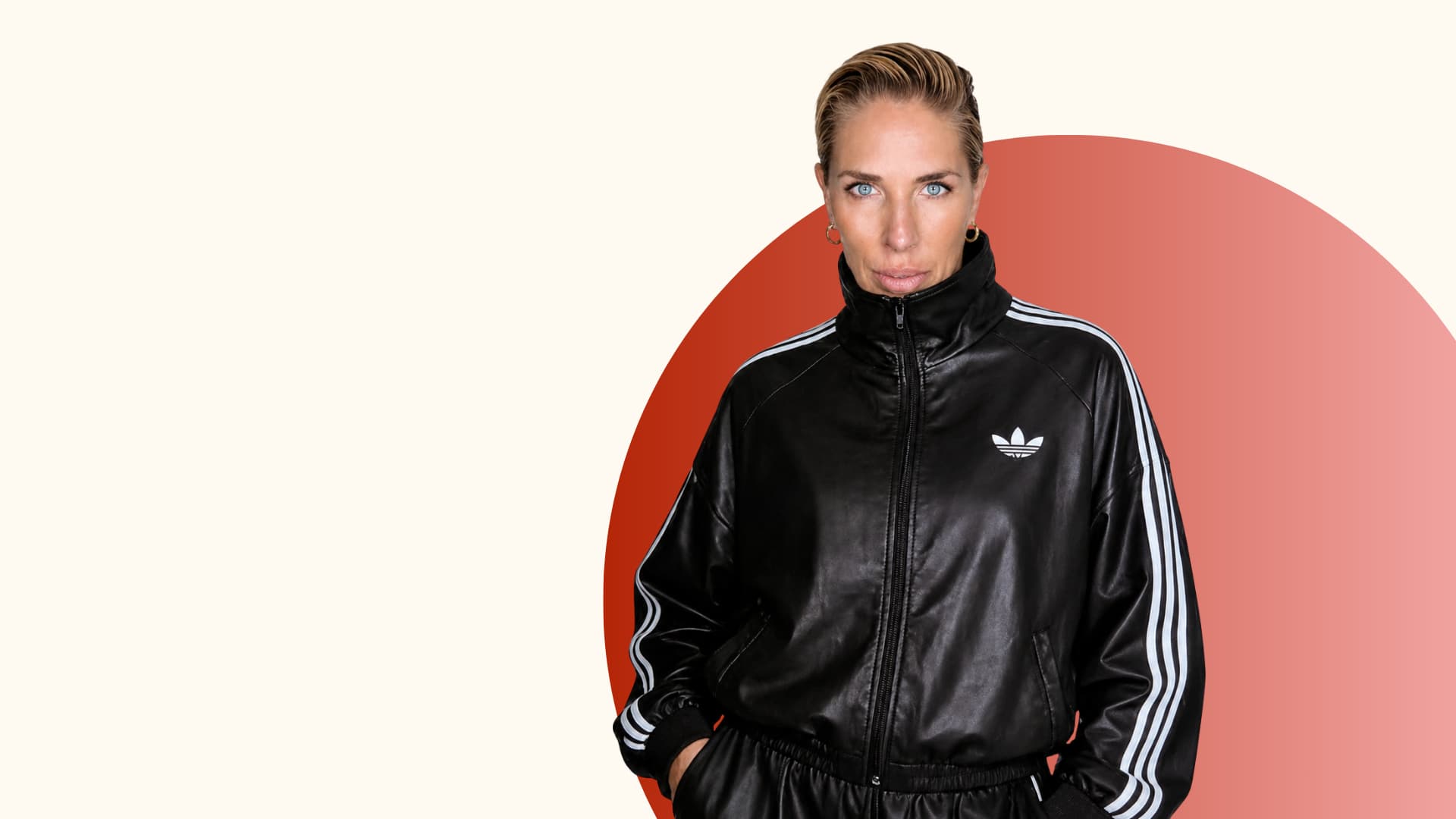
Meet Emma
Emma Barbato is the Creative Director of MissEm.AI and Duke & Dame Media, and the creator of Bruce Ryder, Australia's first AI celebrity: a fictional character from 1978 who wears gold satin suits, smokes, drinks, and has a weekly radio show on all major streaming platforms. What started as a solution to a branding problem for a men's body care brand became an entirely new form of entertainment. Emma is now one of the leading voices in hyper-fiction, an AI-native storytelling genre where audiences co-author the story in real time, and is about to launch hyp-fiction.com, a curated publication dedicated to the emerging genre.
In this interview, she talks about how Bruce outgrew the brand he was created for and ended up in academic papers, why the skills that matter in AI are imagination and disregard for the rules rather than technical knowledge, and why she believes this is the one moment in history where everyone, regardless of background, is genuinely at the same level of the game.
The Interview
You created Bruce Ryder, Australia's first AI celebrity, while trying to solve a branding problem. What actually happened?
I owned a men's body care brand called Ducks Nuts Balls, and I needed to replace the face of it, who happened to be my husband. He couldn't keep up with the content demands of running an e-commerce brand. Around the same time I was watching AI-generated ambassadors appear internationally, and I got hooked on the curiosity. Rather than casting for one, I could create one.
The gateway flung open: I could write the most ambitious creative brief imaginable, with no traditional production limits, and this character could expand the brand's universe, not just represent it. Bruce Ryder was born out of that experiment, and through him I stumbled onto an entirely new form of storytelling that's since become the obsession of my work.
Bruce started as an ambassador for a body care brand and ended up with his own radio show and academic citations. How did that happen?
Bruce wasn't a side project, he became part of the business while growing into something bigger than the products he represented. He was no longer the ambassador, he became the product. Within about a year he'd outgrown the brand entirely. What started as body care is now a weekly radio show, the Bruce Ryder Show, on all the major streaming platforms, and that's when the conversation shifted to entertainment, AI and the future of storytelling.
Bruce was even referenced in academic papers and worked into the curriculum at the Australian Film and Radio School. Now I'm about to launch the hyper-fiction publication which focuses entirely on the rise of the genre, the characters and the evolution of the category.
What is hyper-fiction, and why do you think it's the next frontier of entertainment?
Hyper-fiction is an emerging form of AI-native storytelling where audiences don't just watch a story unfold, they interact with it, influence it, and become part of it, co-authoring it in real time. I've spent most of my career obsessed with the same riddle: how do you get the consumer to play, to co-author the story as it unfolds?
Plenty of creatives want to control the narrative start to finish for the sake of continuity. I was always the opposite. When generative AI arrived, the limitations that used to kill ambitious ideas on the CFO's desk got sucked into a vacuum. The people who adopted early had already blown the gates open.
You had no technical background at all. What actually mattered when learning AI?
Absolute zero. I'm not a programmer or data scientist, my background is visual storytelling across multiple forms of media. One of the biggest misconceptions is that you need to get technical before you can use AI creatively. I don't believe that's true. AI isn't a craft in itself, it's an amplifier of the craft you've already spent years building.
For me, the skills that mattered weren't prompting, they were imagination, curiosity, and disregard for the rules. So I learned by doing: YouTube, articles, communities, the odd course for a specific tool, but nothing taught me as much as opening the software and experimenting until I burnt through tokens like you wouldn't believe.
You launched Bruce in public before you knew what you were doing. Was that a deliberate strategy?
Pretty much straight away, but not in the traditional agency sense. I launched Bruce in May 2024, and because the technology was evolving so fast, nobody expected perfection. I wasn't waiting to become an expert, I was documenting an experiment in public, in real time. There were no experts, just curious creatives.
I never set out to build an AI agency. Bruce was the project, and everything else grew from there: keynotes, government speaking, consulting on interactive AI and the future of entertainment. It's been a wild ride.
What does your day actually look like now, two years in?
I've moved from being deep in the tools to overseeing the bigger picture: the creative direction of Bruce Ryder, the publication and staying across the culture, keeping him connected to the wider narrative. In practice with Bruce: I write every script myself, direct all the content, and produce the weekly show while simultaneously doing interviews, writing articles and speaking events.
The bigger freedom hasn't been financial, it's been creative. I don't need permission to build something ambitious anymore, no network, no studio, no huge budget required. If I wake up with an idea at 2am, I can start building it at 2.05am. My top tools right now are Seedance, ElevenLabs, a mix of lip-sync tools alongside traditional editing software, and Claude Cowork to manage all my projects and run agents for most of my research work. But here's the important part: I still write everything myself, every script, every line of dialogue, most of the time, by hand.
What is the biggest mistake you see people make when they start with AI?
Treating AI as the source of imagination instead of the tool that expands it. Mine was the same one every early adopter makes: trying absolutely everything until the dopamine dries out. Eventually you realise the tools don't need to keep improving before the audience catches up with them, or you end up with a fun hobby that makes cool stuff, not a body of work.
Some days it felt like white-knuckling the steering wheel of a drag car. Eventually I realised: the tools don't need to get much better. We need our storytelling, taste and ethics to catch up with what the technology's already capable of.
You said that for the first time, women are not climbing a ladder that already exists. Can you say more about that?
I don't think this is about women being uniquely positioned. Anyone willing to step in early and go for it is on equal footing right now. For the first time, women are not climbing a ladder that already exists, we're building it together. This is the one moment where I believe we are all at the same level of the game.
The people who define this next chapter won't necessarily be the most technical. They'll be the ones brave enough to get in the front seat of the drag car and floor it. One of the creators behind Chloe vs History, one of the biggest AI characters out there, was a customer service rep with zero tech or entertainment credentials. Don't wait for someone to tell you you're qualified.
What is the new economy you see being built around hyper-fiction?
A combination of collaborations, merchandise, and what will soon become the economic framework for most hyper-fiction: microtransactions. Fans will build their own economy around this medium, the way we've already seen with Roblox and Fortnite. It's about building worlds people want to co-invest in.
Surprisingly, the most important tool has been community. Actual people. The one thing everyone's afraid AI will cost us is our connection to each other. All it's done for me is connect me with more of them. This is what hyp-fiction.com will be dedicated to: curating, education and publishing the new economy.
What do you say to a woman who thinks this world is too technical for her?
Stop looking at AI as a technology and start looking at it as a creative medium. You don't need permission, a qualification, or to wait until you know enough, because none of us know enough. That's the beauty of being here this early.
Nobody has all the answers. Finally, no experts, just a bunch of half-baked creatives flying by the seat of curiosity. The industry moves too fast for anyone to call themselves an expert, and it's a breath of fresh air.
JOIN AK ACADEMY
AK Academy brings together courses, workshops, interviews, and a community to help women build practical AI skills for real professional use.