Interview
How Erika Built a Cross-Industry Marketing Career and Made AI Her Competitive Edge
with Erika Opali, Marketing Leader, Sydney
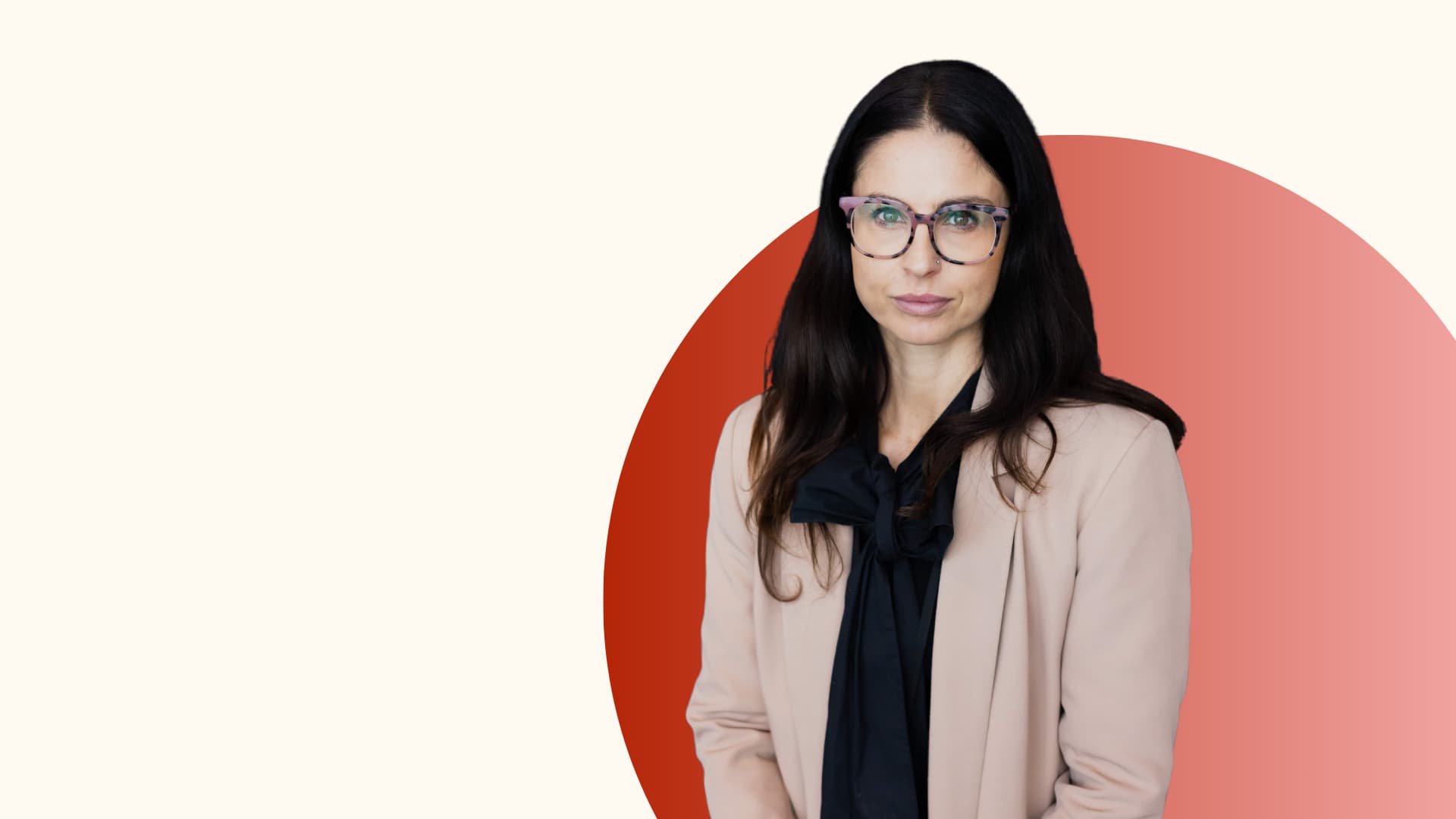
Meet Erika
Erika Opali is a marketing and growth leader based in Sydney, originally from Italy, who has spent her career building brands and driving commercial results across fitness, wellness, and fintech. She launched a men's grooming brand from scratch, spent five years at Technogym contributing to the 300% growth of the Australian business in 5 years and now works at CMC Markets looking after the High Net Worth and institutional segment that represents 70 percent of the business's revenue. She uses AI across every part of her working day, from a Claude-powered morning briefing to custom ChatGPT agents that run daily competitor reports.
In this interview, she talks about how a language barrier became the unexpected reason she adopted AI early, why the first question she asks herself each morning has fundamentally changed, what a time-blocked AI-assisted working day actually looks like, and why she believes doing a great job is never quite enough on its own.
The Interview
You contributed to 300% growth at Technogym in five years. What did that actually teach you about marketing?
The biggest turning point before Technogym was building a brand from scratch. I launched a men's grooming brand called Buck's Grooming when nobody knew the brand and, to be honest, I didn't really know how to build one either. The biggest challenge was digital marketing and e-commerce because I had no formal training in those areas. Every day I had to learn, experiment, analyse the results and figure out what worked. It was a steep learning curve, but it taught me resilience, creativity and how to think commercially.
That experience was then strengthened when I joined Technogym, where over five years I was able to apply those entrepreneurial skills within a global organisation,contributing to the double digit growth year on year of the Australian business. At CMC Markets, I've been able to transfer those same brand-building principles into a completely different industry while also learning much more sophisticated processes and ways of working that come with a global fintech company. Looking back, my career has been a combination of learning by doing, continuously challenging myself and adapting those skills across different industries.
AI changed the question you ask yourself first thing in the morning. What do you mean by that?
Before AI, my first thought was: how do I do this? Do I need to hire someone, find more time or engage an agency? Now my first question is: can I do this myself with the support of AI? It has shifted my mindset from outsourcing problems to finding ways to solve them more efficiently myself.
Every morning I receive two AI-generated reports. The first is a summary of all my emails, highlighting what's urgent, upcoming deadlines and any actions that require my attention. The second is a report on competitor activity and any relevant market developments. These are two tasks I used to do manually every morning, and together they could take hours. Now, within minutes, I know exactly what's happening, whether a competitor has made an important announcement and which emails need my immediate attention.
English isn't your first language, and you work in marketing where words are everything. How did AI change that?
I first started using ChatGPT partly because of this. English isn't my first language, and working in marketing made that particularly challenging at times. You often need to write persuasive copy, develop campaigns that feel culturally relevant and use language that resonates with a local audience.
ChatGPT became an incredible learning tool. It helped me expand my vocabulary, improve my writing and communicate with much more confidence. Since then, I've incorporated AI into many aspects of my work to improve both productivity and the quality of my output. I love technology and I love change, so when AI emerged, I didn't see it as a threat. I was genuinely excited and curious to explore what it could do.
Walk us through your full AI stack and how each tool actually fits into your work.
ChatGPT is my strategic thinking partner: daily competitor analysis, custom GPTs and agents for specific campaigns, analysing large datasets across multiple spreadsheets using Codex, building campaign strategies and marketing plans, creating creative briefs, image generation and concept visualisation, and interview preparation.
Claude is my productivity and thinking assistant: daily organiser, email summaries and prioritisation, framework creation, long-form writing, project planning and breaking down complex problems into structured thinking. Microsoft Copilot for tidying and improving emails and quick document editing inside Microsoft 365. Canva AI Magic Studio for presentations, social media creative generation and image editing. And Notion AI for project management, brainstorming, meeting notes, SOPs and capturing learnings. I also have a branded GPT that allows me to write content with the same tone of voice across everything.
What does a well-structured working day actually look like for you now?
The first thing I do every morning is check my calendar. I have a custom AI assistant in Claude that summarises everything happening that day, along with a summary of my emails. From there, I write my priority list, identifying the one to three key projects I need to focus on while also factoring in my meeting commitments. I spend no more than 30 minutes responding to emails before moving into project work.
When I'm working on a project, I set a 45-minute timer so I can stay fully focused without distractions. Only once that session is complete do I check Teams messages or respond to other requests. I also block out dedicated time for emails and messages just before lunch and again around 4:30pm. Anything that isn't urgent is left for quieter periods later in the week. The afternoons are usually spent in meetings or delivering projects. The work is incredibly varied and can range from creating a social media campaign, organising an event, developing a client acquisition promotion, tracking campaign performance and reporting on results. Every day is different, which is one of the things I enjoy most.
What do people consistently get wrong about what marketing actually requires?
People often assume marketing is all about creativity, but in reality the two skills that matter most are project management and people skills. Marketing sits at the centre of the business, so you're constantly coordinating multiple projects, managing competing priorities and bringing different teams together to deliver a common goal. One of the most important relationships I've built throughout my career is with the sales team.
I've always believed that sales should see marketing as an extension of their own department rather than a separate function. When that partnership is strong, marketing becomes much more effective because campaigns are aligned with commercial objectives and everyone is working towards the same outcome. The other area people often underestimate is stakeholder management. Strong communication, the ability to influence without authority and keeping everyone aligned are essential. At the end of the day, marketing isn't just about delivering great campaigns, it's about delivering measurable business results.
What has been the hardest part of building your career, and what do you wish you had known earlier?
The hardest part hasn't been learning marketing itself, it's been constantly having to prove myself in new environments. I've moved across industries, from fitness and wellness to fintech, and each transition meant learning a new market, new customers, new regulations and new products while still being expected to deliver commercial results quickly. Building credibility with stakeholders and showing that the fundamentals of great marketing are transferable has probably been the biggest challenge.
I wish I had known earlier that doing a great job isn't always enough. I used to think that if you worked hard and delivered results, opportunities would naturally come. I've learned that you also need to build your personal brand, make your achievements visible and actively invest in your network. Your reputation often opens doors before your résumé does.
How do you think AI will change marketing specifically over the next few years?
I think AI will create new opportunities for marketers. It will make marketing more efficient by automating repetitive tasks, allowing us to spend more time on strategy, creativity and building relationships. One area I do have concerns about is entry-level marketing roles. Many of the tasks traditionally handled by junior marketers can now be automated, so future marketers will need to be AI-literate from day one while also developing strong soft skills such as communication, critical thinking and stakeholder management.
I also believe we will see renewed investment in human connection. As AI-generated content becomes harder to distinguish from reality, experiences that build trust, such as events, partnerships, communities and authentic brand engagement, will become even more valuable. The people who will stay relevant won't be the ones who know every AI tool. They'll be the ones who know how to identify opportunities, solve problems and combine AI with strong human skills. That's where the real value lies.
What would you say to a woman who thinks AI is too technical for her?
You've probably been using AI for years without even thinking about it. The text prediction on your phone is AI. The chatbots that help you on websites are AI. Even the car you drive likely uses AI in some way. It's already part of our everyday lives. You don't need to understand everything about AI to benefit from it. Instead, shift your mindset. Rather than asking how do I learn AI, ask yourself: is this task something AI could help me with? Or could this process be automated?
Start small. Pick one or two repetitive tasks and experiment with using AI to make them faster or easier. As your confidence grows, you'll naturally discover more ways to use it. You don't need to become technical, you just need to be curious. And remember: it takes many failures to create success, so don't give up after the first obstacle. Every challenge is part of the journey and an opportunity to learn.
JOIN AK ACADEMY
AK Academy brings together courses, workshops, interviews, and a community to help women build practical AI skills for real professional use.