Interview
From Film School to AI Studio: How Estelle Found Her Creative Voice
with Estelle Jouandet, AI Visual Creator, Paris
Meet Estelle
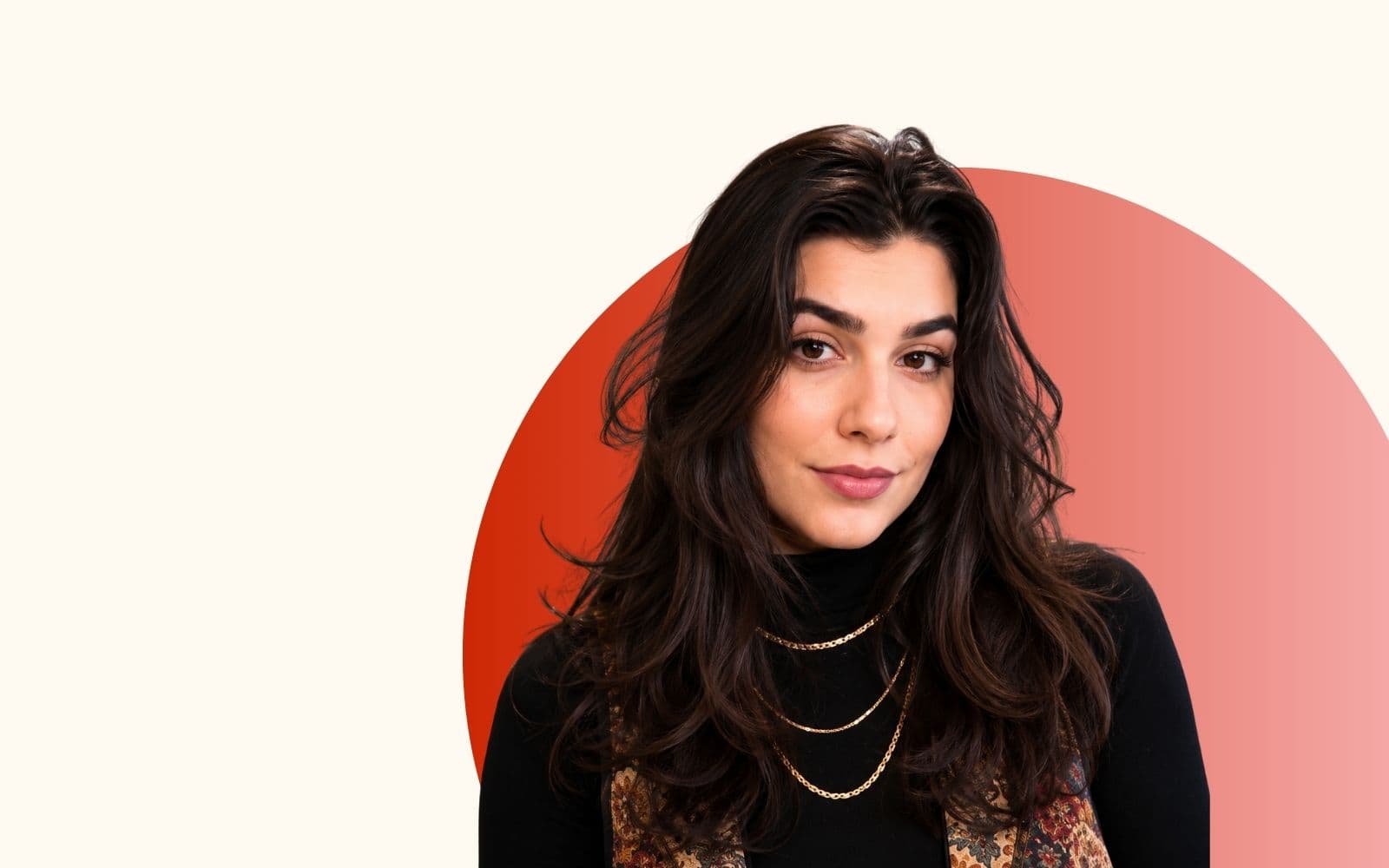
Estelle Jouandet is a 27-year-old French-Brazilian AI visual creator and communication assistant based in Paris. She studied film at Paris 1 Panthéon-Sorbonne with the ambition of becoming a director of photography, before shifting toward the creative industries and discovering AI as the tool that finally allowed her to produce the visuals she had always imagined, without a production budget or a team. Today she creates AI-generated images and videos for brands in fashion, beauty, and accessories, using Midjourney, Nano Banana, and Kling, and is preparing to begin a Master's in fashion communication in September 2026.
In this interview, she talks about why she left film, how she built a visual practice from zero through consistency and courses, how being visible online led to her first professional collaboration before she felt ready, and why she believes the eye behind the tool matters far more than any technical skill.
The Interview
Can you introduce yourself and tell us what you do?
My name is Estelle Jouandet, I'm 27, and I'm based in Paris. I'm French-Brazilian, and growing up between those two cultures shaped my sensitivity and the way I see the world from very early on. Today I work as a communication assistant at Nat & Nin, a French leather goods brand, where my role covers community management, content creation, influencer collaborations, event planning, press relations, and photoshoot production.
Alongside that, I'm developing a freelance practice in AI visual creation under Yugen Axe AI Studio, working mainly with brands in beauty, fashion, and accessories. I also volunteer as a peer support worker in mental health at La Maison Perchée, helping create safe spaces for people living with mental health conditions.
You came from film school. How did you end up in AI and fashion?
I studied film at Paris 1 Panthéon-Sorbonne because images and photography have fascinated me since I was very young. My plan was to become a director of photography in the film industry. What changed that plan was the persistent sexism I encountered in that field, which made me question whether there was really a place for me there.
I stepped back and chose a broader path, a Master's in Management of Arts and Creative Industries at KEDGE Business School, where I explored architecture, design, music, theatre, and museums. That was where I first encountered AI as a creative tool, and where I had the first clear intuition of the direction I wanted to pursue.
What was the moment that made you want to go deeper into AI?
At KEDGE, several classes introduced us to technological innovations in fashion and the creative industries, including 3D, AI, and the metaverse. It felt like discovering a new creative playground and a glimpse into the future of the industries I wanted to be part of. The real trigger came when I realised that AI could allow me to bring my creative ideas to life entirely on my own.
I had a strong ambition to become an image director for a fashion brand, and I wanted to prove I was capable of developing full creative concepts and visual directions, even without a production budget. AI became the tool that made that possible. More than a shortcut, it felt like a way to validate my ideas and demonstrate my value in a very concrete way.
How did you actually learn, and what resources made the real difference?
I started completely from zero, no technical background at all. In the beginning I learned mostly through YouTube tutorials, experimenting and trying to understand how the tools worked on my own.
When I wanted to go deeper, I invested in online courses: Mastering AI Fashion Photography, and two courses specifically focused on Midjourney and visual refinement. It was a very hands-on process, a lot of trial and error, a lot of curiosity, and above all, consistency. Today, I interact with Midjourney almost like I'm talking to a friend. I know how to structure ideas, describe a feeling, and guide the tool toward something that sometimes exceeds what I originally had in mind.
How did your first professional AI opportunity actually arrive?
It came in a completely unexpected way. I had applied for a graphic design position at a creative studio in Paris and did not get the job. A few weeks later, they reached out to me again, not for the original role, but because they had seen the AI visuals I was sharing on Instagram and LinkedIn.
They were not specialised in AI, but they were curious about it, and my work had caught their attention. That experience taught me something important: sharing your work publicly matters, even when you don't feel fully ready. The opportunity did not come from a formal application. It came from being visible.
What tools do you work with and how do they fit together?
My core stack is Midjourney, Nano Banana, and Kling. I use Midjourney for highly creative and visually strong images when I want to explore concepts, push aesthetics, and create editorial or artistic work. Nano Banana I use specifically for product integration, inserting products into visuals in a realistic and controlled way, which is essential for brand collaborations. Kling handles animation and video, bringing still images into movement.
Beyond AI tools, I use ChatGPT to refine ideas and structure prompts, DeepL to translate prompts into English since tools like Midjourney respond better to English than French, and Pinterest to build moodboards and shape the visual direction before I start any project. Each tool has a specific role. The workflow always begins with creative thinking, not generation.
What is the biggest mistake you see people make when starting with AI?
Jumping straight into the tools without developing a strong artistic direction first. AI can generate visuals very quickly, but without a clear vision, a personal style, or strong references, the results feel generic. I made this mistake myself at the beginning. When you start, it is very tempting to copy what you see, especially when certain aesthetics seem to work well for others. But I quickly realised it was limiting my creativity.
Over time I understood the importance of building from my own references, my own inner world. That is what makes work stand out. AI is just a tool. What matters is the eye behind it.
What does the freedom this work gives you actually look like right now?
I want to be honest: AI does not give me full financial freedom yet. I'm still studying and doing an apprenticeship, so most of my AI work happens in the evenings and on weekends. I have already had to turn down collaborations because clients expected someone available full-time and did not realise I was still a student.
What it does give me is flexibility and a sense of possibility. I can work from anywhere, as long as I have my computer. I can supplement my income. And I can build something that is genuinely mine. What I enjoy most in this work is being able to translate ideas, moods, and concepts into images in a very direct way, almost without limitation. That creative freedom is hard to find elsewhere.
If someone wanted to start earning from AI creative work, where would you tell them to begin?
Start by building visibility. Create a professional account on Instagram and LinkedIn and post your work regularly, even while you are still learning. Consistency matters more than perfection at this stage. Engage with others in your field, follow accounts you admire, comment, interact, and share. Before even thinking about selling, focus on being seen.
My first collaboration came not from a pitch or a proposal, but from someone who had simply been watching my work online. Visibility did the work that a cover letter could not. Position yourself early, experiment openly, and do not wait until you feel legitimate before starting. That moment rarely arrives on its own.
What is your message to women who feel intimidated by AI or think it is too technical for them?
Feeling intimidated is completely normal, but it should not stop you. A lot of women grow up with a form of impostor syndrome that makes them feel not technical enough or not legitimate in fields like this. But that is something we have been conditioned to believe, not a reality.
AI is not only about technical skills. It is also about creativity, intuition, and perspective, and those are things many women already bring in a very strong way. Recently I came across a quote by Nigo that stayed with me: Do or do not. There is no try. It applies perfectly here.
If you want to learn AI and change your career or your income, you have to fully commit. Not just think about it. Start, experiment, put yourself out there, and keep going. That is how things actually begin to shift.
JOIN AK ACADEMY
AK Academy brings together courses, workshops, interviews, and a community to help women build practical AI skills for real professional use.