Interview
The Creative Director Who Rode the AI Wave from the Very Beginning
with Inés Dueñas, AI Creative Director, Spain
Meet Inés
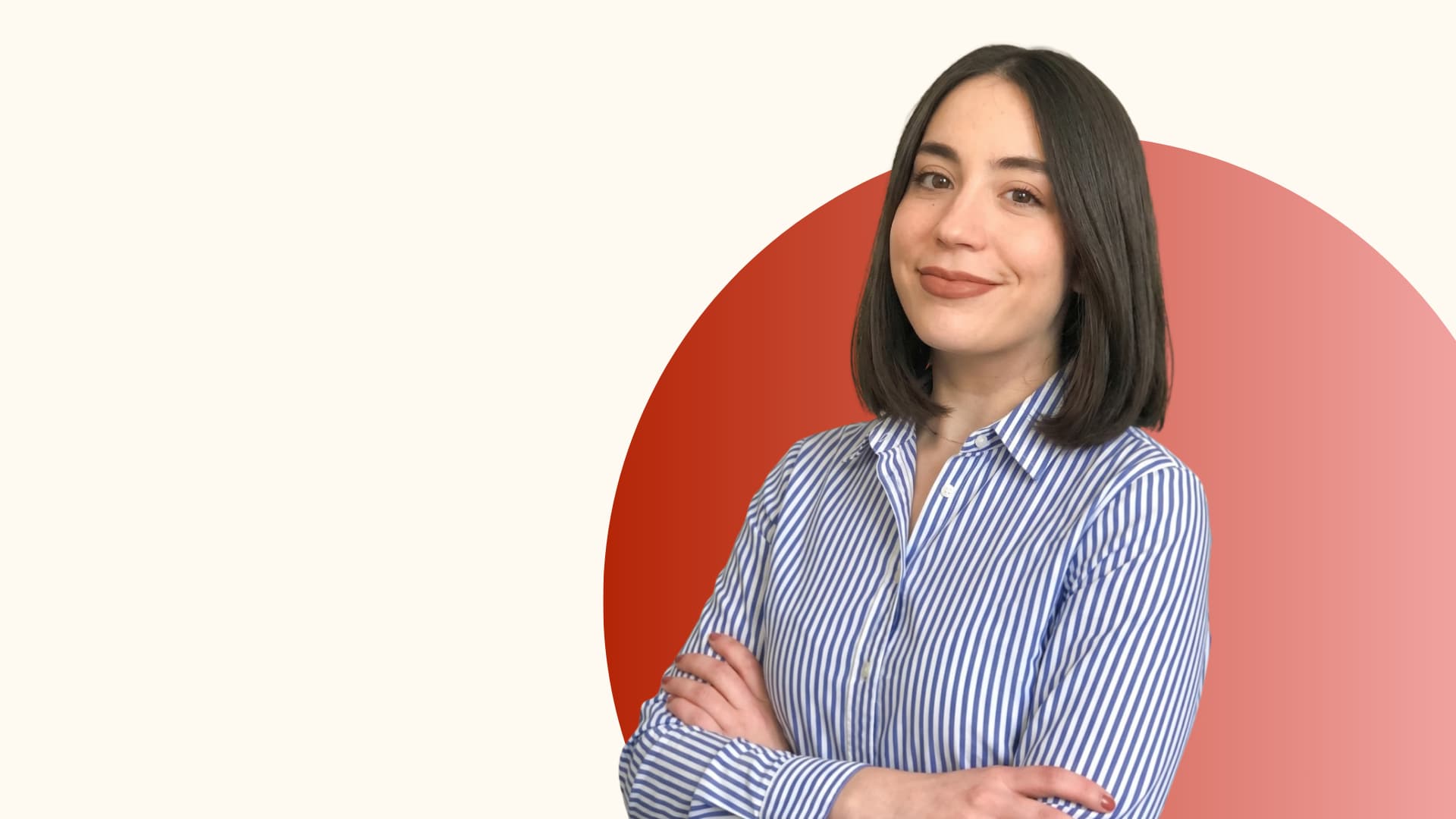
Inés Dueñas is a 31-year-old AI Creative Director based between Barcelona and Cádiz, Spain, with nine years of experience across branded content, editing, and creative direction. She discovered AI as a creative tool in 2021 alongside a visionary manager who saw where the technology was heading, and has been building at the intersection of creativity and AI ever since.
When most people were still watching the Will Smith spaghetti video, she was already building node-based workflows at Jellysmack, scaling content for some of the world's biggest creators. Today she works across social media campaigns, short films, and video concepts, with a stack that includes Seedance, Kling, ElevenLabs, Claude, and ComfyUI.
In this interview, she talks about why a strong creative foundation matters more than any AI course, what the wow-effect fever is and why it holds so many people back, how she thinks about the difference between work AI can own and work that still needs human hands, and why she believes women's perspectives are exactly what this industry needs more of.
The Interview
Can you introduce yourself and tell us what you do?
I'm Inés Dueñas, I'm 31 and I split my time between Barcelona and Cádiz in Spain. I'm a Creative Director and for the past five years I've been dedicated to the AI field, which means I focus on integrating AI into all the creative processes across my different roles.
Throughout my nine-year career I've moved through branded content, editing, lead editing, and creative direction before stepping fully into the creative AI world.
I've always been a bit of a geek and genuinely tech-oriented, including getting my hands into code to automate creative workflows. It is a field I enjoy and one I would not rule out returning to more deeply in the future.
You studied engineering, then left. How did you find your way into creative work and eventually AI?
I was good at maths and numbers, so at 17 I planned to study engineering. Of course I did, and of course I left. It was not for me. I found my real vocation watching films and series and imagining being the person behind them. That pulled me into the creative world, where I stayed and built my entire career.
The move into AI came naturally from there. I have never been one of those creatives who rejected AI. I embraced it from the very beginning as just another tool, without much drama around it.
A lot of that was shaped by a manager I had around 2021 who already had the vision of what AI would become. Alongside him I developed my path, explored, and found incredibly rich opportunities. A curious mind plus AI is an explosion, possibly a little addictive.
What was the specific moment that made you go deeper into AI?
Around 2022 I was working at Jellysmack, a company that scaled content for some of the biggest creators in the world across social media. I became obsessed with automating scripting and storylines for creators, and with generating the most hyper-realistic content possible.
Back then there was only one AI video most people remember from that era: Will Smith eating spaghetti. We were already building node-based workflows that went well beyond that.
That obsession compounded on itself. Every result I got made me want to push further. Curiosity really is the engine in this field. Once it kicks in properly, it is very hard to slow down.
How did you actually learn AI, and what would you tell someone starting from zero today?
A lot of my friends in the creative world ask me what the best course is, and I always give the same answer: AI really only needs one thing, and that is you. A lot of curiosity and enough time exploring the tools to understand what you can and cannot get out of them.
More important than any course is having a strong creative foundation. You want to position yourself as a creative who has enough autonomy and problem-solving skills to fix the messes AI inevitably creates.
If I were starting today, I would follow the most influential creative voices in the field, subscribe to every YouTube channel keeping up with what is happening, and happily pay for a month of every new tool just to push it to its limits. Test everything obsessively. To the point of becoming really, really annoying about it.
What does your day-to-day work actually look like?
I work across everything from performance-driven social media campaigns to more creative short films and video concepts. The range is wide and that is part of what keeps it interesting.
On the tools side, I work extensively within the Google ecosystem because from a legal perspective it is one of the safest environments right now.
For hyperrealism, storytelling, and pure cinema, I reach for Seedance or Kling without hesitation. ElevenLabs, Claude, and ComfyUI are also essential parts of my stack. I am also currently exploring Omni, which I think has significant potential. Beyond AI tools, Adobe Creative Suite and visual inspiration platforms are the constant backbone of everything I do.
What kind of freedom has working in AI actually given you?
If you are a good creative by nature, AI genuinely adds something valuable to your profile, and that is not a small thing. It brings flexibility, autonomy, more opportunities, and ultimately a sense of professional freedom that is hard to find in more traditional roles.
Nowadays so many job descriptions specify that they are AI-first, which means having that fluency opens doors that simply did not exist before.
What I enjoy most beyond the work itself is sharing this passion with other passionate people in the industry. And seeing desired results achieved despite the inherent randomness of AI is genuinely satisfying. To me, when that happens, it means the creative has done their job well.
What is the biggest mistake you see people make when they start with AI?
The wow-effect fever. I see many non-creatives jumping on the AI wave and it is easy to spot: the output may impress at first glance, but a good creative can immediately tell it is mostly surface-level impact with very little substance behind it.
We still need great human minds behind the machines, and that is not going to change any time soon.
The other common mistake is frustration. People expect extraordinary results immediately, and when they do not get them, they give up. Getting consistent, high-quality output from AI requires training your eye for detail so you can properly guide and refine what you are generating. That skill takes time to build, and there is no shortcut to it.
What has been the hardest part of staying at the front of this field?
AI demands almost constant attention if you want to stay current, because every two days there is a new best model in the conversation. That level of awareness is genuinely demanding, even for someone who is passionate about it.
It can also be difficult when clients expect AI productions to work exactly like traditional film productions, which at least for now they do not.
Managing those expectations is a real part of the job. The creative possibilities are extraordinary, but the workflows and constraints are different, and helping clients understand that gap is an ongoing conversation rather than a one-time explanation.
If someone in this community wanted to start earning from AI creative work, where would you tell them to begin?
I would say be absolutely sure you can offer something you truly stand behind and defend with all your heart, something with a creative quality that genuinely exceeds your client's expectations. Then, and only then, add AI to the process.
Start with freelance projects, especially smaller static image work, to build confidence and real experience before moving into more complex productions.
Anything related to automating the repetitive, heavy manual tasks has enormous potential right now. Clean work, in my view, still needs human hands. But the tedious groundwork, full social media campaign layouts including branding, copy, logos, and calls to action, AI handles that surprisingly well today and it saves a significant amount of time.
What is your message to women who are curious about AI but feel it is too technical for them?
Dive in head first. We need women's perspectives in this industry. They are valuable, thoughtful, careful, and bring a quality of sensitivity that the field genuinely needs more of.
Becoming a woman with her own voice and criteria in AI requires hard work and dedication, but if you know you are that woman, nothing will stop you.
Decide how you want to apply AI to your career and go all in. It requires persistence, constant awareness of what is happening, and a refusal to become complacent. The technical side is far more accessible than it looks from the outside. What actually matters is creative judgement, and that is something you already have.
You can find Inés on LinkedIn.
JOIN AK ACADEMY
AK Academy brings together courses, workshops, interviews, and a community to help women build practical AI skills for real professional use.