Interview
The Logistics Manager Who Built an AI Creative Career One Partnership at a Time
with Irina Naumann, AI Creator & Creative Partner, Germany
Meet Irina
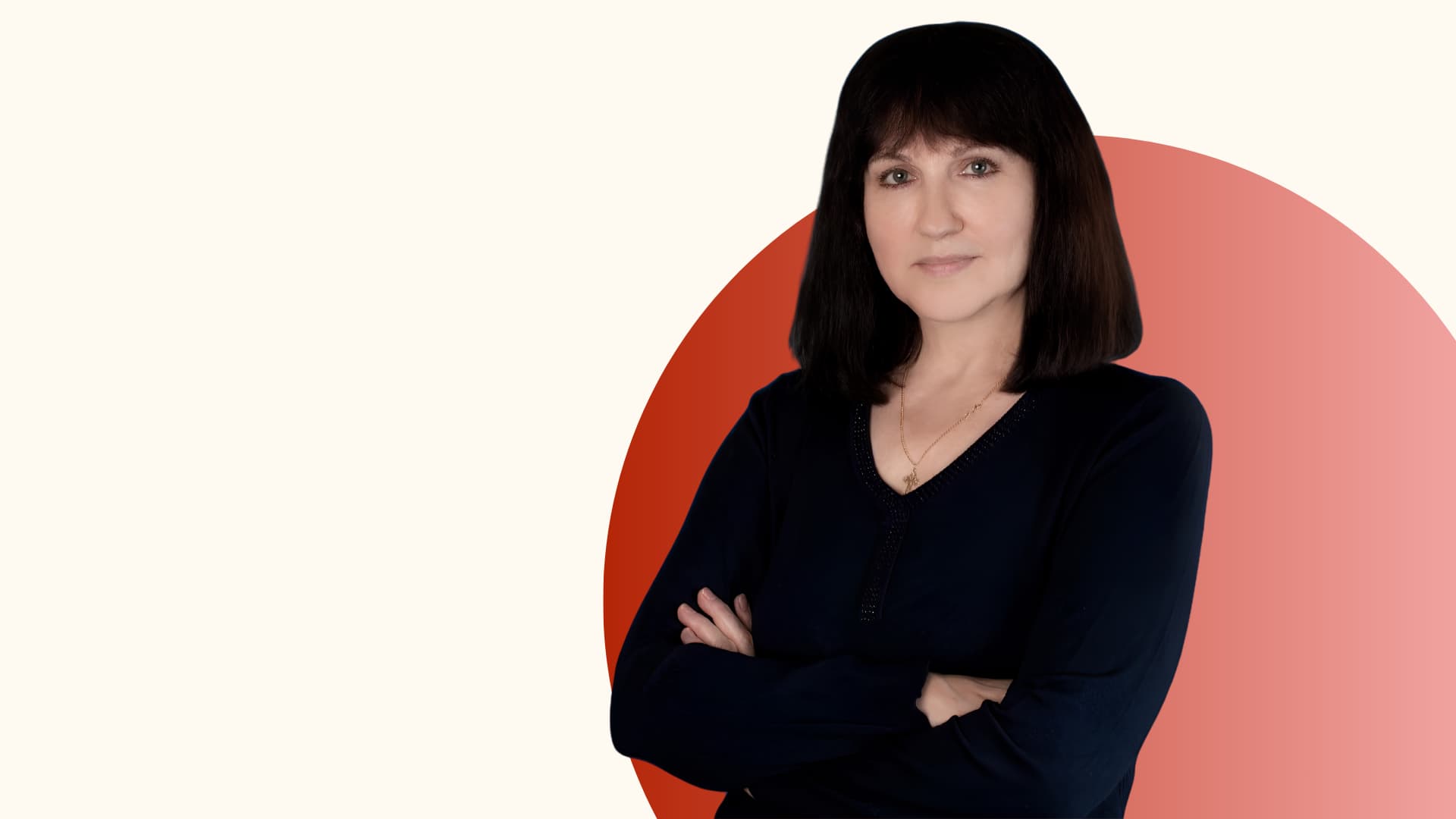
Irina Naumann is an AI Creator, Creative Partner, based near Frankfurt am Main, Germany. She came to AI from an unconventional direction: a qualification as a mining technician in Kazakhstan, a career in international logistics in Germany, 15 years as a professional photographer, and retraining in psychological counselling. She still works full-time in logistics. Since 2023 she has built a parallel creative practice by joining Creative Partner Programs with platforms including Luma AI, PixVerse, CapCut, Higgsfield.AI, and others, earning her first income through AI projects and growing one partnership at a time.
In this interview, she talks about how the English language barrier became an unexpected accelerator, why mastering a few tools deeply beats chasing every new platform, how AI helped her daughter bring an entire illustrated book to life alone, and what she would say to any woman who thinks she is not technical enough to begin.
The Interview
Can you introduce yourself and tell us what you do?
My name is Irina Naumann. I was born in Russia and have been living in Germany, near Frankfurt am Main, for many years. By day I work as a manager at an international logistics company. In parallel I have been building a career as an AI Creator, generating visual and video content using modern AI tools. I also participate in several international Creative Partner Programs, where I test new AI technologies, create projects for various platforms, and take part in creative contests and collaborations. Together with colleagues I am a co-founder of AI-TIM Creative, a community of AI specialists that offers personalised training.
Your background spans mining, logistics, photography, and psychology. How did all of that lead to AI?
My first qualification was as a mining technician in Kazakhstan. After moving to Germany I retrained as an Industrial Management Assistant and built a career in international logistics. Alongside that, I ran a professional photography business for approximately 15 years. Working with images, visual storytelling, and creative projects became a core part of how I see the world. I also completed professional retraining in psychological counselling, a field that intersects constantly with what I now do in AI, because AI raises real questions about mindset, motivation, creativity, and human behaviour. Since 2023 my focus has shifted steadily toward AI and emerging technologies.
The intersection of AI, creativity, and psychology is exactly where I want to work.
How did you actually get started with AI, and what opened the door for you?
My first step was an online course on AI. With the course came access to an international community of creators where people from different countries shared their experiences, tested new tools, and supported one another. It was there I found not just my first AI tools, but genuine friends and like-minded people from all over the world. The first platform to accept me into its partner program was Luma AI. That was where I gained my first practical experience collaborating with an AI company, won my first creative contests, and earned my first money through AI projects. Over time more partnerships followed: PixVerse, Pollo AI, CapCut, ImagineArt, Dreamina AI, Higgsfield.AI, Getimg.ai, and others.
Each one helped me master new tools and better understand a rapidly evolving field.
You kept your logistics job throughout. How did you manage the balance?
I studied new technologies gradually, fitting it around my main job, my family, and everything else that matters in life. There were evenings, weekends, and spare moments wherever I could find them. That gradual, consistent forward momentum is what eventually produced results. I did not burn out because I never tried to do everything at once. About a year after I started learning I felt confident enough to take on my first freelance projects.
By then I had practical experience across multiple tools and a personal portfolio to show. But I want to be honest: learning in AI never truly ends. Even now I am studying new tools and features almost every day.
What was the hardest part of learning, and what would you do differently today?
The biggest challenge for me was the English language. Most new tools, tutorials, and professional communities are primarily available in English, so I had to learn the technology while simultaneously improving my language skills. It was not easy, but the desire to understand the tools was stronger than the difficulty.
As a result I became much more confident in international environments than I ever expected. If I were starting today, I would avoid trying to learn too many tools at the same time. New platforms were appearing constantly and I wanted to test everything. Over time I realised it is far more effective to master a few tools deeply than to have a superficial knowledge of dozens. I would also stop comparing myself to more experienced people sooner.
Everyone develops at their own pace, and the only comparison that matters is between who you are today and who you were yesterday.
What does your creative process actually look like from idea to finished project?
Every project begins with an idea: an image, a visual concept, sometimes just a feeling that needs to be translated into the digital environment. My first assistant at that stage is usually ChatGPT. I use it to create the first draft and form the foundation of a project, then refine using other models depending on what each does best. After that comes the full creative process: scriptwriting, storyboards, animatics, selecting the right AI models, writing and testing prompts, generating images, animations, or video. A single project can combine several tools at once, with each performing a specific task.
My top three tools right now are ChatGPT for research, brainstorming, copywriting, translation, and analysis; CapCut for content creation and video editing; and Suno for music and voiceovers. I also work regularly with Dreamina, Higgsfield, PixVerse, ImagineArt, and Pollo AI, alongside Canva and Pinterest for design and visual references.
What has working in AI actually given you, beyond the professional side?
It has expanded my world in ways I did not expect. Through international communities and creative projects I have found genuine friends and like-minded people across many countries. One of the most powerful discoveries was that AI helps bridge language barriers: a new universal language of creativity has emerged that lets people realise their ideas regardless of where they live or what language they speak. I can see it in my own family too. My daughter writes and illustrates children's books using AI, designing characters exactly as she envisions them. Previously that kind of project required a whole team of specialists. Today, talent, an idea, and the right tools are enough. That is what excites me most about this field: the pace at which it is becoming accessible.
Ideas that once needed massive budgets are now achievable for a single person with creativity and curiosity.
What mistakes do you see people making when they start with AI?
The most common one is expecting results too quickly. People assume they just need to press a button and the AI will instantly produce something perfect. In reality, AI is a tool you have to learn how to use. You need to understand how to formulate tasks, analyse results, and experiment consistently.
Patience and practice still matter enormously. The other mistake I see is trying to learn too much at once, jumping between every new platform the moment it appears instead of going deep on a few. Start with one direction that genuinely interests you and develop within it. AI works best as an amplifier of skills and interests you already have, not as a replacement for choosing a focus.
What would you say to a woman who thinks AI is too technical for her?
I would say: do not let fear make decisions for you. I came into AI from logistics, photography, and creative projects. I had no programming experience. Many tools seemed complicated and confusing at first. But step by step, everything becomes easier. You do not need to know everything in advance. You do not need to wait for the perfect moment. All it takes is curiosity, a desire to learn, and the willingness to take the first step. AI is not only about technology.
It is about creativity, ideas, communication, education, and solving real problems. Your existing experience does not lose its value when you add AI to it. On the contrary, AI helps unlock and amplify what you already know. Sometimes one small step in a new direction changes far more than it seems at the beginning.
JOIN AK ACADEMY
AK Academy brings together courses, workshops, interviews, and a community to help women build practical AI skills for real professional use.