Interview
From Nail Technician to AI Creative Designer: How Iryna Rebuilt Her Career One Tool at a Time
with Iryna Matanska, AI Creative Designer, Poland
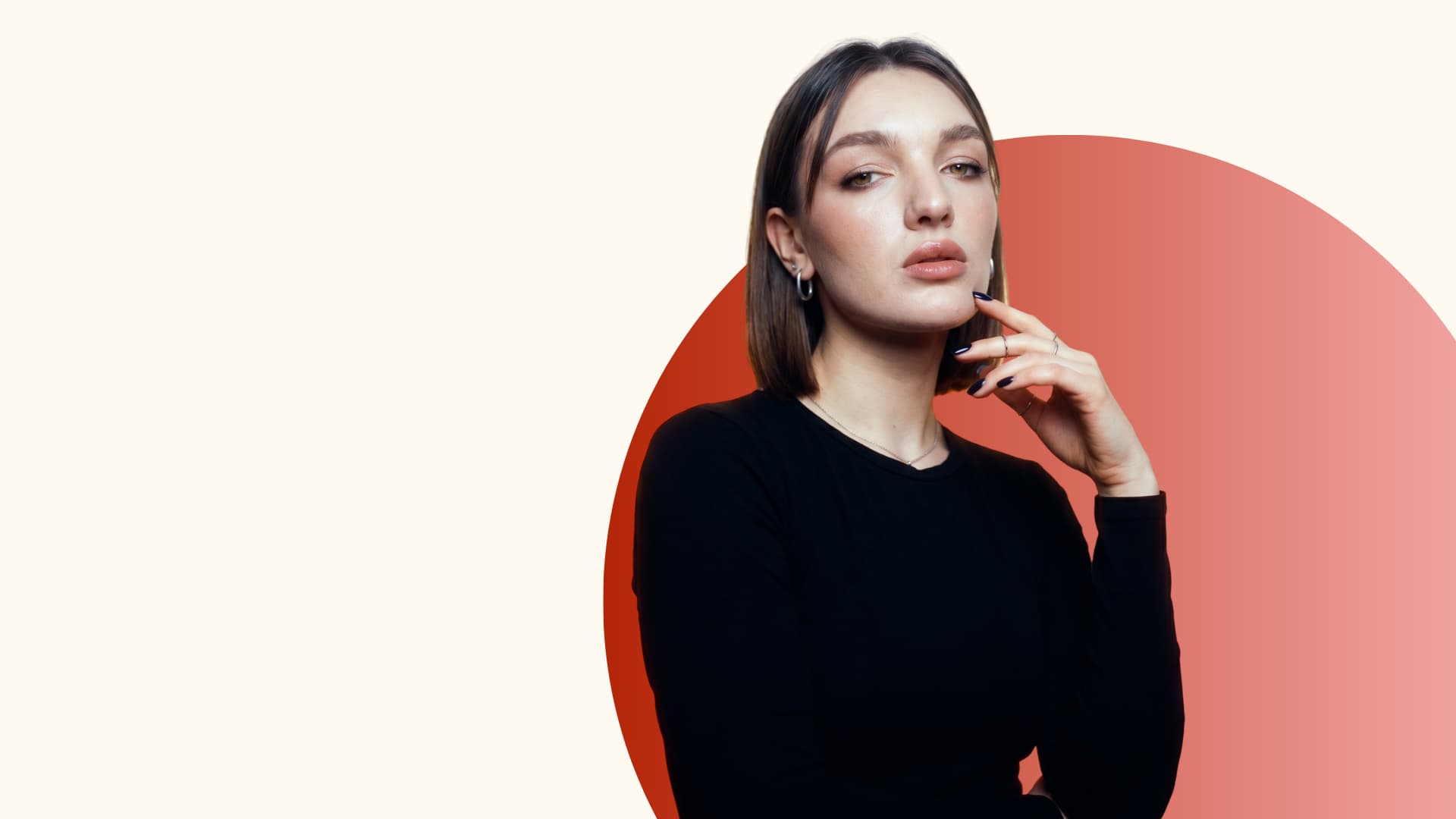
Meet Iryna
Iryna Matanska is an AI Creative Designer based in Poland, originally from Ukraine. She spent seven years as a nail technician before burnout pushed her toward tech, two years studying UX/UI design at Projector Online Institute, and then stumbled into an AI Creative Designer role she was not even looking for on a Ukrainian tech job platform. Today she works as an AI Creative Designer at a company while building @arcanee.ai, her own creative Instagram practice where every model is an AI character she designed and built herself, each with its own identity, aesthetic, and story.
In this interview, she talks about how a client's offhand remark about AI changed the direction of her career, why she learned everything through YouTube, TikTok, and Telegram communities rather than courses, what her goal of making AI models feel like real models actually means in practice, and why AI is not a magic button.
The Interview
You went from nail technician to UX/UI designer to AI Creative Designer. How did that path actually unfold?
While I was at university studying Hospitality and Restaurant Management, I loved doing my friends' nails as a hobby. Over time that hobby turned into a career, and I ended up working in the beauty industry for about seven years. Eventually I reached a point where I felt physically exhausted, burned out, and ready for a new challenge. I knew I wanted to build a career in tech. You know that dream of sitting on a beach with your laptop, working from anywhere? That was exactly what I wanted. Someone told me there was a creative profession in tech called UX/UI Design, and it immediately caught my attention.
I studied at Projector Online Institute for about two years, took on freelance projects, and gradually built my portfolio. Then, while actively looking for a UX/UI design position, I unexpectedly came across a job opening for an AI Creative Designer. I thought, why not give it a try? That opportunity completely changed my career. Looking back, I truly believe that everything happens for a reason. Sometimes the path you planned isn't the one you're meant to follow, but the right opportunity eventually finds you.
AI came into your life through a client conversation. What did she say that stuck with you?
One of my clients mentioned that her friend was an AI developer, and said that soon everyone would be using AI. I remember thinking, hmm, that's interesting. From that moment on, AI became a huge part of my life. At first I simply needed images for my design projects, visuals that matched the same style and colour palette for websites. I became fascinated by the possibilities AI offered and started exploring it more and more.
The more I experimented, the more I realised how much creative freedom it offered. That curiosity quickly turned into a passion, and eventually led me to a career as an AI Creative Designer.
You learned entirely through self-education. What did that actually look like?
I spent countless hours watching YouTube videos and TikTok tutorials, following AI creators, and staying active in AI-focused Telegram communities. I also subscribed to a private AI community where new tools, updates, and workflows were shared regularly. Most importantly, I learned by experimenting and applying AI to my own projects. Working with real tasks helped me understand the tools better and continuously improve my skills. When you truly enjoy what you do, you don't really focus on the difficulties. You see them as interesting challenges and opportunities to learn something new.
Since AI evolves so quickly, I believe continuous learning is essential. I still make time to explore new tools, features, and techniques to stay up to date.
Your biggest goal is to make AI models feel like real models with their own identities. What does that creative practice look like?
I'm passionate about creating short films, AI series, animated stories, and visually aesthetic content. I'm building my own creative Instagram portfolio where every post follows a consistent visual style. All of the models featured there are AI characters that I designed and created myself. I enjoy developing unique identities, aesthetics, and worlds around them. My biggest goal is to make my AI models feel like real models, to build recognisable digital personalities with their own stories, audiences, and presence, blurring the line between virtual and reality.
For my personal content, I work only with my own AI models that I created myself. I develop their appearance, style, and visual identity, and use them to create different types of content. I have many ideas that I want to bring to life, and this is only the beginning.
What does your day-to-day work actually look like, and what tools are at the centre of it?
My day-to-day work includes creating visual content, developing creative concepts, and experimenting with different AI tools and workflows. I recently created an advertising video for Kite, a Ukrainian brand of school and children's products, alongside personal content for my Instagram. My top tools right now are Nano Banana Pro for image generation almost every day, ChatGPT as a creative assistant for brainstorming, prompts, and workflow, and Seedream 5 Pro for high-quality AI images.
For video, Seedance 2.0 has become an essential part of my creative process. I also regularly use Grok and Kling 3.0. Beyond AI, Canva and CapCut help me edit and prepare social media materials. And Claude for writing and improving prompts and developing ideas.
What is the biggest mistake people make when they start with AI?
Believing that AI will do everything for them automatically just because it is AI. In reality, you still need to learn how to communicate with it effectively. You need to understand how to write good prompts, ask the right questions, provide clear instructions, set up AI agents, and explain the task properly. AI is not a magic button. It is a powerful tool that works best when you know how to guide it.
One mistake I made in the beginning was not reviewing my prompts carefully enough before generating. I often realised later that I could have explained something better, which caused me to waste credits. Over time, I learned to write clearer prompts, think through details in advance, and communicate with AI more effectively.
What do you wish you had known two or three years ago?
I would have wanted someone to tell me two or three years ago how much AI would change the world and how quickly it would become such an important part of our lives. People were already talking about AI, but hearing predictions and truly understanding the impact are two different things. I wish someone had told me: in a year, you won't need to spend so much time creating a website design from scratch. Learn how to use AI, because soon you'll be able to build things much faster with the right tools.
I still value my design background, but I believe the future belongs to people who can combine creativity, design thinking, and AI tools effectively.
What would you say to a woman who thinks AI is too technical for her?
AI does have more technical areas, but getting started doesn't have to be complicated. Creating a simple 5 to 10 second creative video by describing your idea in ChatGPT and asking it to translate your concept for an AI tool is something almost anyone can do. You don't even need paid subscriptions at the beginning. Many AI platforms offer free credits or trial tokens, so you can create your first projects without spending money. The most important thing is simply to start experimenting. If you enjoy the process, your curiosity and motivation will naturally push you to learn more.
I would also recommend not leaving your current job immediately. Start learning AI and developing your skills alongside your existing work. Once you begin getting your first projects, gaining confidence, and understanding that this is the direction you want to pursue, you can consider bigger changes. The best approach is to build your new direction step by step.
JOIN AK ACADEMY
AK Academy brings together courses, workshops, interviews, and a community to help women build practical AI skills for real professional use.