Interview
WHOSANGST: How Jovana Built an International AI Art Practice Before Anyone Knew What to Call It
with Jovana Laković, AI Artist and Visual Creator, Belgrade
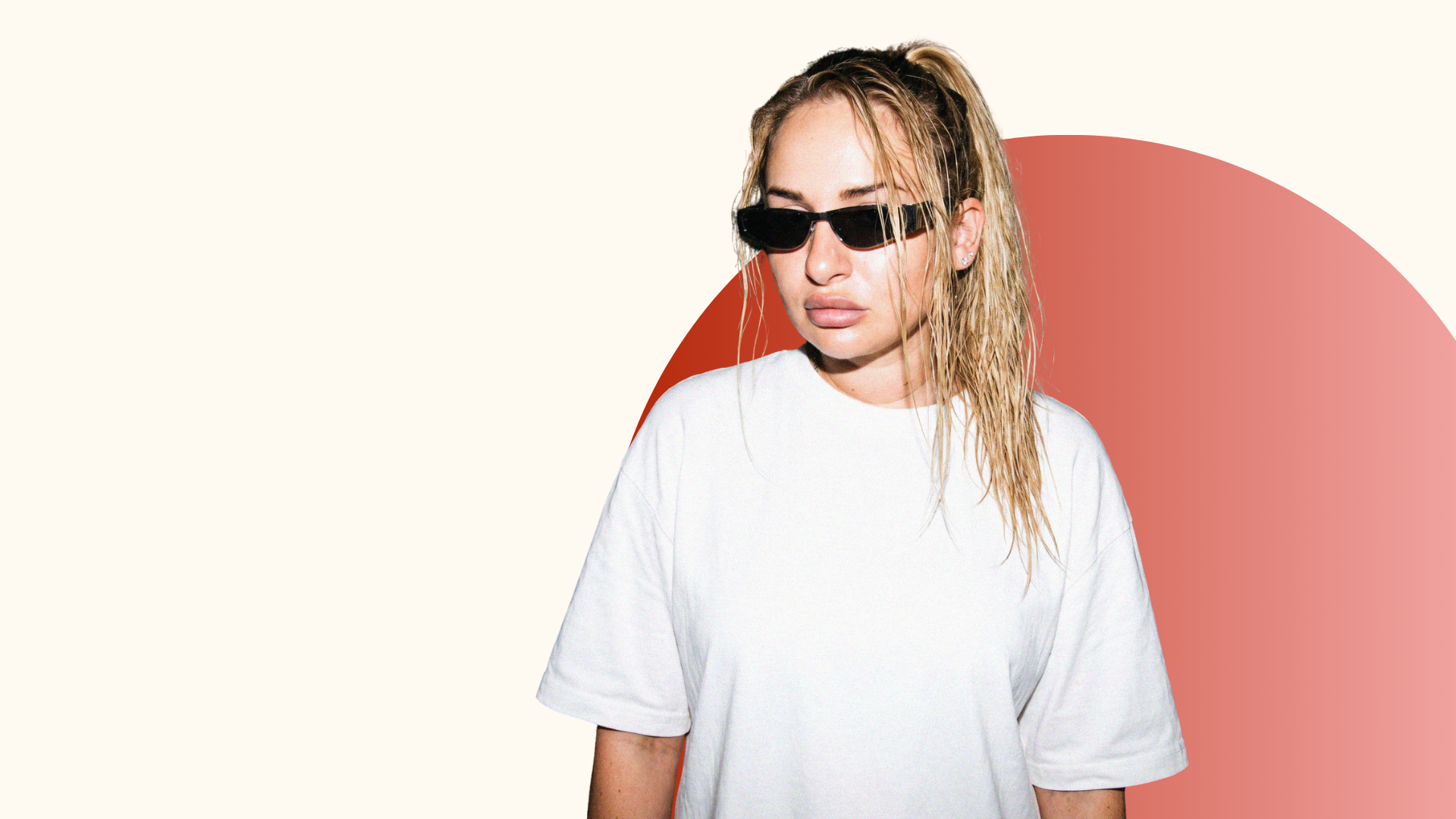
Meet Jovana
Jovana Laković is a Serbian visual artist and AI film director based in Belgrade, working under the name WHOSANGST. She holds a master's degree in Graphic Design and Visual Communication from the Faculty of Applied Arts at the University of Arts in Belgrade, and spent years working as an art director, graphic designer and conceptual artist before generative AI became a serious tool. She began working with AI in 2022 and has since shown work at the National Art Center Tokyo, OFFF Barcelona, where her visuals were projected across the façade of Disseny Hub, and exhibitions in Seoul, Australia, Belgium and Chile. Her work has been published and discussed in Prompt Magazine.
In this interview, she talks about why she was not looking to make images faster, why the machine's first failure was more interesting than its obedience, how she prices invisible labour in a market that confuses speed with simplicity, and why your existing knowledge is not baggage but leverage.
The Interview
WHOSANGST existed before AI. What is it, and how did AI enter a world you had already built?
WHOSANGST is not a logo or a convenient online name. It is the authorial space I created for work shaped by tension, vulnerability, resistance and memory. I was already working as a visual artist, graphic designer and art director across branding, film, docu-drama, cultural projects, street art and independent exhibitions. I developed concepts, wrote narratives and scripts, and learned how an image changes when it has to carry an entire idea.
AI came later. It did not create the artist. It entered the world the artist had already built. My practice combines conceptual video, photography, written narrative, digital manipulation and generative AI. I work with memory, absence, identity, control and raw human emotion, not as themes used to decorate an image, but as material I place under pressure until it becomes visible.
You started working seriously with AI in 2022. What were you actually looking for?
I was not interested in making images faster. I was interested in collapsing the distance between an internal vision and its physical form. AI opened a production space that did not require a large crew, a studio or permission. But I also understood the danger immediately: the machine can generate endlessly, while meaning still has to come from the artist.
The trigger was the first time the machine came close to an image I had carried for years and then failed. That failure was more interesting to me than obedience. I realised I could write a script, build a sequence of references and prompts, push the system through repetition, and force it towards a language that belonged to WHOSANGST. I was not searching for a machine that could replace my hand. I was searching for a new material that could resist it.
You have a master's in Graphic Design from the Faculty of Applied Arts in Belgrade. How did that formation shape the way you work with AI?
It was a five-year programme built around discipline: composition, typography, photography, concept and the ability to defend every visual decision. I never planned a path outside the visual arts. I did not come from programming or computer science. Technically, I had to learn a new system. Artistically, I never started from zero.
I entered AI with formal visual education, years of practice, an archive of references and a very clear sense of what an image must do. Software can be learned. Judgment, endurance and the courage to reject an almost-good image take much longer.
Your work has shown at the National Art Center Tokyo, OFFF Barcelona, exhibitions in Seoul, Australia, Belgium and Chile. How did that happen from Belgrade?
Through the work being visible. My portfolio, exhibitions, publications, social platforms and creative network allowed people to encounter a point of view before they encountered a service list. There was no single overnight breakthrough. The opportunities grew as the work became visible and unmistakably mine. I published complete projects, entered international open calls, worked with artist platforms and treated every self-initiated piece as evidence.
Commercial work followed the authorial body of work, not the other way around. A client does not need another person who can open an AI platform. A client needs someone who can understand the brief, write the concept and script, make difficult decisions and carry the idea to the final frame.
Walk us through what making a film actually looks like from the first idea to the final frame.
The work begins before I open the platform. I research, write the concept and script, define the emotional rhythm and build a visual system. Then I create key images, test characters and environments, engineer prompts, direct variations, animate selected frames and edit everything into a narrative. Colour, sound, voice-over, typography, upscaling and quality control come after that.
A 20-second film can contain hundreds of decisions and many discarded generations. DaVinci Resolve, After Effects, Premiere Pro, Photoshop and Topaz are essential to my post-production process, alongside traditional visual research, writing and storyboarding. Without editing, sound, colour and finishing, most AI output remains a demonstration of software rather than a completed film or artwork. An artist working with AI must also think like a production studio.
What is the hardest part of what you do that nobody sees?
Making invisible labour visible. People see the final 15 seconds and imagine the machine produced it instantly. They do not see the script, failed generations, credit costs, continuity problems, editing, sound design or the years of visual experience behind each decision. The market still confuses speed with simplicity.
My responsibility is to price the full act of authorship and production, not apologise for the technology inside it. The hardest part technically was consistency without sterility. One striking image is easy. A coherent film, recognisable characters, controlled movement, emotional rhythm and one visual universe is another discipline entirely. I had to learn when to keep pushing the machine and when to destroy the entire approach and begin again. Control is not forcing every result to look identical. It is knowing exactly what can remain unpredictable.
What is the biggest mistake you see people make when they start with AI?
They confuse access with authorship. The same platform is available to millions of people; that does not create millions of artists. Beginners often collect prompts and imitate the visual trend of the month before asking what they actually need to say.
A machine can produce content without you. It cannot produce your position without you. In the beginning, I sometimes generated too much before defining the visual rules. I tried to negotiate with a weak image for longer than it deserved instead of returning to the concept. I also learned never to reduce the value of my work because AI is part of the process. The client is paying for vision, script, direction, problem-solving and the finished result, not for the number of buttons pressed.
What would you tell someone who wants to start generating income with AI creative work?
Begin with what is already yours. Bring your existing knowledge, profession or obsession into AI and use the tool to extend it. Then choose one precise problem, build a small but uncompromising body of work and learn to deliver it professionally.
Do not sell AI as a product. AI is available to everyone. Sell judgment, authorship and a result that could not have existed in the same way without you. I would also say: do not make your ambition smaller so that other people can understand it more easily. Enter before you feel ready. Learn one tool, make one real project, finish it and allow it to be seen. Then make the next one stronger. Confidence does not create the work; the work creates confidence.
What do you say to a woman who feels AI is too technical for her?
Fear is not proof that you do not belong. It is often the threshold of a territory you have not entered yet. I did not begin as a programmer. I entered with visual knowledge, discipline and the willingness to continue after the first failure. Technique can be learned.
Do not confuse unfamiliar language with inability, and do not wait for a technical world to grant you authority. Build authority through the work. What you learned before is not baggage. It is leverage. The strongest opportunity is where your existing knowledge meets a problem AI can solve differently.
JOIN AK ACADEMY
AK Academy brings together courses, workshops, interviews, and a community to help women build practical AI skills for real professional use.