Interview
From iGaming to Fintech CEO: How Megan Builds Teams, Cuts Admin, and Uses AI Daily
with Megan Easey, CEO of Xace, Malta
Meet Megan
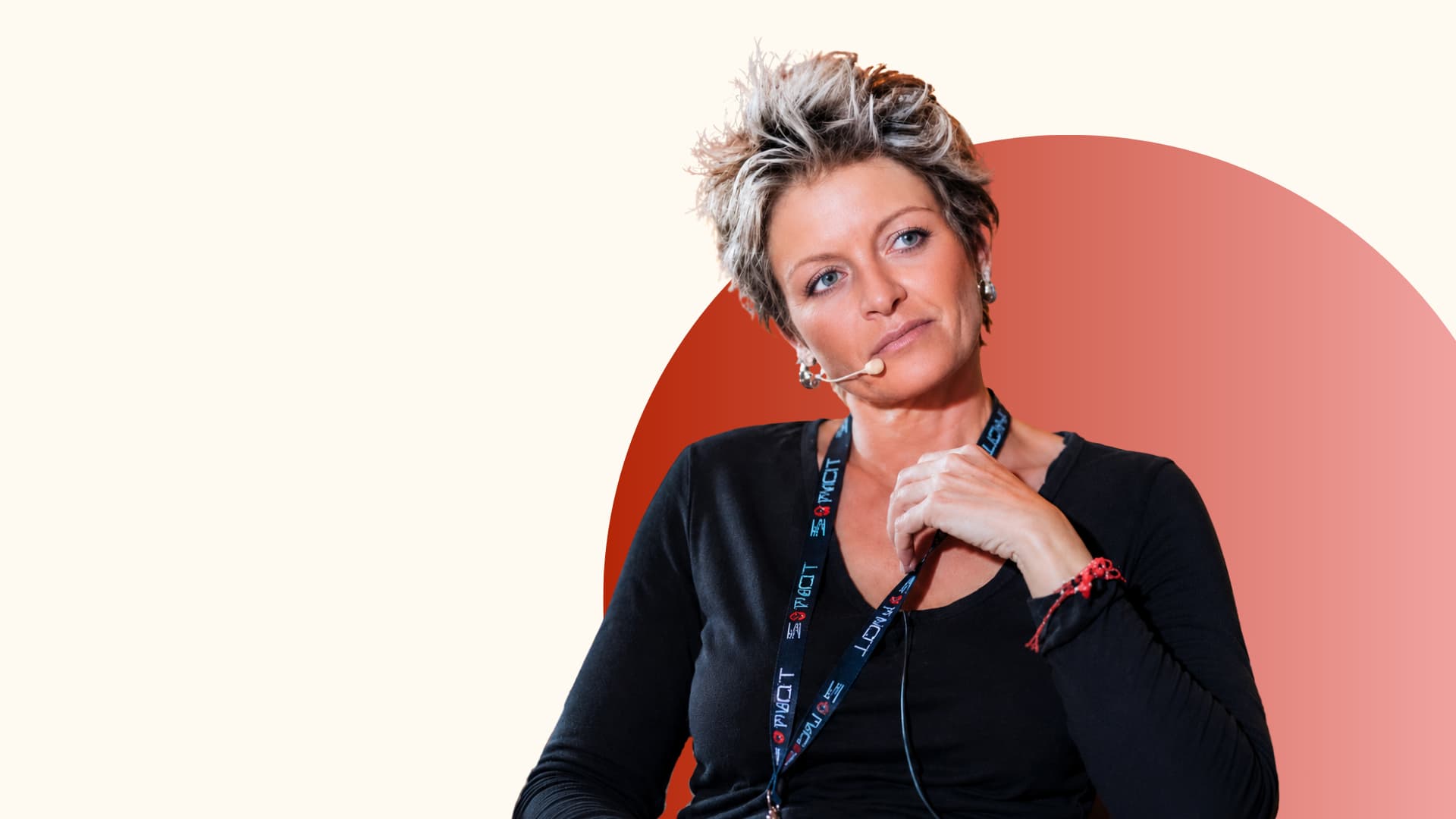
Megan Easey is the CEO of Xace, a Fintech company moving money in a regulated and flexible way across the spaces where hard cash no longer reaches. She is 50, based in Malta, and has spent 25 years building her career from a call centre team leader of six to one of the most senior roles in her industry, across iGaming and Fintech. She studied Psychology and Communications, never planned to be at the top, and got there anyway by focusing on people rather than the ladder. She uses AI daily across Rovo, ReadAI, and ChatGPT.
In this interview, she talks about how she replaced agency fees and meeting minutes with AI, why feedback is the one thing technology should never touch, what remote life in Malta looks like between board meetings and morning swims, and why soft skills are exactly what AI cannot replicate.
The Interview
You never set out to become a CEO. How did that happen?
Climbing the corporate ladder was never my intention. I never set out to be at the top. I've always just wanted to make a difference, and somehow that thinking kept landing me in more senior roles. My career started in 1999 in a customer call centre. I was a team leader of six people, and I learnt early that making team members happy translates directly into business profit. Happy team, happy customers, strong profit. Simple.
Twenty-five years later I am CEO of Xace, a Fintech company that moves money in a regulated, flexible way in the spaces where hard cash and cheques no longer reach. I studied Psychology and Communications, not knowing at the time that those two subjects would be what I exercise every single day as a leader. The corporate world drew me in with its fast pace, organised chaos, and the opportunity to develop people. It never really let me go.
Twenty years in iGaming, then a move to Fintech. What made you cross that line?
I worked in Operations in iGaming for twenty years. The products at Xace span both industries, so the move felt like a natural progression rather than a leap. Fintech is where I landed, and I've been genuinely excited by it. A common misconception is that Fintech is primarily about technology and innovation, when success depends just as much on regulation, compliance, risk management, and trust. People underestimate the complexity behind payments and banking. What looks seamless from the outside involves an enormous amount of infrastructure, judgement, and trust-building behind the scenes. That is what I find genuinely interesting about it.
You were sceptical about AI at first. What changed your mind?
My reaction to AI was a bit like how people reacted to the Industrial Revolution. Mechanisation increased productivity and economic growth. AI feels like the next wave of automating work that humans previously had to do themselves. I was sceptical, then I was converted.
My fascination with automation started in the early 2000s when data was first positioned as king. What blew me away was how fast and accurately today's AI can do what used to take humans days. That said, a pair of human eyes as the final edit is unquestionably vital. I haven't lost sight of that.
What does AI do for you on a practical level every day?
Sheer efficiency. Three tools run most of it. Rovo is Atlassian's AI platform built into Jira and Confluence. It acts as an AI teammate that searches across company knowledge, answers questions, summarises information, and automates tasks. It is like having a very organised colleague who never forgets anything.
ReadAI automatically takes meeting notes, tracks actions and decisions, summarises leadership and board meetings, highlights engagement trends, and creates a searchable record of conversations across the business. It is like having minutes of meetings on steroids.
And I use ChatGPT the way I used to use Google, except the results come from multiple sources rather than one search. I no longer pay an agency to do external competitive analysis on our products. I type X versus Y versus Z and it is instant. That is a real cost saving that compounds over time.
ReadAI in particular seems to have changed how accountability works in your organisation. Can you say more?
It has made accountability more visible, which is one of the hardest things to maintain at scale. After every meeting I can see a clear summary of what was discussed, who is tasked with what, and what needs to happen next. There is no ambiguity about who said they would do something. It is all there, specific and searchable.
For a CEO running multiple priorities simultaneously, that level of clarity removes a significant cognitive load. The follow-up used to fall on me or whoever was taking notes. Now it is handled automatically, and the team knows it.
Where do you draw the line on what AI should not replace?
Feedback. Full stop. You cannot replace a person who delivers feedback in a meaningful way. The nuance, the timing, the reading of the room, the relationship behind the words, none of that translates into a generated output. AI can't replace leadership skills, and I say that as someone who uses it daily.
The most rewarding part of being a CEO is shaping culture, developing people, and helping others achieve more than they thought possible. Great CEOs don't just build businesses. They build teams, future leaders, and a shared sense of purpose. That work is irreducibly human.
What does working from Malta look like day to day?
I start with checking in with team members, and it is not the same people with the same message every day. Each person has their own communication preference. For some it is a formal good morning. For others it is a GIF or a meme that signals shared stress about an upcoming task.
When it is not busy, I go for a swim in the sea in the morning, play a paddle game, or just take a breath and ease into the day. I've lived in Malta on and off for more than a decade and I work mostly remotely, which has changed my life predominantly for the positive. I do miss conversations at the water cooler and laughing out loud in a group. But the freedom of remote work more than makes up for it.
What is the biggest mistake people make when entering Fintech or iGaming?
Thinking that a pure academic education will prepare them for the pace at which businesses grow in the AI world. I learn more each day than I ever could have dreamt of learning in the past. Innovation is simply faster than anything you can learn in a formal environment.
Research the history, the current, and the future of Fintech before you step into an interview. The past is relevant to how we got here. What we are doing now will change, and that change is going to be driven by technology. Embrace AI not as a threat but as the next evolution of what has always driven this industry forward.
What do you think AI will actually change in Fintech in the next few years?
The biggest impact may not be customer-facing at all. It will be the ability for Fintechs to scale operations, compliance, and customer support without needing to grow headcount at the same rate. That changes the economics of the whole industry. It is not the survival of the fittest. Survival is being able to adapt. The companies that figure out how to use AI to do more with the same team, without losing the human judgement that regulation and risk require, are the ones that will pull ahead. That is what I am focused on building at Xace.
What would you say to a woman who wants to grow in her career but feels like the world is moving too fast?
Sign up for ChatGPT. Ask crazy questions. You'll be blown away. The technical barrier that feels so high from the outside is much lower than you think once you are inside it. Choose more of what makes you happy. Money isn't everything, but being good at what you love and staying curious about where it is going will take you further than any plan.
Life is a series of ups and downs. Some things you will really like, some things you won't. The soft skills that people sometimes dismiss as less serious, the listening, the empathy, the ability to develop others, those are precisely what AI cannot replicate. Build those alongside your technical knowledge and you will not be left behind.
JOIN AK ACADEMY
AK Academy brings together courses, workshops, interviews, and a community to help women build practical AI skills for real professional use.