Interview
How Nadiia Built an AI Automation Career from Zero
with Nadiia, AI Automation Specialist
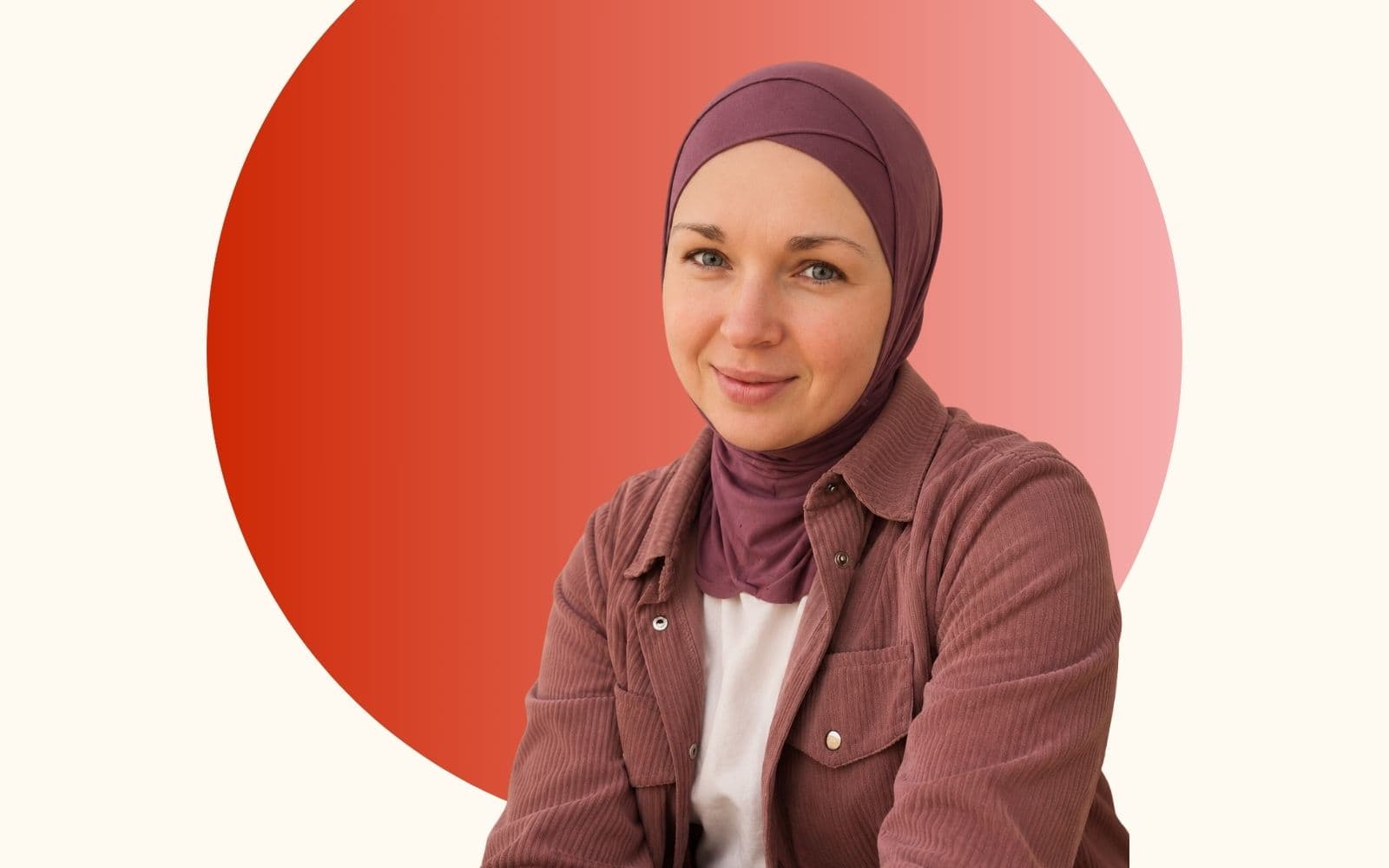
Meet Nadiia
Nadiia is a 38-year-old single mother of three who spent nine years at home raising her children before deciding, during maternity leave, to completely reinvent her professional life. With no tech background and a master's degree in landscape design she had never used, she taught herself full-stack development, then discovered AI automation and built a client base within four months of completing her course.
In this interview, she talks about how she landed her first clients through a mentor programme, what her automation work actually looks like in practice, how remote work has given her the freedom to be both a present mother and a growing professional, and why she believes every woman who is curious about AI is already ready enough to start.
The Interview
Can you introduce yourself and tell us what you do?
My name is Nadiia, I'm 38, a single mother of three, and I have a master's degree in landscape design that I never used professionally. After nine years at home raising my children, I decided during maternity leave that I needed to build something new.
I started with full-stack development courses, worked for a year as a backend developer in Node.js, and then discovered n8n and AI automation, which is now my main professional focus.
I recently completed an AI automation course for businesses and now work with real clients on real automation projects. My children are my motivation. They are proof every day that you can start over and do more than you thought possible.
How long did it take you to go from learning to generating income?
Three to four months from starting the course to having paying clients. I know that sounds fast, but I genuinely did not have the option to move slowly.
Being a single mother means the financial pressure is real and immediate, and that pressure turned out to be one of the most powerful motivators I have ever had.
Women often hold themselves back because they do not feel ready enough. I had to push through that. The moment I decided I was good enough to start, things started moving. The income followed the mindset shift, not the other way around.
How did you find your first clients?
The course I completed had a condition: the best-performing students would receive a job placement with the mentor's company. I earned that placement.
That gave me my first three clients, all real businesses with real automation needs, which meant I was building genuine experience from the very beginning rather than working on practice projects.
Since then, I have been actively looking for additional clients through LinkedIn and Upwork. It takes persistence. Last week, I had a conversation with a potential client in the UK who went quiet afterward. That is normal. Every conversation is an experience, and experience builds confidence for the next one.
How did you manage without a technical background?
When I started, AI tools were not as developed as they are now, so I had to find information myself through a lot of Googling and asking questions. It was harder then.
Today, you have ChatGPT, Gemini, and Claude to help you understand almost anything faster, but critical thinking still has to come from you.
My advice is to learn the core concepts first: understand how platforms and tools communicate with each other, what API calls are, and how data moves between systems. You do not need to master everything before you start. But without that foundation, you will get lost. Once you have it, learning new things on top of it becomes much faster.
What does the freedom this career gives you actually look like day to day?
AI automation work is remote by nature, which means I can structure my day around my children. I am present for them in a way that a traditional office job would not allow.
At the same time, I am building something professionally that is genuinely mine, something I chose, something I learned from scratch at 35 with three children at home. That combination is what I want other women to understand is possible.
You do not have to choose between being a good mother and having a career that grows. This kind of work gives you both, but you have to be willing to invest the time and hold through the period before the income is stable.
Can you walk us through a real project you have worked on?
One of my clients in the US sells sun protection systems through a Shopify marketplace. My job is to take every new order from Shopify and automatically create a new client in their Pipedrive CRM, build out the deal, add the products, assign the right sales manager, and generate a dashboard so the business can see exactly what is happening in real time.
I also built a separate automation that captures incoming calls from Aircall and creates the client record in Pipedrive before the sales manager even picks up the phone, because they were losing leads in that gap.
That is what this work actually is: connecting different tools, making data move correctly between them, and helping businesses see and act on what they are doing. The impact on how a business operates is very real.
What is your advice for someone who wants to start in AI automation without a tech background?
Learn the core concepts first. Understand how tools communicate, what APIs are, and how information flows between systems. You do not need to go deep into programming, but you need that foundation, or you will not be able to troubleshoot when things break.
After that, stop watching tutorials and start doing real work as fast as possible, because nothing teaches you like an actual client with an actual problem. The information coming at you every day is overwhelming.
New tools, new videos, new frameworks. You can spend months consuming it and never build anything. The experience that actually changes your career comes from real tasks, real feedback, and real mistakes that you have to fix.
What is your message to women who are thinking about making this kind of career change?
You are good enough. That is the first thing. The doubt that stops most women is not about skill; it is about permission, the feeling that you need more credentials or more experience before you are allowed to try. You do not.
Approach learning the way children do: they fall, they get up, they try again, and they never question whether they deserve to figure it out. Prepare financially so the transition period does not break you.
Save enough to cover a few months without a stable income, because the gap between starting and earning is real, but it is temporary. And know that what you are building is not just a career. It is proof to yourself and to your children that it is never too late to become someone new.
What do you think about the risk of leaving a traditional career path for something new?
The risk is real. There is a gap between where you start and when the income becomes stable, and that gap is exactly what stops most people from jumping.
But the way I see it, the risk of not trying is larger than the risk of trying and going through a difficult few months. AI automation is not going away. These skills are going to matter more, not less. Even my son is already doing small coding projects. This is the direction everything is moving.
Learning to work with these tools now is like learning to drive: terrifying at first, completely normal very quickly, and after that, you cannot imagine going back to not having the freedom it gives you.
JOIN AK ACADEMY
AK Academy brings together courses, workshops, interviews, and a community to help women build practical AI skills for real professional use.