Interview
From Global Product Director to Founder: How Nicola Built The Nest on Her Own Terms
with Nicola Perring, Founder of The Nest, Cambridge UK
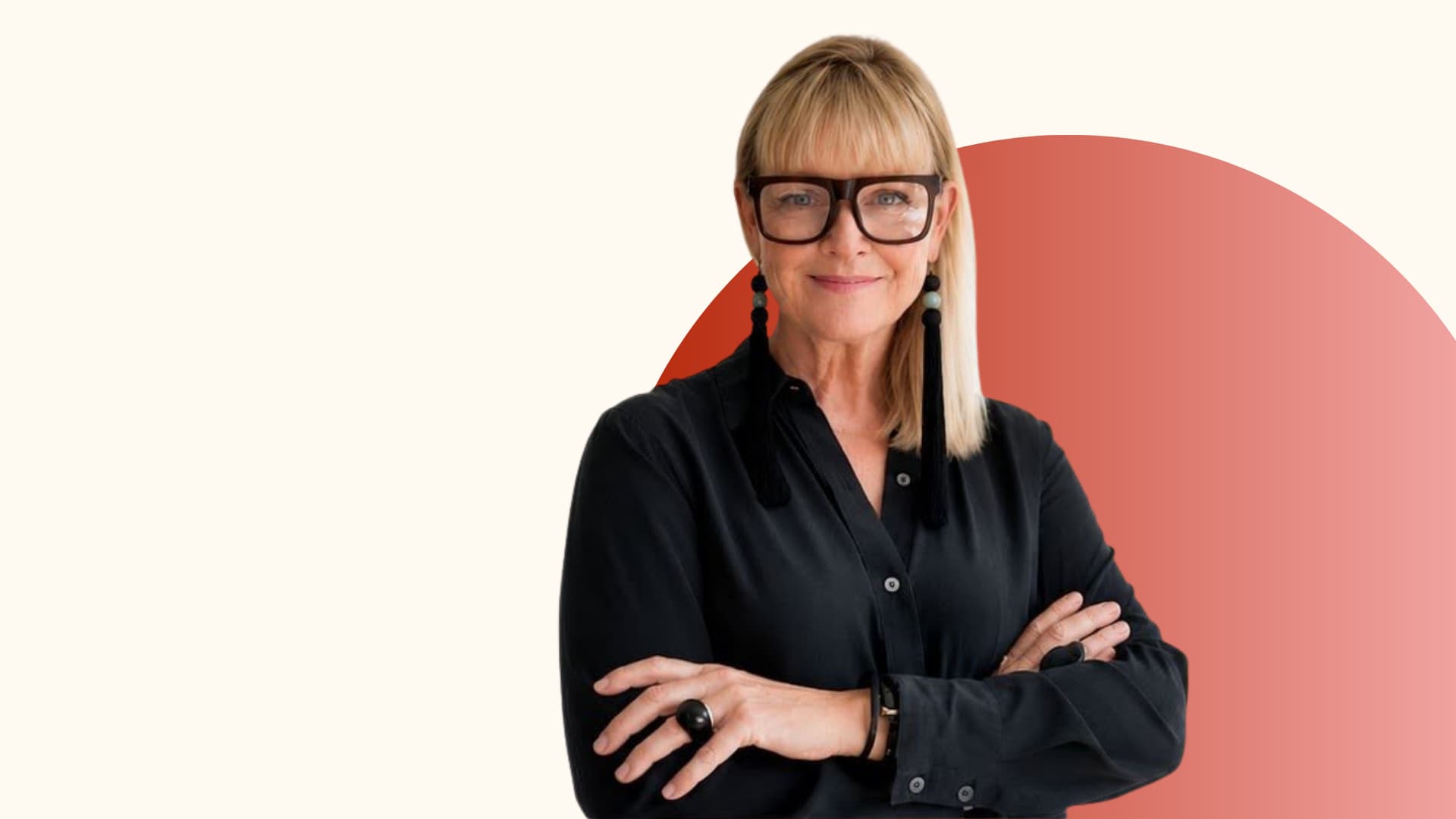
Meet Nicola
Nicola Perring is 56, based in the English countryside just south of Cambridge, and the founder of The Nest, a specialist consultancy helping founder-led brands in the maternity, baby, and children’s product industry reach the right buyers and grow the right way. She spent 35 years in corporate retail, buying across every major category and model, before her final role as Global Product Director at Mothercare gave her the clearest possible view of what small, conscious brands needed and could not access on their own. She was made redundant on her birthday, walked out in electric blue kitten heels, and never went back. You can also find her on instagram @lookin_thenest.
In this interview, she talks about what buying in her mother’s wedding dress shop taught her about understanding customers, how she bootstrapped through cancer, redundancy, a website build that fell apart and cost her significantly, and a global pandemic, how AI gave her back the autonomy to build and change her own tools, and why the SEFAR framework she trademarked from her son’s GCSE project is now the architecture the whole business runs on.
The Interview
Can you introduce yourself and tell us what you do?
I’m Nicola Perring, founder of The Nest.. I’m 56, turning 57 this July, and I’m based in Little Chishill, a tiny hamlet just south of Cambridge in the UK. It’s a beautifully rural part of the world, and living here shapes everything I do. The Nest is a specialist consultancy for the maternity, baby, and children’s product industry. I help founder-led brands get in front of the right buyers and grow into the right channels, without the hype or the spray-and-pray tactics most consultants reach for. It all runs on one belief: Build BETTER. Grow CONSCIOUSLY. Better products, built consciously, deserve to reach the right buyers, and the right introduction beats a hundred cold ones.
You knew from 14 what you wanted to do. How did that path unfold?
I knew from 14 I wanted to work in fashion and become a buyer. So I left school at 18 and went straight for it: no degree, no detours. My real education started earlier, in my mother’s wedding dress shop. I worked there as a teenager and went with her to the trade fairs where she chose her stock. We clashed constantly: I had strong opinions about what she should buy, and she’d buy something completely different. She was always right, and the lesson stayed with me. Being a buyer isn’t about what you like. It’s about understanding what your customer actually wants. It has to be objective, never subjective. I carried that to London, found a buying role with a major retailer after being told not to bother applying without a retail degree, pushed anyway, got the interview, got the job, and never looked back. I used to say I was paid to travel the world and spend millions of pounds of someone else’s money on clothes. It was every young girl’s dream, and I was living it.
What were the 35 years before The Nest actually like?
Over 35 years in corporate retail. I bought, and led teams that bought, across womenswear, menswear, footwear, accessories, lingerie, and childrenswear. Every category and every model: bricks and mortar, e-commerce, wholesale, concession, franchise, and licensing. I worked for UK retailers and across European, Asian, and global markets. My last role was Global Product Director for Mothercare, and that role was the trigger for everything that came next. At Mothercare I was the gatekeeper for every product entering the business, and that seat gave me a clear view of a problem. Smaller brands were arriving with genuinely innovative products but couldn’t get a foot in the door with the big retailers. And when they did, the payment terms and corporate ways of working made it hard to survive the relationship. The Nest became the way to put 35 years of knowledge to work for them.
You were made redundant on your birthday. What happened that day, and what came after?
I’d pushed hard at Mothercare to bring in the right products. H&M was one of the frontrunners in organic cotton for babies at the time, and I believed that’s where we should be. But every conversation hit the same wall: margin. I used to say: everything costs something, and for too long it’s been the people making our products and the planet paying the cost. There just wasn’t the appetite for it. The frustration grew, and I’m sure I was considered a bit of a troublemaker, a badge I’m quite happy to wear. So when the business looked to cut costs, my name was an easy one to land on. I was made redundant on my birthday. But I remember walking out of that building in a brand new shirt and a beautiful pair of electric blue kitten heels, head held high, certain it wasn’t the end of anything. It was the first day of a new chapter, and I honestly felt truly optimistic.
Then a single morning during lockdown sealed it. The sky was completely silent, I could hear every bird, and Radio 4 was talking about how, with the container ships fallen quiet, you could hear the whales again. I thought: this is it. When trading resumed, the conversations I’d always wanted to have were finally happening. That moment was the dial-changer.
The financial sacrifices were real. How did you keep going?
I’ve always bootstrapped: no loans, no outside investment, only ever my own resources. Between a developer relationship that turned sour and cost me a lot of money, my mother passing away leaving debt to clear, my sons earning rugby scholarships to wonderful schools, and being spread impossibly thin, I reached the end of what bootstrapping could carry. So I sold my house and used the equity to keep both my private life and my business going. I don’t mind saying that, because it’s true, and honestly it was the only way I could start to sleep again. I’d also survived cancer in Shanghai in 2010, when I was living there as a single mother with three little boys, having moved to launch F&F clothing for Tesco. That experience put everything else in perspective. The doubt was never can I do this. It was simply being open to trying, learning, and refining as I went. I decided I was going to do it, and I’d make it happen.
How did you actually find your first clients?
They came out of the work itself. The Nest didn’t begin as a consultancy: my first model was a B2B marketplace, conscious British products sold to international buyers. While talking to small brands about onboarding them, I kept spotting the same thread. So many were started by women who’d given up their careers when they had their first child. No retail experience, but a crystal-clear idea of what they wanted for their own child, so they made it themselves, posted it on social media, and friends started asking, can you make me one? A business was born. As I talked to them about the marketplace, I kept ending up mentoring and coaching instead. And I realised I loved it. We gave ourselves six months to a year running both models, then within a couple of months it was obvious: consulting was the driver. Those first brands I’d been mentoring became my first clients.
What does the freedom of running The Nest actually look like day to day?
It’s choosing who I work with. I only take on brands whose values I believe in, so the work never feels like selling something I don’t stand behind. It’s working from my home in the countryside, surrounded by the nature that fuels the whole mission. And increasingly it’s the freedom that comes from building my own tools: if something needs changing, I can go in and change it myself, no waiting, no gatekeepers. After 35 years inside big corporate structures, that autonomy is everything. There’s one caveat on the clients: they have to be on a conscious journey. Not perfect, no business is, but genuinely committed to moving in the right direction. Saying no to the ones who aren’t is hard, and it’s also what protects everything The Nest stands for.
How does AI actually fit into your work, and how did you get into it?
Constantly, and not as a gimmick. The turning point came just after the lockdowns. My website had been built on WordPress, every page I needed to adapt was custom-coded by someone else, and I couldn’t code. Then one of my sons said: Mum, you love tech, you have to try ChatGPT. I did, and I was blown away instantly. So I backed myself and decided to build my own website. I built it on Wix, working closely with ChatGPT to refine it, then built our second website using different AI tools for different parts of the build. The best part: if something’s not right, I can fix it myself. AI now runs through every part of how I work. I used it to write copy, check meta tags and search terms, and plan the site structure and architecture. I use ScoreApp to build scorecards that give me a clear read on a brand’s strengths and opportunities. I use Authority Hacker which taught me how to set up my AI workflows and schedule routine jobs. And I’ve recently joined Coachvox, which will let me create an AI version of myself to coach the brands I work with around the clock.
Tell us about SEFAR and how it ties everything together.
SEFAR is the framework I’ve trademarked that the whole business is built on: Sustainable, Ethical, Future-thinking, Affordable, and R⁵ (Reduce, Repair, Reuse, Recycle, Reimagine). It started at my kitchen table, with my middle son’s GCSE Design Technology project. He’d stumbled onto an idea, and when he explained what his design was really about, I saw something brilliant in it. Too good to leave behind, even though he didn’t pass the GCSE on a technicality. So I trademarked it and built a framework around it, and it now shapes three sections of the new website: the SEFAR hub, a global trade gateway connecting manufacturers, brands, and retailers around shared values; the SEFAR directory, a curated set of resources and vetted industry experts; and the SEFAR lab, a portfolio of AI software we’ve tested and trust. The lab matters because it levels the playing field. That has always been the point: take the tools the big retailers use, adapt them so they work for an SME, and make them even more effective by building in AI, so a small brand can compete at a fraction of the cost.
What mistakes did you make, and what do you wish you’d known earlier?
An expensive one early on. I chose the wrong company to build my first website, they never finished the job, I lost a lot of money, and a few weeks into lockdown they filed for voluntary liquidation. That money was gone. The lesson stuck: do your due diligence, and back yourself to understand more than you think you can. What I wish I’d known earlier is just how valuable my knowledge, experience, and network would be to the businesses I now love to serve. If I’d truly grasped the impact I could have with it, I’d have spoken about it sooner. I’ve always been wary of seeming arrogant or patronising, but you can be neither and still say, with confidence: I know this, and I want to share it to help you. Trust is the number one reason a parent buys a product for their baby or child. And trust is exactly why businesses choose The Nest.
What would you say to a woman who is hesitating about starting something of her own?
You don’t have to leap with your eyes closed. Start before you feel ready, but start small and deliberate. The version of growth sold to women online is loud and fast, and it’s mostly noise. Quiet, considered, values-led progress compounds. You’re allowed to build it your way. Get specific. The instinct is to stay broad so you don’t miss anyone, but the narrower your niche, the stronger your authority and the easier it is for the right people to find you. Specialism isn’t a limitation, it’s the whole advantage. And don’t see leaving a traditional career as the risk people assume it is. Test and learn. You don’t have to bet everything on one perfect plan. You try, you learn, you refine, you reframe the mistakes as progress. The real risk is staying somewhere that’s quietly grinding you down because it feels safe. Leaving felt like the bigger leap at the time. It wasn’t.
If you strip everything back, what is the real reason you do this?
My three sons. I’ve always believed my most important role in life is to be a good role model for them: to show them that when you work hard, and stay passionate and loyal to what you truly believe in, you can make things happen in a positive way, and you reap the rewards of that work. SEFAR came from them too. Talking to my sons, who are Gen Z, teaches me constantly. They are the next generation of parents, seeing the planet through a very different lens to mine, and listening to them is some of the most valuable thinking I do.
A few years ago my youngest told me he didn’t think he’d ever have children, because he worried about the health of the planet and whether it would be safe to raise a child on it. That moved me more than I can say. I want my three sons to feel they have a choice. And if I’m lucky enough to have grandchildren, I want to look them in the eye and say: I did everything I could, because I wanted to save this for you. Not just for the children being born now, but for the generations we’ll never meet. That is what it means to me to be a good ancestor. And here’s the lovely irony: without them, I’d probably never have stumbled across AI. I’m very proud to be the old dog learning new tricks.
JOIN AK ACADEMY
AK Academy brings together courses, workshops, interviews, and a community to help women build practical AI skills for real professional use.