Interview
How Razan Manages a Full-Time PM Role, an MBA, and an AI Skills Coach
with Razan Abusamra, Product Manager and AI Consultant, Nablus, Palestine
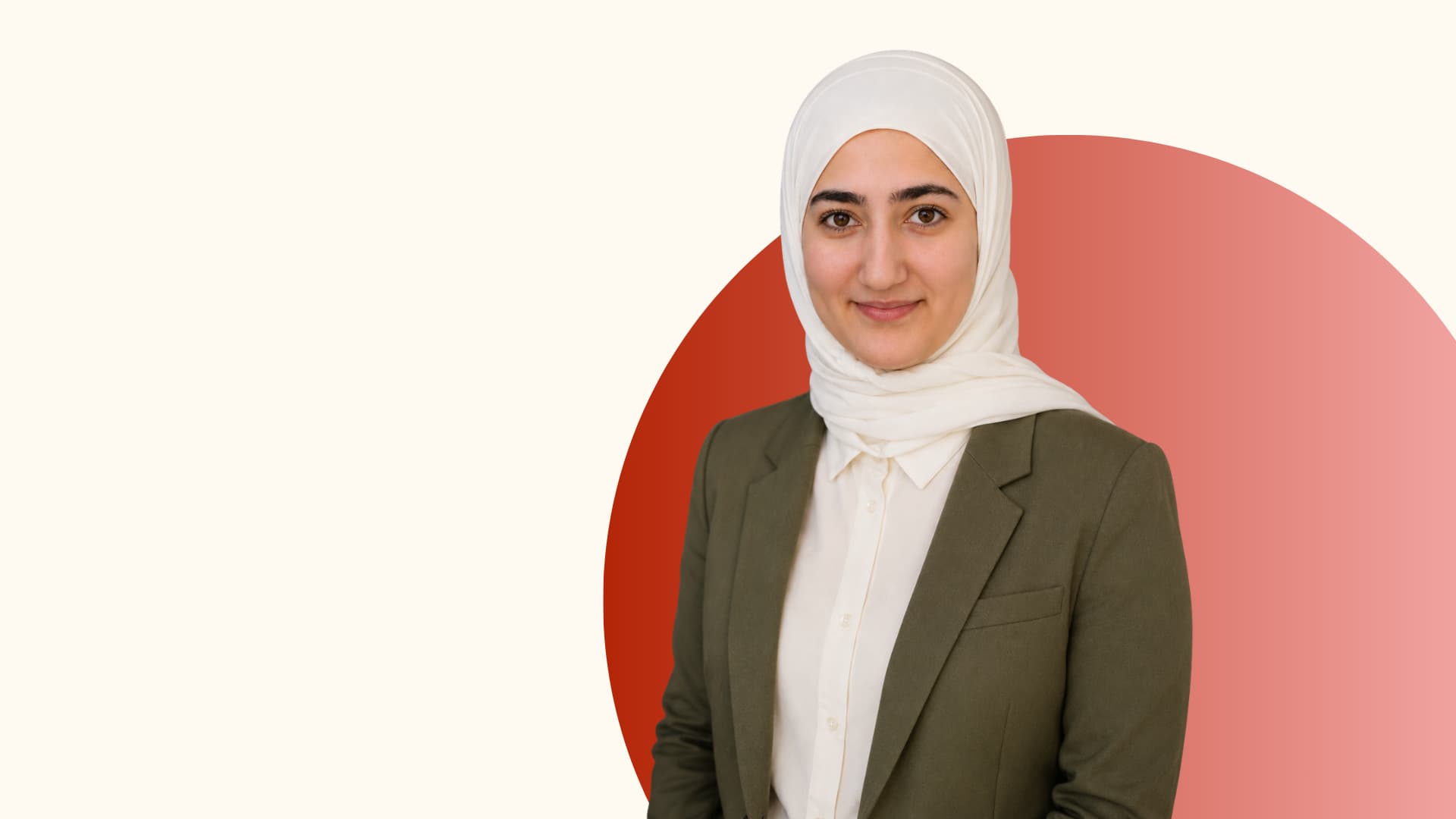
Meet Razan
Razan Abusamra is a product manager, AI consultant, and coach based in Nablus, Palestine, a city well known for its Kunafa. She manages the payroll module at an HR tech and fintech scale-up in Dubai by day, runs an AI skills coach and job readiness coaching practice outside of working hours, and is completing an MBA on top of all of it. She came to product management through mechatronics engineering and a coding bootcamp, spent five years growing from associate to PM at an Amsterdam-based edtech startup, and has been building her AI practice ever since.
In this interview, Razan talks about how AI changed the way she validates features before building them, why human connection is the one thing she will never automate, how the role of product manager is evolving into something closer to builder, and why you do not need a technical background to start, you just need to start.
The Interview
You are running a full-time PM role, an AI skills coach, a coaching practice, and an MBA simultaneously. How did that happen?
Honestly, it came together gradually rather than all at once. From 9 to 5 I manage the payroll module at an HR tech and fintech scale-up based in Dubai. Outside of working hours I work as an AI skills coach and as an AI and job hunt readiness skills coach and facilitator. And I am doing an MBA on top of all of that.
The through line across everything is the same thing that drew me to product management in the first place: impact, communication, and building things that genuinely affect people's lives. I grew up wanting to be a teacher. Both my parents are teachers. That instinct to teach and enable others never went away. It just found different shapes over time.
Mechatronics to front-end engineering to product management is not an obvious path. What connected it all?
After my bachelor's in mechatronics I tried engineering jobs and did not enjoy them. It felt very static, sitting at a desk designing all day with little human interaction, and I wanted to create more impact. So I joined a coding bootcamp and specialized in front-end development.
As I built up my skills I realized that product management combined everything I cared about: impact, communication, organization, and the problem-solving mindset I had built through engineering. Becoming a product manager became my goal.
I started my career as a front-end engineer at an Amsterdam-based SaaS startup. When the founders launched a new edtech startup and needed a project manager, I made the shift and joined as the third person after the two co-founders. I spent five years there growing from associate to junior to product manager before taking my next step.
What does good product management require that people do not expect?
Everyone expects the technical foundation: understanding the full product lifecycle, product discovery, product delivery, how to communicate with different stakeholders, how to translate business needs into something a team can build. That is a given.
What people do not always expect is how much the role depends on softer skills: strong communication, problem solving, creativity, and adaptability. A good product manager is part translator, part strategist, and part psychologist. So much of the job is understanding people, what they need, and what is stopping them from getting it. My favourite moment is when we ship something and I get to see a client's satisfaction firsthand, knowing that something which used to be a blocker for them is now resolved.
How has AI changed the way you work as a product manager day to day?
It has made my life significantly easier. The biggest shift is in how I handle user research. It used to take a long time to translate insights from user interviews into actionable deliverables the team could act on. Now AI does not just help me summarize those insights, it helps me build mockups and visual representations of how a feature could actually look.
That means I can show clients a clear picture and demo it to them before we ship anything, to make sure we are building what they want. Before, we would sometimes go straight into building a feature only to realize it was not quite what the client needed, which wasted time and energy. Now validation, summarization, building, and shipping all happen faster and with much more confidence.
I also use AI for analyzing user discovery research, building growth maps, assessing team capacity, and vibe coding parts of what I work on.
What does your Tech and AI stack look like, and how do the tools fit together?
Notion is my number one. I love it so much I end up promoting it wherever I go. For LLMs I lean toward Claude right now, though that shifts depending on what fits best. I use Claude Code and Claude Cowork and connect them with different technical MCPs to automate tasks across various processes.
Beyond that I use n8n for automation and Lovable for vibe coding to build and ship things faster. ChatGPT mainly for image creation. What I have not fully tapped into yet is creating seamless funnels where the tools talk to each other directly without me stepping in to adjust or move things along. That kind of deeper end-to-end automation is what I want to explore next.
LinkedIn rounds out my top three: not just for posting but for building real relationships, which is where a lot of the most valuable connections in my career have come from.
Where do you draw the line on what AI should not replace?
Human connection, without question. Even though everyone complains about meetings, for someone extroverted like me, working in an industry as intangible as tech, those moments of genuine human contact really matter. Whether it is with my team, within the company, or with clients directly.
At the end of the day, that is what truly matters. AI can handle the repetitive, the administrative, the analytical. The relationship is still mine to build.
The same goes for communication more broadly. A lot of people in product management still struggle with it, often because they avoid it rather than lean into it. I am a strong believer in over-communicating rather than under-communicating. AI can make that so much easier, but the judgment about what to say and when still has to come from a person.
How do you think product management will change as AI becomes more capable?
We are already starting to see the shift. Product managers are evolving into AI product managers, where the role goes beyond telling people what needs to be built. Increasingly, PMs are hands-on in the actual building and creation process themselves, using AI tools to prototype, validate, and even ship parts of the product directly.
The line between product and engineering is going to blur even further. Product managers who can combine strategic thinking with the ability to actually build, even just enough to test an idea quickly, will have a real edge.
AI will not replace product managers. But it will raise the bar for what is expected of us. The ones who stay curious, keep learning, and stay close to how the tools are evolving will be the ones who pull ahead.
What mistakes do you see people make when they are starting out in product or in AI?
Trying to know everything at once. In the beginning of your career you need to go deep first. Specialize in one thing and make sure you are genuinely great at it before you start branching out. You need to nail the foundation and build a deep understanding before anything else.
The same applies to AI. People want to use every tool simultaneously and end up with surface-level knowledge across all of them instead of real fluency in any of them.
Keeping up with how fast everything moves is genuinely the hardest part. Sometimes it feels like you are falling behind no matter how much you do. What has helped me is remembering that a career is not linear. It has highs and lows. During the lows, let the highs keep you motivated. Let those high moments fuel what is coming next.
What would you say to a woman who feels AI is too technical for her to start?
I see AI as a genuine form of empowerment, especially for women who are not coming from a coding, engineering, or development background. AI lets you use your everyday language to create. It is not reserved for a specific type of person. It is accessible to everyone.
If you bring curiosity and consistency, you can create remarkable things and hold your own against people who have been in the industry for years. You do not need a technical background to start. You just need to start. Reach out to someone who is just one step ahead of you and learn from how they did it. Do not try to be an expert from day one. Give yourself room to grow. Consistency and quality matter far more than quantity.
JOIN AK ACADEMY
AK Academy brings together courses, workshops, interviews, and a community to help women build practical AI skills for real professional use.