Interview
From Performance Psychologist to Founder: How Sophie Built MOLO
with Sophie Bruce, Founder and CEO of MOLO, Surrey UK
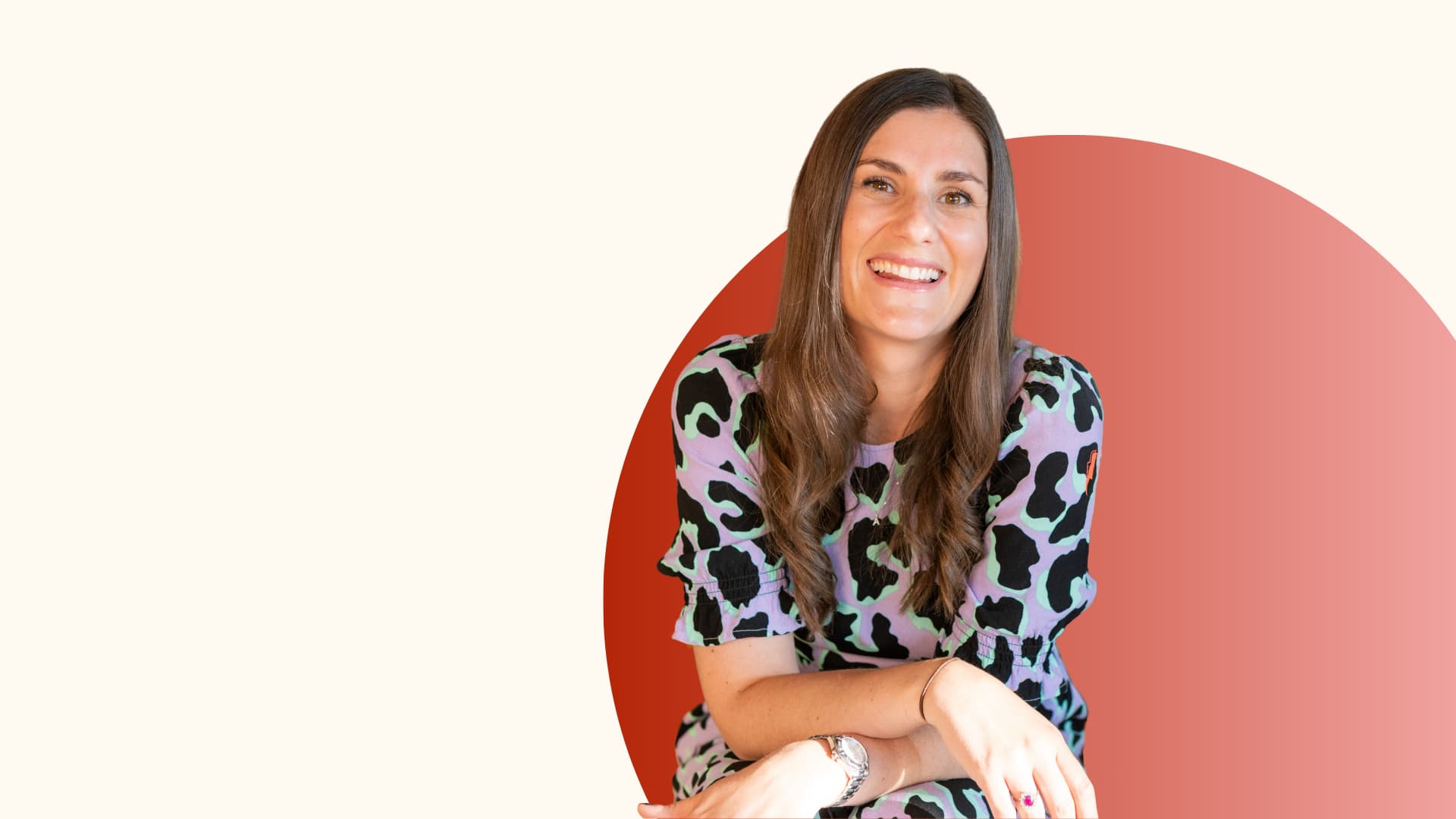
Meet Sophie
Sophie Bruce is the founder and CEO of MOLO, a platform that reads the messages, letters, and reminders that run a family and turns them into calendar entries automatically, making the invisible load of modern family life visible and shared. She is 38, based in Surrey just outside London, and a chartered performance psychologist who spent her career working with Olympic athletes, F1 teams, and C-suite leaders before a single moment driving home from a board meeting made her realise the problem she had to solve. She is also the co-founder of Mums Building Companies and the host of The podcast.
In this interview, she talks about the 1,700-person waitlist she built before the app launched, why she ran a pre-tech pilot on WhatsApp for six months before writing a line of code, how AI makes it possible for a small team to operate at a scale that would have been impossible five years ago, and why she believes the risk of not trying is just as real as the risk of trying.
The Interview
What is MOLO, and what problem does it solve?
MOLO is an AI-powered app that makes the invisible load of running a modern family visible, manageable, and shared. Think school letters, appointment reminders, WhatsApp messages. MOLO reads them and turns them into calendar entries automatically. No more 10pm panics about things you meant to add to the diary.
We launched on the App Store in May 2026 and had paying users within the first week. Alongside the app I speak, write, and podcast about what we call the Modern Load™, a term we coined and trademarked to describe the full cognitive and emotional weight of running a modern family. It goes beyond the mental load conversation and looks at the structural reality of what this generation of parents is actually dealing with.
You were a tech COO coming out of an 8-figure exit. What made you walk away from that to build something from scratch?
I drove home from an all-day board meeting I had led at work and realised I was not thinking about the strategy we had just spent eight hours on. I was calculating nappy burn rate for an upcoming holiday in my head. Automatically. Without even deciding to. My brain had been hijacked by the logistics of family life and no tool, no system, no infrastructure existed to help.
That was the moment I knew I had to build it. I had spent my career building high-performance environments, working with Olympic athletes, F1 teams, C-suite leaders, and PE-backed companies. The question I kept returning to was: how do you build environments where people can actually thrive? And then I looked at the modern family home and realised it was the most under-resourced high-performance environment I had ever encountered. The tools were stuck in the 1990s. The cognitive load was falling on one person by default. I could see the problem clearly, I had the skills to solve it, and I could not find a good reason not to try.
You built MOLO between 5am and 7am and 7pm and midnight for two years before making it your main focus. What was that actually like?
Relentless, honestly. But it also gave me something really valuable: two years of building proof before I made the leap. I was not jumping into the unknown. I was stepping into something I had already been constructing.
In 2025 we ran a closed pilot with ten families through WhatsApp before any tech was built. Those families gave us 100 percent retention over six months, which told us we were solving a real problem. By the time we launched on the App Store we had a waitlist of over 1,700 people. I had been building in public on LinkedIn for months, talking about the Modern Load™, being honest about the building process. I did not find them. They found us because the problem resonated.
What were your biggest fears going in, and which ones turned out to be real?
That I was wrong about the market. That I would invest everything into solving a problem people would not pay to fix. That investors would not take it seriously because it was about family life and domestic labour, and those things have historically been dismissed as soft or niche.
The reaction that surprised me most was from parents who heard about it and just said: finally. That kept me going through the harder moments. The fear about investors was partially correct. Some needed more convincing than others. But the parents validated everything. And I eventually understood that the parents who tried MOLO and stayed, who came back, who told their friends, who said it changed something for them, that is the validation that matters most. I spent too long early on looking for external proof when the proof was in the room with me.
What mistakes cost you the most time?
I tried to do too much too soon. I had a vision for the full product from day one and it took me longer than it should have to accept that you have to start with one thing done brilliantly rather than ten things done adequately.
I also underestimated how much of the job is telling the story, repeatedly, to different audiences, in different ways. I thought the product would speak for itself. It does not. You have to speak for it. The irony is not lost on me either. I am building a product to solve the modern load for everyone else, and in doing so I have taken on the ultimate load myself. The decision fatigue is real.
AI is the product. But how do you use it in running the business itself?
Beyond the product, I use AI throughout the business every day. For research, writing, working through strategic problems, preparing for investor meetings, drafting communications. I use Claude extensively as a thinking partner when I need to stress test an idea or see a problem from a different angle.
AI has allowed me to run a business at a scale and pace that would not have been possible five years ago with the team size we have. It has levelled the playing field in a way that genuinely benefits early stage founders. My full stack beyond Claude includes Klaviyo for email marketing, PostHog for product analytics, RevenueCat for subscriptions, and Canva for design. And honestly, the MOLO app itself, which is doing exactly what it was built to do for my own family.
What does freedom actually look like at this stage of building a startup?
Not freedom in the traditional sense. This stage is incredibly demanding. But the autonomy is real. I decide what we build and why. I decide what matters. I get to work on something I genuinely believe in rather than someone else's priorities.
I worked every day on my holiday last week, from my sunlounger on my phone, and came back with more motivation, energy and clarity than I ever did after a day job. And I get to model something for my daughter Amelie, which matters to me more than I expected it to. When your work and your life are completely intertwined like this, the line between working and living starts to dissolve in a way that is actually energising rather than draining.
How do you think about the risk of leaving a traditional career path?
The risk of not trying is just as real and much less talked about. The risk of spending your career building someone else's thing when you could see a problem that needed solving. The risk of reaching a point where you wonder what would have happened. The world is more uncertain than ever, so backing yourself is more secure than a nine-to-five where you are realistically replaceable at any point.
We overweight the risk of trying and underweight the cost of not trying. Both are real. Know which one you are more afraid of. That is not to romanticise it. It is genuinely hard and financially uncertain in ways a traditional career is not. But the question I kept coming back to was: what is the actual cost of not trying? For me, that cost was higher.
What would you say to a woman who is hesitating to start?
That the hesitation is normal and useful. It means you are taking it seriously. But do not let it become a permanent state. At some point you have to make a decision with incomplete information, because you will never have complete information. Nobody does.
You do not have to leave your job to start. Start alongside it. Build the proof of concept. Talk to potential customers. Test the idea. The leap feels smaller once you have already taken the first few steps. Start with the problem, not the solution. Get obsessively clear on what you are solving and for whom. Talk to the people who have that problem. Listen more than you pitch. The best ideas come from really understanding what someone needs rather than falling in love with what you want to build.
What has community meant to you through this process?
Building alone is brutal. Building with people who are doing the same thing, who get the specific challenges, who will tell you the truth and celebrate your wins, that changes everything. For me that has been Mums Building Companies, a community I co-founded for professional mothers building businesses in London.
The conversations are the part I enjoy most. With parents who tell me MOLO has changed something for them. With investors who push my thinking. With my team when something clicks. Building something from nothing is relentlessly hard but it is also the most alive I have felt professionally. Find your version of that community. It is not optional. You can download MOLO on the App Store, join the mailing list at wearemolo.com (newsletter signup), follow MOLO on Instagram and TikTok, and find Sophie on LinkedIn.
JOIN AK ACADEMY
AK Academy brings together courses, workshops, interviews, and a community to help women build practical AI skills for real professional use.