Interview
How Terese Built Her UX/UI Design Practice with AI
with Terese Christiansen, Creative Product Designer, London
Meet Terese
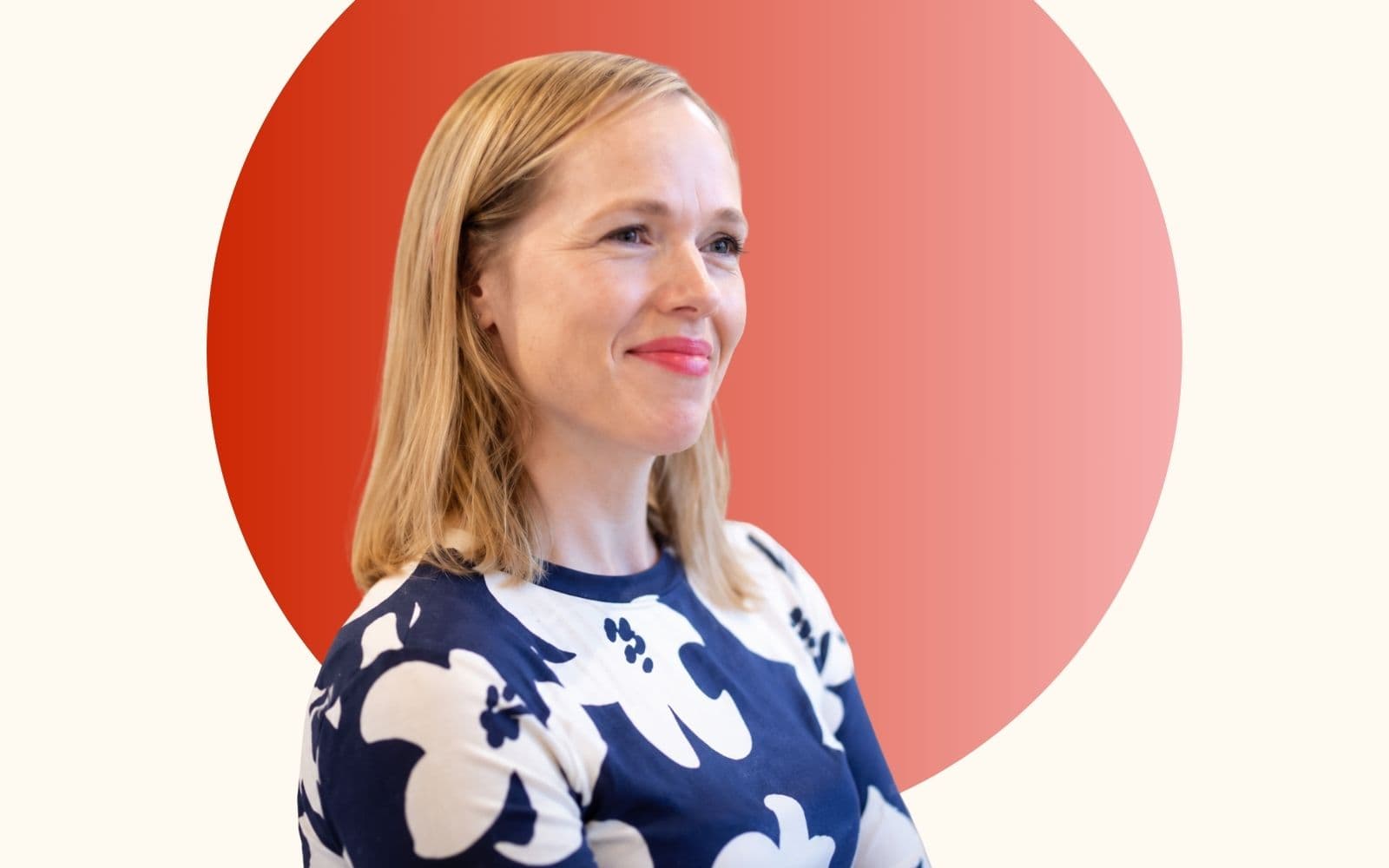
Terese is a creative product designer based in London who works independently across early-stage products, joining before anything is built to shape ideas into prototypes that are ready for users and investors. After years at a large company, she made a deliberate decision to step out, upskill in AI, and focus on the part of the product lifecycle she finds most interesting: the very beginning. She also runs a personal project called A Day in the Life of You, a small app she built in her own time to help people recognise how much they actually accomplish in a day.
In this interview, she talks about how a UX boot camp and a year of deep experimentation changed how she builds products, why AI is a derivative and not an innovator, how she uses Claude and Lovable in her daily workflow, and why critical thinking is the skill that will always separate good design from fast design.
The Interview
Can you introduce yourself and tell us what you do?
I am Terese, and I am a creative product designer based in London. I work as an individual contributor across several early-stage products, which means I come in at the very beginning of a product's life: before it is built, before it is funded, when it is still just an idea that needs to be shaped, tested, and made real.
Over the last year, I made a deliberate decision to step away from a large company role, upskill in AI, and build a practice around that earliest and most interesting stage of product development. One thing I feel strongly about is that critical thinking and AI have to go together. AI is a derivative, not an innovator. The innovation still comes from you.
How did you get started with AI and what opened the door for you?
My entry point was about a year ago through a platform called ivee, which was originally geared toward helping women find work but has since evolved into an AI education platform now listed on the UK government's training initiative. Furthermore, I joined a School of UX boot camp focused specifically on implementing AI within UX design, using tools like Lovable and other vibe coding tools.
Coming from a design background, being able to produce a full user flow within half a day was genuinely mind-opening. Things that used to take weeks now have a working frame in hours. In that same year the tools went from interesting to genuinely functional, and I watched entire communities on Skool and Discord start building and launching real products on the App Store. The pace of change in that single year was remarkable.
You stepped back from a corporate role to focus on AI. What did that decision look like?
It was a deliberate strategic move. I was at a large company where AI was still very much in early discussion, with lots of questions around legality, data security, copyright, and compliance. Progress was slow for understandable reasons.
I decided I wanted to get ahead of that curve rather than wait for a large organisation to catch up, so I took time to upskill properly and shift toward independent work at the early stage of product development.
I know not everyone can step away from their day job, but even half an hour a day dedicated to exploring what AI can do for your specific role is enough to start building real fluency. The percentage of people who are genuinely using these tools is still surprisingly low, which means the gap between those who do and those who do not is widening every month.
Can you walk us through how you actually use AI in your day to day work?
Claude is my primary tool. I have different project areas set up inside it covering everything from specific product ideas to research topics like compound interest for fintech products. When I have a thought late at night, I open a new project, put the idea in, and come back to it. It keeps everything organised and in context.
From there I move between Claude and Figma, creating wireframes that I paste into FigJam as a starting framework, then adjust from there. I also use Lovable and Figma Make for building out early prototypes. I use ChatGPT much less than I did a year ago.
The workflow now is Claude for thinking and structuring, Figma for design, Lovable for building. That setup gives me enough to produce a working prototype without needing an engineer at the early stage.
How do you manage the constant flow of new tools and information without losing focus?
It is a genuine information overload, and I think everyone in this space feels it. A new tool appears weekly, communities are full of announcements, and if you follow every thread, you end up with a hundred tabs open and nothing finished.
The approach that works for me is to find my setup, test it until it works, and then resist the pull to switch until someone gives me a compelling reason to. I go into Claude, open the project I am working on, and focus on that one thing.
That sense of a defined space within a chaotic field is where I find calm. The tools will keep evolving. Your ability to focus on one problem at a time is the actual competitive advantage.
What mistakes did you make early on that someone starting now could avoid?
In the beginning, I would jump straight into prompting with a half-formed idea and wonder why the output was vague. The better approach is to sit with the idea first, write it down, keep adding to it, and only prompt once you feel it is in a good enough place.
The more specific and detailed the input, the more useful the output. It sounds obvious, but most people underinvest in the thinking before the prompt. I also want to reassure anyone who is nervous about building: you are not building a massive backend from day one.
A simple database, user sign-ups, a working prototype are all of that is achievable with tools like Lovable without an engineer. Get something working, learn from it, and bring in more expertise at the next stage. The point is to have a go.
As a designer, what do you see AI doing to the visual landscape and why does that concern you?
Looking across the apps, websites, and products coming out right now, there is a sameness creeping in. When everyone uses the same tools with the same default settings, the outputs start to converge.
For a designer, that is a real problem, because your job is to make something that belongs to a specific brand, that builds a distinct identity, and that people trust enough to keep coming back to. Trust is the number one thing to build for.
AI can produce something quickly, but quickly is not the same as right for this brand, this audience, this purpose. Critical thinking and a strong visual reference point are what separate work that resonates from work that just fills a space.
How do you use online communities to find product ideas and stay connected to what is actually happening?
Reddit has become one of my most useful tools for product research. People go there to be honest about what is frustrating them, what apps are not doing, what problems they cannot find a solution to. That is business research in its most direct form. Reading through those conversations regularly gives you a map of the gaps, the pain points, the things people wish existed, and that is exactly where a product idea should come from.
Beyond Reddit I am active on Slack communities, Skool and Discord, where you can watch people building and launching in real time. LinkedIn is valuable for understanding where the market is heading and for networking. Between those platforms, you are never short of signals.
Tell us about your personal project and what inspired it.
I have been working on a small personal project called A Day in the Life of You. The idea came from something I think a lot of people experience: you get to the end of a day and feel like you have not achieved much, when in reality you have done more than you realise.
The app lets you record everything you did that day, and when you look at it all together, it becomes a genuine pat on the back moment. It is still in the early stages and very much a personal project built in my own time, but it is a good example of how the tools available now make it possible to take a small human idea and turn it into a working product without a team or a budget. I will be sharing the link once it is tidied up a bit.
What is your message to women who are thinking about getting into AI or building something of their own?
Start. There is enough free resources now, including government-backed initiatives in the UK, that the information barrier is essentially gone. Pick something simple, try a tool, put an idea into a prompt, and see what comes back.
The playful approach is not just for beginners. I still have sessions with Claude that feel more like exploration than work, and that is where some of the best ideas come from. On the product side: if there is something that has been bothering you, something you have experienced that does not have a good solution yet, that is your starting point. There is something in this space that you can add or improve. Find your corner, go deep on it, resist the pull to do everything at once, and keep the critical thinking close.
JOIN AK ACADEMY
AK Academy brings together courses, workshops, interviews, and a community to help women build practical AI skills for real professional use.