Interview
How Tina Went from Meta to Founding an AI Consultancy for the Creative Industries
with Tina Saul, Founder of KINTAL, Hertfordshire UK
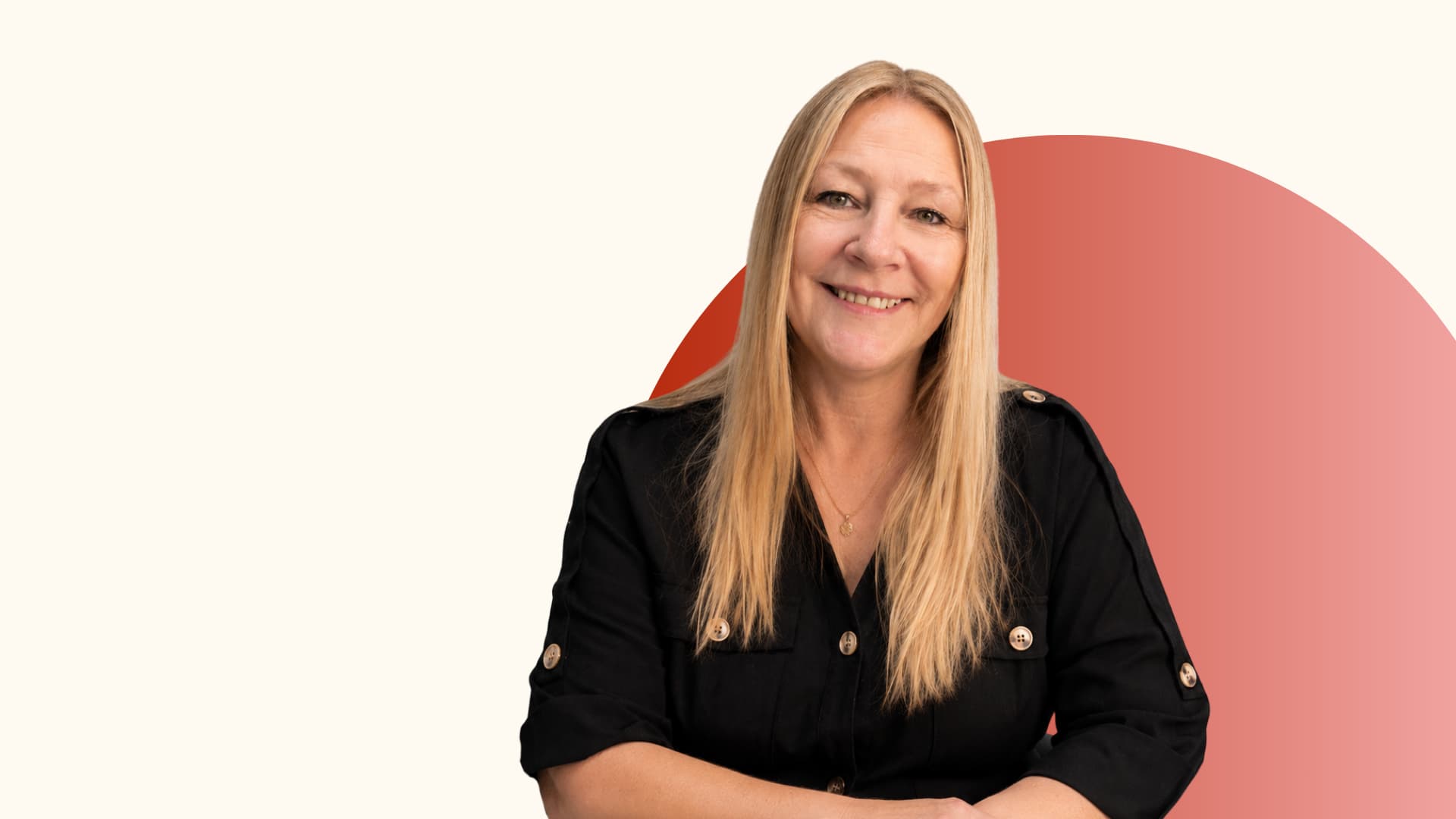
Meet Tina
Tina Saul is the founder of KINTAL, a product-led, human-first AI consultancy focused on the creative industries. She is 53, based in Hertfordshire just outside London, and has spent 25 years working at the intersection of creative strategy and operations, from Sky when interactive TV was genuinely new territory, through digital agencies and in-house technology teams, to managing the video production team across EMEA at Meta. It was at Meta that her AI journey began in earnest, with early access to tools and the growing conviction that the hardest part of AI was never the technology.
In this interview, she talks about why she built a consultancy around the human side of AI adoption that most organisations are getting wrong, how she learned by using AI to learn AI, why she works seven days a week and calls it the courage kind of freedom, and what she would say to any woman who thinks this field requires a technical background.
The Interview
You worked at Sky when interactive TV was new territory, then through agencies, then Meta. What was the thread through all of it?
Since 2000 I have worked in the creative industries, always sitting at the intersection of creative strategy and operations. Tech was always part of the picture, but my focus was never purely technical. It was about how creative teams work, how they make decisions, and how they get things done. Most recently I was managing the video production team across EMEA at Meta. That is where my AI journey started.
I was privileged to have access to tools well before most people did, and I took full advantage of it. I do not come from a traditional background. University was not an option for me. I grew up in circumstances where that just was not on the table, so I studied at the University of Life instead. When you have not had a prescribed route, you learn to think differently, and that has enriched how I see problems and opportunities in ways I could not have planned for.
What did you see at Meta that made you want to build something around AI specifically?
Two things. The first was watching AI summarise a large body of research quickly and well. About as good as a human, actually, because humans make mistakes too. If a tool can get you 80 percent of the way there and you refine the rest, that is a game changer.
For audience research especially, it was gold. The second was noticing how AI was being treated almost entirely as a technical problem, when the real challenge was human: the change management, the transformation, the impact on how people work. I could see companies doing it badly, and I wanted to focus on that instead. That is what KINTAL is built around.
What is KINTAL, and what makes it different?
KINTAL is a product-led, human-first AI consultancy focused specifically on the creative industries. Technology is the easy part. That is something I say constantly and mean completely. The real work is on the human side: the change management, the cultural shift, helping creative teams understand what AI can actually do for them rather than to them.
For businesses specifically, buying a tool is not enough. You have to buy the tool, bring someone in to coach the team, and then give people actual time within their working day to implement what they have learned. A three-hour workshop starts the conversation. Companies that only invest in tools are going to struggle to realise the benefit.
How did you actually learn AI, and what accelerated it most?
Mostly hands-on and curiosity-driven. I took courses, went deep into the research, and constantly consumed podcasts and videos. The AI Daily Brief became my non-negotiable daily listen. But the thing that accelerated my learning most was using AI to learn AI: asking it questions, challenging the answers, testing the edges of what it could do. My Steam Deck has not been touched in two years.
Weekend gaming got replaced by weekend AI experimentation. I did not plan that but I am really glad it happened. It is hard to separate AI skills from everything else I bring, because they do not stand alone. They are woven into 25 years of creative industry experience. That combination is the KINTAL product. In terms of feeling confident enough to build a business around it, that took around three years from when I first got serious about it at Meta.
What does your day actually look like with AI running through it?
Every day starts with an AI-generated briefing that sets me up before I have even had a shower. It pulls together what I need to know, what has changed overnight, what needs my attention. By the time I sit down to work, the pre-planning is already done.
Beyond that, I use AI every day to prioritise, to synthesise multiple streams of information into something I can act on, and to stay on top of what has changed in a field that moves fast. My top three tools are Claude for deep thinking, drafting, and building; Perplexity for research, fast and well-sourced; and Wispr Flow, which lets me speak naturally and turns my words into written content that finally sounds like me. As someone who has always thought faster than I type, it has changed how I work completely. This entire interview was dictated using Wispr Flow.
You are honest that the freedom narrative around entrepreneurship can be misleading. What has it actually been like?
Right now I work seven days a week. I am building something from scratch and that is what it takes at this stage. I want to be honest about that because I think the freedom narrative can mislead people about what the early days actually look like. What AI has given me is the confidence to do that alone.
Having AI as a constant support, something that helps you think, plan, draft, research, and problem-solve at any hour, has made going solo viable in a way I am not sure it would have been otherwise. That is the freedom it has given me. Not the lifestyle kind. The courage kind.
What mistakes did you make early on, and what did they teach you?
I relied on AI too much early on. I got access to this incredible tool and leaned into it hard, and my communications became sanitised as a result. Everything started sounding polished in a way that did not sound like me. I caught that early, fortunately. Just because AI sounds confident does not mean it is right, and just because it sounds good does not mean it is yours. The bigger learning was accepting that I am never going to know everything about this.
That is hard when you have spent 25 years in an industry and feel you are at the top of your game. With AI you are back at ground zero. Every new company, every new team, every new format is its own learning curve. I would like to say I have always had a growth mindset. I have not. But it is the thing that has carried me through this more than anything else, and it gets tested regularly.
What do you think organisations consistently get wrong about AI adoption?
Everyone is focused on the tools but nobody is doing enough about the mindset. The cultural shift that comes with AI adoption is the thing I see organisations consistently underestimating. That is where the deep work is, and it is also where the results come from. The biggest mistake is trying to go too fast and treating AI as a silver bullet. Start with one small piece of admin, nail that, then use the time you have freed up to tackle the next thing.
Approach it as a compounding effect rather than expecting an overnight transformation. Meeting transcription is the one I keep coming back to. It baffles me that more people are not using it. When you are focused on taking notes or trying to remember what someone said three minutes ago, you are not present in the conversation. Remove that friction and you can give your full attention to the person in front of you. It sounds small and turns out to be enormous.
What would you say to a woman who wants to start generating income with AI but does not know where to begin?
Do not start with technology. Look at yourself. What is your secret sauce? What makes you different? Where is your passion? Find that first, then explore how AI can help you do it better, faster, or at a scale you could not manage alone. Vertical depth, genuine passion, and real understanding of a specific domain combined with AI is where the strength is.
Someone who knows the legal sector inside out combined with AI is more valuable than someone who just knows AI. Find the intersection of what you know deeply and what you care about. That is where your opportunity is, and no one else can occupy that exact spot. Use AI to learn AI: that is all you need. And invest time in it right now. The window to get ahead of this is still open. Find me on LinkedIn (linkedin.com/in/tinasaul) and I am always happy to connect with people who are serious about this.
JOIN AK ACADEMY
AK Academy brings together courses, workshops, interviews, and a community to help women build practical AI skills for real professional use.