AI Business
6 New Business Ideas To Explore in 2026 with AI
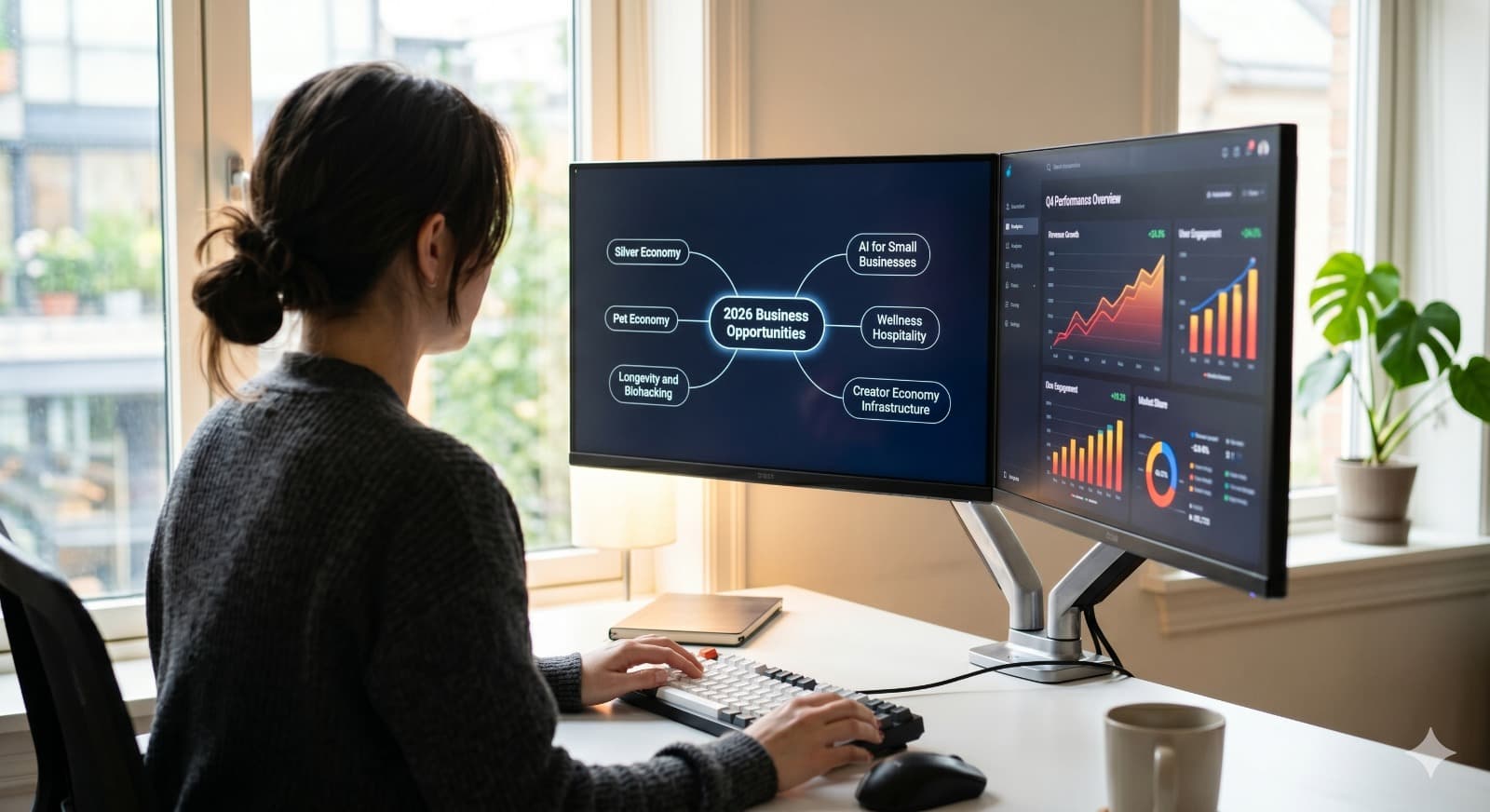
Choosing the right market is the most important business decision you will make. A brilliant product in a shrinking market produces mediocre results. A straightforward product in a fast-growing market has a structural advantage from day one.
Why These Six Markets Are Worth Paying Attention To
Choosing the right market is the most important business decision you will make. A brilliant product in a shrinking market produces mediocre results. A straightforward product in a fast-growing market has a structural advantage from day one.
These Are Not Trends. They Are Structural Shifts.
Each of the six markets in this article is driven by a demographic, behavioural, or economic shift that has been building for years. Population ageing, the humanisation of pets, the mainstreaming of longevity science, the maturation of the creator economy, the growth of health-focused travel, and the adoption of AI by small businesses are all documented and accelerating. Picking a business inside one of these markets means working with momentum rather than against it. For anyone who wants to understand how AI specifically creates income across different models before going deep on a single market, that broader context is worth having first.
Why AI Gives You a Real Advantage in Each One
In every one of these markets, AI does something specific and valuable: it makes personalisation affordable at scale. Personalised recommendations, tailored care plans, custom content, individual health programmes, these used to require a human expert for every interaction. A well-designed AI-powered service delivers that same personalised experience to thousands of people simultaneously at a cost that makes a lean business genuinely viable. That combination of a large addressable market and AI-powered efficiency is what makes each of these ideas worth serious consideration.
Silver Economy: Building for the 60 Plus Generation
By 2030, one in six people globally will be over 60. This group is projected to control over fifteen trillion dollars in spending. That is not a niche. It is one of the largest consumer markets in the world, substantially underserved by technology companies whose products are designed with younger users in mind.
What the Opportunity Actually Is
The silver economy covers any product or service designed for older adults living longer, healthier, and more active lives than previous generations. This generation is travelling more, spending more on health and wellness, and adopting technology faster than most assumptions allow. The gap between what this demographic wants and what the market currently offers is significant, and it is growing rather than shrinking.
Start Idea and How AI Makes It Work
A digital concierge platform helping older adults organise travel, health services, and social activities addresses one of the most consistent pain points in this market. The challenge for this demographic is rarely motivation. It is complexity. Coordinating a health appointment, a travel booking, and a social event across multiple platforms designed for younger users creates friction that discourages engagement. AI makes this viable through personalised recommendations that learn from each user's preferences and history, automated booking assistants that handle the complexity in the background, and voice interfaces that make the service accessible to people who find touchscreen-heavy applications frustrating. The businesses that succeed here go deep on one specific problem for one specific segment of this population rather than trying to build a single platform for everything.
Pet Economy: Premium Services for Pets as Family Members
Pets have moved from animals people keep to genuine family members people invest in. Spending on premium food, veterinary care, wellness products, grooming, insurance, and experiences is growing at rates that would have been unrecognisable a generation ago. The premium and personalised segment is growing fastest.
Where the Real Opportunity Sits
The opportunity in the pet economy is not in standard pet services. It is in the personalised layer that is emerging as owners begin applying the same standards to their pets that they apply to their own health and wellbeing. Custom nutrition, preventive health monitoring, and tailored supplement plans are all categories where current offerings remain overwhelmingly generic despite clear demand for something better.
Start Idea and How AI Makes It Work
A personalised pet wellness brand offering custom nutrition plans and supplements is one of the clearest entry points into this market. Pet owners already spend on food and supplements. The shift toward plans tailored to the specific breed, age, weight, activity level, and health history of an individual animal is still in early stages but growing quickly. AI makes this viable by analysing pet health data to generate tailored care plans, automating the customer support experience, and personalising ongoing recommendations as the pet ages and its needs change. The subscription model that fits naturally here creates recurring revenue that compounds with every customer who stays.
Longevity and Biohacking: Tools for Living Longer and Better
Longevity science has moved from fringe conversations in specialist medical circles to a topic of genuine mainstream interest. People across age groups and income levels are actively looking for tools and protocols that give them a measurable edge on healthspan, and they are willing to invest significantly in what they believe works.
Why This Market Is Bigger Than It Appears
Longevity and biohacking sit at the intersection of health technology, fitness, nutrition, mental performance, and preventive medicine. The people most engaged in this space tend to be high earners in their thirties, forties, and fifties with a high willingness to pay and a genuine personal investment in the outcomes. That combination of audience quality and spending commitment makes this one of the most commercially valuable demographics in any market.
Start Idea and How AI Makes It Work
A membership platform combining longevity devices, regular biomarker testing, and expert-designed protocols addresses the core problem this audience faces: the information is fragmented, the protocols are complex, and without personalised guidance, the results are inconsistent. A I makes this viable by analysing biomarkers and health data to build personalised longevity routines specific to each member, tracking progress over time and adjusting recommendations based on results, and flagging changes that warrant attention before they become problems. Different membership tiers at different price points, from basic biomarker tracking to device access and direct expert consultation, allow the business to serve multiple segments of this market simultaneously.
Creator Economy Infrastructure: Helping Creators Monetise Their Knowledge
The creator economy has matured from a space where individuals build audiences to one where those audiences are assets waiting to be monetised more effectively. The next phase of growth is not about more creators. It is about better infrastructure for the ones who already exist and are looking to convert their knowledge into sustainable income.
The Gap Most Creators Are Sitting In
Most creators with a genuine audience and genuine expertise share the same set of problems. They know what they know. People trust them. But converting that trust into products, courses, digital libraries, and ongoing revenue requires skills and systems that have nothing to do with content creation itself. The gap between what a creator knows and what they can currently monetise is where the business opportunity sits. Building an AI content agency is one direct way to serve this market as a production partner.
Start Idea and How AI Makes It Work
A service or platform that turns a creator's existing expertise into educational content libraries and digital products is among the most direct ways to serve this market. You extract their knowledge systematically through structured interviews and content audits, then use AI to generate video content, edit and repurpose existing material, structure courses, and automate the production pipeline. The creator brings the knowledge and the audience. You bring the system that converts both into sellable products. AI makes this viable by reducing what would take months of a creator's time to weeks of yours, making the economics work for both parties.
Wellness Hospitality: The New Health Focused Travel Market
The global wellness tourism market is projected to reach 1.3 trillion dollars by 2028 as travellers increasingly prioritise health-focused stays. Hotels and retreat spaces focused on recovery, diagnostics, nutrition, and longevity are among the fastest growing categories in hospitality, and the infrastructure to serve this demand is still being built.
What Makes Wellness Travel Different From Standard Hospitality
Standard hospitality sells rooms and experience. Wellness hospitality sells measurable transformation. The guest arrives with a specific health or well-being goal and leaves with progress toward it. That difference justifies significantly higher pricing and drives exceptionally strong word of mouth. Guests who improve a biomarker, sleep better, or leave with a protocol they will continue at home become the most reliable source of referrals in any service business.
Start Idea and How AI Makes It Work
Short-stay wellness retreats combining diagnostics, nutrition, and recovery treatments are a format already working at scale in several markets with significant room for growth in underserved locations and demographics. The three-to-five-day programme format, where a guest arrives, receives a baseline health assessment, follows a personalised protocol, and leaves with a continuation plan, is proven and replicable. AI makes it viable through personalised health programmes built from diagnostic data, predictive recommendations that adapt the programme in real time, and smart room environments that support recovery and sleep quality. The AI layer allows a small team to deliver a genuinely personalised experience to multiple guests simultaneously. A partnership model, where you design and run programming inside an existing space rather than owning property, is the most accessible path into this market.
AI for Small Businesses: The Operations Toolkit Founders Actually Need
Every small business founder is running marketing, sales, customer service, and operations simultaneously with limited time and limited budget. AI tools are the first genuine solution to that problem that does not require hiring, and the market for practical AI operations services is expanding rapidly.
What Founders Are Actually Struggling With
The challenge for most small business founders is not strategy. It is execution volume. Content that needs creating and publishing. Leads that need following up. Customer questions that need answering. Campaigns that need running. Together, these tasks consume all available time and leave no space for the higher-level decisions that actually grow the business. Founders who want a practical step-by-step system for solving exactly this problem will find a detailed blueprint worth exploring.
Start Idea and How AI Makes It Work
An AI operations toolkit for marketing, sales outreach, and customer service is the most direct starting idea in this market. You build a configured stack of AI tools for a specific type of small business, whether that is a clinic, a restaurant group, a coaching practice, or a retail brand, and offer it as a managed service. The client gets the output of a marketing team, a sales function, and a customer service operation without a single additional hire. AI makes this viable through automated content creation, CRM automation that ensures every lead receives a follow-up, and campaign optimisation systems that run continuously. The value you add is not the tools themselves but the configuration, the integration, and the ongoing management. Freelancers wanting to offer this as a standalone service will find the skill set maps directly to established AI income paths.
Why This Market Has No Ceiling
There are tens of millions of small businesses globally. The vast majority are not yet using AI in any systematic way. The combination of awareness that AI matters and a lack of knowledge about how to implement it creates sustained demand for people who can bridge that gap. Unlike consumer markets, where you need to find your audience, small businesses are everywhere, identifiable, and consistent enough in their problems that a single well-designed offer can be replicated across hundreds of clients with minor customisation.
How to Choose the Right Market for You
Six markets, each with genuine income potential. The question is not which one is objectively best. The question is which one fits your background, your interests, and your current situation.
Match the Market to Your Background
Some of these ideas work best as service businesses charging clients directly. Others work better as product businesses where you create once and sell repeatedly. If you need income within the next 60 days, service models in AI for small businesses and creator economy infrastructure produce revenue faster. If you are building for long-term passive income, subscription and product models in the pet economy and longevity spaces have higher ceilings. Choosing the right model for your current financial situation is as important as choosing the right market. The five zero-capital AI business models are worth reviewing for anyone who wants to understand the service end of this spectrum before committing.
Final Thoughts
The six markets in this article share one characteristic that matters more than any other: they are all being shaped by forces that will still be relevant in five and ten years. Building a business in any of them means working in alignment with where spending, behaviour, and demographics are already heading. AI is what makes it possible for one person or a small team to enter these markets at a competitive quality level without the capital, the team size, or the infrastructure that used to be required. Find the market where your knowledge, your interests, and your situation converge. Start with the most specific and most solvable version of the problem. Use AI to produce at a level that previously required a team. Build from there. If you want structured guidance on how to build any of these businesses and a community of women doing the same, AK Academy is where to start.
Start building professional AI skills today.
Explore AK Academy and choose the path that fits your goal: courses, workshops, community, corporate training, or teaching with us.
FAQ